Friday, January 15, 2016

Thyme, Timian


Thymus vulgaris
Thymus vulgaris


Thyme is a half bush with square stalks, green leaves, dark violet, white or pink flowers. The herb has a very pleasant aroma which attracts honey bees.

Thyme is today a wellknown and popular spice herb all over the worl. The plant originated in the Mediterranean  regions and is known from time immemorial. It is an evergreen herb with culinary, medicinal and ornamental uses. The most common variety is Thymus vulgaris. Thyme is of the genus thymus of the mint family lamiaceae and a relative of oregano and it is one of the oldest spice herbs. It was already mentioned by the Sumerers 5000 BC. The Greek word thymus means power. The herb grows wild in all of southern Europe and is found up to a height of 1000 meter.


Ancient Egypt, Anubis attending embalming of mummy
Ancient Egyptians used thyme for embalming. The ancient Greeks used it in their baths and burnt it as incense in their temples, they believed it was a source of courage. The Greeks wore it on the breast and took a thyme bath before they went to war. Olympic masters were garlanded with thyme. The spread of thyme throughout Europe was thought to be due to the Romans, as they used it to purify their rooms and to "give an aromatic flavour to cheese and liqueurs".

Fairy, Midsummer Eve, E.R. Hughes 1908


In the European Middle Ages, the herb was placed beneath pillows to aid sleep and ward off nightmares. In the days of chivalry ladies would embroider a bee hovering over a sprig of thyme to present to their champions at the tournaments.  The association with magic and fairies was particularly noticeable during Shakespeare's time. In the Ashmolean museum in Oxford is a recipe dated 1600 that includes thyme, which will enable one to see the fairies. Medicinally thyme has been associated with the treatment of depressions. Thyme was also used as incense and placed on coffins during funerals , as it was supposed to assure passage into the next life.


In Denmark 
Thyme was a daily spice upon the king's dinner table in the summer 1541,  and it is mentioned in 1613 about some purchase of thyme seeds to the royal garden at Skanderborg Slot. In 1650 as a cut thyme-frame of garden beds; it had to be cut two days before New Moon. The thyme plant was known by both rich and poor in Denmark. Yearly was sowed and plant numerous plants - and people said that "it was really not necessary to tell everyone that they used thyme in the kitchen every day -  for everyone knew that it was one of the finest food herbs". 

In a market today

Gardeners from Funen sold in the 1700s seeds and plants of thyme at markets in Holstein and Jutland, and it was probably exported to Norway.  Thyme was called craddle straw like other strongly scenting herbs which could drive away bed fleas. In the Middle Ages it was often called Virgin Mary's Bedstraw  (Jomfru Maries sengehalm) like another herb, yellow bedstraw. Thyme was also called bee herb, the honey bees love thyme  In autum thyme was bound into garlands around hoops and hung to dry in the ceiling and later at the attic for use in the next winter.

At the market in Copenhagen was in 1967 sold 295.000 bundles of thyme.


Thymus vulgaris : common thyme, English thyme, summer thyme, winter thyme, French thyme or garden thyme is a commonly used culinary herb. It also has medical uses. Common thyme is a Mediterranean perennial which is best suited to well drained soils and full sun.
(There are about 100 varieties of thyme) 


Thymus serpyllum , Boeslum, Mols, photo gb
In Denmark are two species of wild growing thyme:
1) *Thymus serpyllum (DK: smalbladet timian)is low and creeping and a very branchy halfbush with red flowers in dense heads, it is common in dry sandy fields and hills, in hedges,wickets, in dunes, in heathers etc like its very alike 2) Thymus pulegioides (DK: bredbladet timian) 

 Thymus serpyllum: wild thyme, creeping thyme is an important nectar source plant for honeybees. All thyme species are nectar sources, but wild thyme covers large areas of droughty, rocky soils in southern Europe, both Greece and Malta are especially famous for wild thyme honey. The lowest growing of the widely used thyme is good for walkways  It is also an important caterpillar plant for large and common blue butterflies.


Other varieties:

Thymus pseudolanuginosus: wooly thyme is not a culinary herb, but is grown as a ground cover.

Thymus herba-barona: caraway thyme is used both as a culinary herb and a ground cover and has a very strong caraway scent due to the chemical cavone

Thymus citriodorus, wikimedia
Thymus citridiodorus  - various lemon thymes, orange thymes, lime thymes. Lemon thyme is a creeping wintergreen plant with a strong lemon taste. It has blue flowers in June- July - it is a fine and useful plant, both in the herbal garden and the rock garden. As a medicine plant it is used against whooping cough, diarrhea and stomach pain. It has wound-healing properties and is used in mouth water, in gum inflammation and as a cover on wounds and scratches. As a spice herb it is used instead of lemon balm, fx in fish dishes and salads. A little twig of lemon thyme in the tea takes a bitter taste and sweetens the tea and makes sugar unneccessary. The plant thrives well in a sunny place in the garden in sandy soil. Spring and summer the plant easily takes roots. It grows fast and it keeps green in normal winters, but much bare frost might take the green.


The name of the genus of fish thymallus, first given to the grayling (T. thymallus described in the 1758 edition of systema naturae by Swedish zoologist Carl Linneaeus) originates from the faint smell of the herb thyme, which emanates from the flesh.


Garden


Herb garden, Boller slot, photo: gb
Garden thyme (Thymus vulgaris)  is a relatively  hardy plant which can withstand to be trodden on. It is very suited to be plant among the tiles and stones, where it will spread as a thick and scenting carpet. The creeping growth of thyme makes it a fine ground covering plant in many sunny beds of the garden, where it can prevent outdrying of the soil and keep down the weeds. It is also good in the rock garden.

Thyme seeds keep their viability for about 3 years. Thyme can grow in the same place in the garden for about 3-4 years, it can be cut down in spring to prevent the plant from getting lanky and wooden-like, old plants can be divided and plant again. Thyme can also sow itself  and these small plants can be plant out in the garden.

Thyme is suitable for planting in pots and bowls at the terasse, and since it is very drought tolerant it can be plant on the sunny places in the garden slopes. In England it is a popular thing to plant several varieties of thyme together in a lawn. It will quickly become an entwined carpet with flowers, scent and attraction to the bees.

To harvest in high season July-August: cut the stalks off and bundle them, put in small brown paperbags after drying, keep in bags until use in kitchen, crumble the bouquets over a sieve which gives a fine and smooth spice  - and it is easier to remove the little branches.

All thymes can easily be propagated with herbaceous cuttings,  many varieties of thyme tend to get a course growth if they are not cut back in spring. It is best to plant thyme in a sunny place, but else the plant is not asking much as for the soil. If a garden has some big areas it is popular to arrange thyme lawns with stepping stones, which is commonly seen in the English country garden. Every four years it is best to replace the plant, take cuttings from the second year on for this purpose.


The young thyme plants are the most vigorous, it is good to renew the plant each second year. Thyme likes a sunny place and its aromatic substances gets heavyer in the sunshine. If the garden-soil is heavy, mix it with sand or grovel, winter-cover is also a good idea, hard winters can eliminate the thyme in the garden. In dry periods thyme must be watered in spite of its hardiness.

Thyme was cultivated in the gardens of Thorshavn, the Faroes in 1780. 


Food


Thyme is sold both fresh and dried. While summer-seasonal, fresh greenhouse thyme is often available year round. The fresh form is more flavourful, but also less convenient; storage life is rarely more than a week. Although the fresh form only lasts a week or two under refrigeration, it can last many months if carefully frozen The plant can take deep freezes and are found growing wild on mountain highlands along the Italian Riviera, it is found from sea level up to 800 m.


Thyme retain its flavour on drying better than many other herbs.It is a common component of the bouquet garni and of herbes de Provence. The lovely aroma of thyme makes is very useful in the kitchen. The fresh leaves as a spice in meat, fish, poultry and in soups. Thyme gives a welltasting tea and is a good pickle spice fx for pickled beetroots, onions or in common pickles.The thyme flowers can be used as a decoration or mixed in a salad dressing, they have a sweet taste and are pretty as a decoration in every kind of dessert.

An old dish from  the Danish island Funen is called "sve". It is thyme and onion in sheep-blood, cooked  with oats to a thick porridge  


Thyme was added to sausage, cabbage and all slaughtering food  When the pig intestines were cleansed they lay until next use in water with a big bundle of thyme which removed eventual bad smell. 

Wild thyme is not worth using as a spice herb, but it was used as a spice in sausages and cabbage if people had no garden thyme. It was said that if a pig eat much thyme it would get a taste like wild boar.

Other Use
Thyme keeps colour and scent very well after drying and is good in a scent potpourri and to bring taste in a snaps


Folk Medicine/Medicine

Old pharmacy, Viborg Museum, photo gb
Thyme was used as a mild antiseptic herb for both outer and inner use, it was a good tea against insomnia, especially very hot and mixed with honey. Thyme was used in cough mixtures and in medicine for the digestive system , an oil from thyme was used to treat shingles.Thyme was also used against female diseases and  in chastity rituals.  Thyme was mixed into the bed straw against fever and dwindling sot  A decoction was used against whooping cough, croup and bronchitis. An oil essence and extraction of thyme was sold at the pharmacy as a cough medicine 

Thyme cooked together with other spice herbs and used as a cover on knots or bumps and bruises.  Thyme in very hot tea upon a sore tooth.  Oil from garden thyme added to mouth water against toothache. The Pharmacopoeia sold Thymus serpyllum and Thymus vulgaris in 1772.   At the Faroes the tea was used as a stomach strengthener and at Greenland the tea was drunk to heal manic insanity.

A tea of equal parts of thyme, peppermint, bay leaf  and camomile was used against fatigue.
medicine


The volative oil thymol, which gives the strong scent is very antibacterial and was in the past used to desinfect hospital tools.  In folk medicine it was used against menses-pain, diarrhea, coughs and
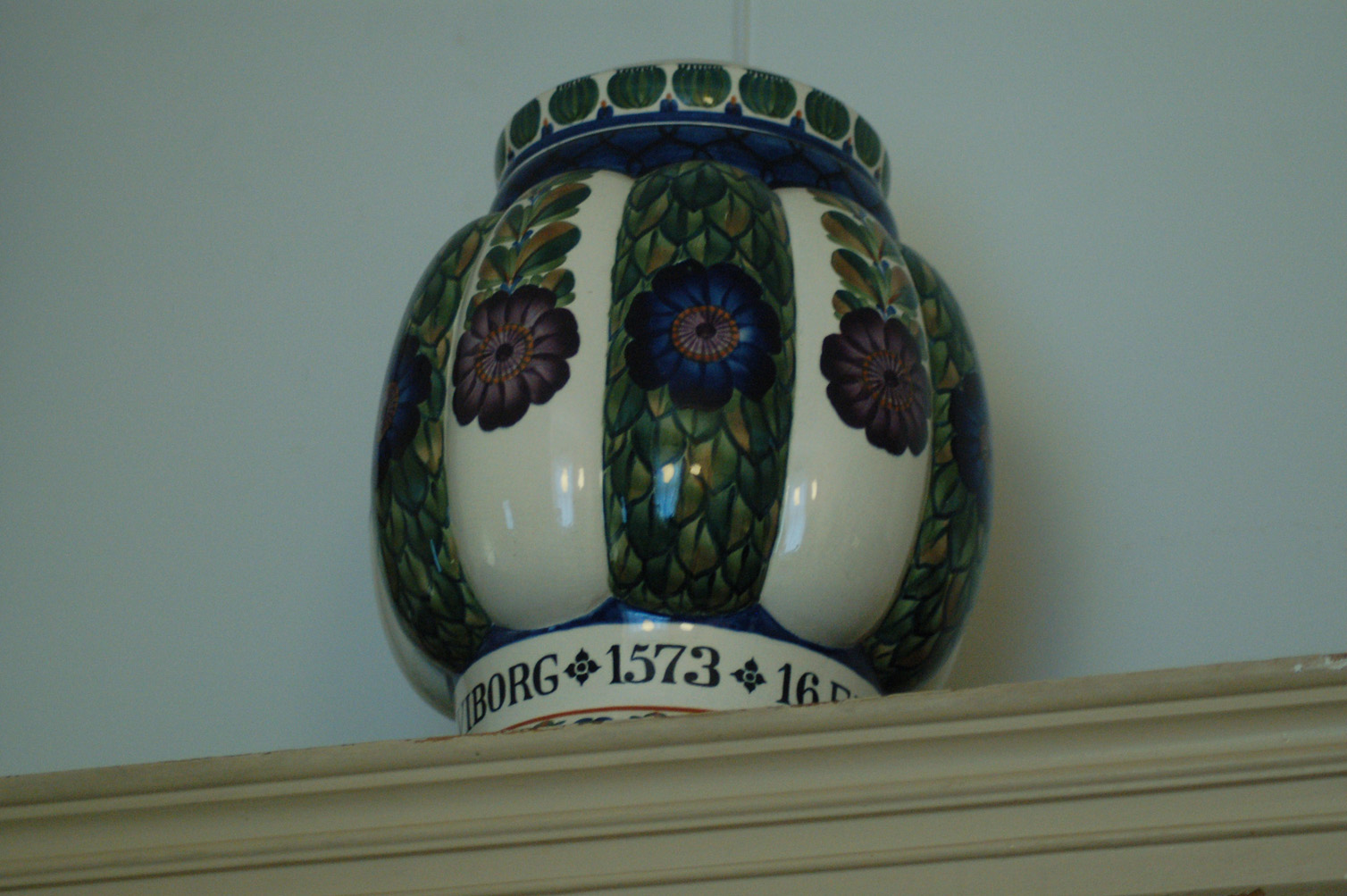
Old pharmacy jar, Viborg museum, photo gb
headache. It is still recommended up till present as a tea for a soar throat and hangovers. Thymol is extracted in the medicinal industry, it is used in mouth water, tooth paste and as a means against tooth ache, and as an ingredience in some desinfectants. The oil is a part of a medicine against whooping cough.


The old Physicians' Medicine:
old medicine bottes, Viborg museum, photo gb
Henrik Harpestræng ab 1300: thyme crushed with vinegar and rose oil in a balm against headache, a decoction was a part of food, so people did not get hurt by worms and other poisonous animals while they were sleeping in the field. Thyme was used as a cover on bites and poisonous stings. Poisonous animals flee from the smoke of burning thyme. 

Christiern Pedersen 1533
Thyme was part of a gout patch, and as a wine decoction against nausea,  the juice of thyme upon

haemorrhoids, crushed thyme mixed with salt was put upon fistulas and cancer. 

Henrik Smid 1546 
A decoction with thyme casts out slime of the kidneys and blatter and stops intestinal twisting,
he also uses thyme as an antidote in bites of posisonous animals. They  were driven away by the smoke from thyme  Thyme was a multi-medicine and used in all kinds of diseases. Mentioning a few: Thyme heals bowles which are sore after blood sot = dysentery; it strengthens the brain to smell to the plant, it can be put upon the head against dissiness, garden thyme cooked in wine is good for shortness of breath , drives out worms, poison, dead embryo etc. 

Simon Paulli 1648
Oil of thyme against head and kidney pain, clusters of garden thyme put in beer as a means for melancholia, wild thyme has empowering and expectorant properties. as a part of a balm it was in the 1700s used as a cover for headache and dissiness. Used in a tea against colic  A decoction to children with intestinal worms 


Farmhands chamber, Hjerl Open Air Museum, photo gb
Superstition; and against vermits
An advice to the farmer: Pluck thyme silently and put it under the first sheaf of straw, this will keep away the rats.
The bedstraw which was delivered to Christian 4. was mixed with thyme as a protection aginast bed fleas. or else it was said that wild thyme only drove away women's fleas and not men's fleas. 
Chicken with fleas or other vermins were smoked with thyme and hops. 
Against flea beetles put out thyme mixed with wormwood and garlic.


Replacement of tea, hops and tobacco.
Shag tobacco, wikipedia
Children in the country were sent out with a basket to pluck wild thyme, which was dried and gave a tea substitute in winter (1880) The tea was added sugar and cinnamon  An old saying was "this tea you must have when the windows are white" = when it is hard frost. Wild thyme tea was in the 1800s recommended as a substitute for hops Also in Greenland was wild thyme used as a tea 
InWWII thyme was dried into shag tobacco, and already in 1780-1800 they used the thyme as tobacco and to chew. 


Livestock 
Hjerl Hede Open Air Museum, photo gb
Thyme was a part of a cover upon the abscesses of the horse. Wine with crushed thyme was rubbed upon the tongue of a cow against heart- inflammation. Tea of thyme was used to bathe the cattle against the food and mouth disease. 


photo: market, Thymus serpyllum, pharmacy, Viborg Museum, Hjerl Hede Open Air Museum: grethe bachmann
other photos: wikipedia
Sketches: grethe bachmann  

Source:
Krydderurter i haven , Anemette Olesen, Politiken, 1996/1998. 
Danske klosterurter, Anemette Olesen Aschehoug 2001.
Brøndegaard, Folk og Flora, bd. 4, Thymus vulgaris.
Krydderurtehaven paa knatten , Annemarta Borgen,
A Garden Herbal Anthony Gardiner
Ceres Esplan Helbredende urter 1981, Hernovs forlag, oversat af Hans Henrik Sørensen og Michael Beck fra Vitskøl Kloster. Original titel: "Herbal teas, tisanes and loitions."


Monday, January 04, 2016

Old Customs in January


A ploughed field in January, photo: gb

January 1., New Year's Day :
It's a Helligdag (holiday) in Denmark and the other Nordic countries and an official flag day. New Year's Day was earlier called the Eighth Day of Christmas, but it was not always considered the first day of the year. Before Christianity came to Denmark it was probably Winter Solstice on 21/22 December which was considered the first day of the year. When Christianity gradually was accepted  the 25th december, the birth of Christ was the first day of the year for centuries. Not until the reform of the calendar in 1700 it seems that the first day of the New Year was commonly considered to be January 1. And still is!

Old Customs:
When the people in the farm woke up on New Year's morning they must not do anything at all before they had eaten something. After this the farmer went outside shooting the new year welcome like he had done the night before - if he had a gun! Then the household had a good and very solid breakfast. Later they all went to church, where they 'sacrificed' (mostly money) to the vicar and the parish clerk. The rest of the day people had a pleasant time with quiet pursuits.

New Year was always one of the big feasts and mærkedage (red-letter days) of the year. As early as around year 1000 (Canute the Great) it was decided that the eighth Day of Christmas had to be fixed  skiftedag' ( a notice day and a day on which servants used to change jobs). But most important were probably the omens from where the farmer read signs about the harvest of the year to come. The harvest was the most important thing of all. In the old society it was crucial, that there was food enough for the household, or else they had to starve in the next winter.

In the ancient societies they lived "from hand to mouth". Most omens had to do with the weather and the harvest situation. Up till the middle of the 1800s more than 90 % of the Danish population was living in the country and was completely dependent on the yields and the significance of the climate.

Superstition and omens for New Year's Day:
Like the weather is on this day, so it will be on Midsummer's Day.
On New Year's morning the farmer looked at the sky, for if the sky was red before sunrise the coming year would be marked with war, plague and bad weather in general.
Another omen said that if the sun on New Year's Day is shining as long as it takes to saddle a horse, then it will be a fertile year.
If you swept well indoors on New Year's Day, you would bring good weather to the harvest in the New Year.


Thursday, December 31, 2015

I prefer the open Landscape and the nearness of the Sea.....


ULF LUNDELL: Öppna Landskap 


Jag trivs bäst i öppna landskap,nära havet vill jag bo,
några månader om året, så att själen kan få ro.
Jag trivs bäst i öppna landskap, där vindarna får fart.
Där lärkorna slår högt i skyn, och sjunger underbart.
Där bränner jag mitt brännvin själv, och kryddar med Johannesört,
och dricker det med välbehag, till sill och hembakt vört.
Jag trivs bäst i öppna landskap, nära havet vill jag bo.

Jag trivs bäst i fred och frihet, för både kropp och själ,
ingen kommer in i min närhet, som stänger in och stjäl.
Jag trivs bäst när dagen bräcker, d'r fälten fylls av ljus,
när tuppar gal på avstånd, när det är långt till närmsta hus.
Men ändå så pass nära, att en tyst och stilla natt,
när man sitter under stjärnorna, kan höra festens skratt.
Jag trivs bäst i fred och frihet, för både kropp och själ.

Jag trivs bäst när havet svallar, och måsarna ger skri,
när stranden fylls med snäckskal, med havsmusik uti.
När det klara och det enkla, får råda som det vill,
när ja, är ja, och nej, är nej,och tvivlet tiger still.
Då binder jag en krans av löv, och lägger den runt närmaste sten,
där runor ristats för vår skull, nån gång för länge sen.
Jag trivs bäst när havet svallar, och måsarna ger skri


 https://www.youtube.com/watch?v=uuOUev9EgI8


the text is Swedish if you'd like to translate it.  


Tuesday, December 22, 2015

Merry Christmas and Happy New Year


A Merry Christmas  and a Happy New Year to all my followers and readers. 

- and a peaceful New Year all over the world 

Best wishes
Grethe  


Friday, December 18, 2015

Mariager By, Mariagerfjord Kommune, Region Nordjylland


Today Mariager is a small town with 2527 inhabitants (2015). It lies on the southern side of Mariager fjord. Mariager lies in Mariagerfjord kommune and belongs to Region Nordjylland.
 
Mariager was a small village until the middle of the 1400, when a Bridgettine abbey was built. This

made the village grow into a market town with trade and handicrafts. There was later no effect on the town from the industrialization which means that it still has a medieval touch with many pretty old houses in the paved streets.

Mariager lies close to the beautiful Mariager fjord by the forested coast of the fjord. High slopes with forest rise behind the houses. Except for the abbey and its high tower all the houses are low. It was the Bridgettines who gave the town its name when they chose to place their Jutland abbey here and named it Mariager abbey. Mariager means Maria's ager = Maria's field (after Virgin Mary). 


There was already a small fishing village in the 1400s and a ferry for the traffic between the towns Randers and Aalborg, but the abbey meant economic progress for the village, and gradually flocked merchants, innkeepers and craftsmen to the town, and rich nobility began buying burial chapels by the church. Mariager abbey became a church of pilgrimage and one of few places in Denmark where people could buy indulgence for their sins. This made the church immensely rich.The pilgrims lead to a substantial revenue for the city's trade, and several guesthouses were built. The town's good times went on until the reformation in 1536, where the administration of the abbey was transferred to the Crown


 The decline for Mariager meant that when it finally got municipal rights in 1592 it had under 500 inhabitants. After this it was the raw materials together with fishing, farming and foresting, which made the basis for the income of the town. An important income was malt and spirits which were shipped to Copenhagen. 
Town Hall


Mariager got a pharmacy in 1816, and the town house was built in 1822  In 1829 a physician came to town and two years later a post office was established -  in 1853 a savings bank and street lights in 1859.  Mariager became service center for the hinterland and grew faster than in the abbey-period, but after the start of the Hadsund-bridge some of the trade moved to the town of Hadsund. 

Hotel Postgaarden

The old city section has kept its original street net, which forms an architectonic whole with old pavements and timbered, thatched houses, almost each house has a garden, which also gives a medieval mark. The town hall at the town square is classistic, the Hotel Postgården is from the 1700s and was earlier a vicarage, but since the 1800s it has functioned as a guest house. 


City Museum
Mariager city-museum is furnished in a pretty, old merchant house from the 1700s with an external gallery on the yard-side. Besides being a city-museum it has alternative art exhibitions and a kloster garden with medicine herbs. The town square is the most significant place in town. Here is also carved in the street a plan of the earliest parish church from the 1100s. 


by tourist and Saltcenter
The town has a small marina and a tourist boat
veteran railway site
Svanen which in summer sails from Hobro via Mariager, Hadsund and to the mouth of Mariager fjord. At the harbour is also Danmarks Saltcenter with café, a museum for salt mining, where people can visit a salt mine and a bathing salt lake with the byname Det døde Hav. A veteran railsway goes from the harbour to a small town Handest 17 km west. Mariager's landmark is Mariager klosterkirke from the 1400s, the tall building and tower stands on a hillside and rise above all the roofs of the town. 
by Mariager fjord

tourist boat Svanen

Mariager has a long tradition for preserving the town and its houses, and  it has a rich selection of special shops and grocery stores. Shipping and tourism also play a big role in the employments. 
Tourism is today considered the central income of Mariager.. In 2013 Mariagerfjord Kommune with Mariager by was certificated as a Cittaslow city. Cittaslow is a movement for cities which want to set focus on a more simple lifestyle. In Denmark are two cities certifacted: Mariager in Jutland and Svendborg at the island of Funen.


Assens between Mariager and Hadsund was earlier the home of a big part of Denmarks  cement industry. In the chalcerous soil in the chalk pits is one of the largest orchid presences in Denmark. The old smitty at Dania is a working museum and along the road by the fjord lie Assens Nyboder, the earlier houses of the workers from the factory.


Mariager klosterkirke was built in connection to the abbey in the 1400s. See my blog Church and Manor for article about Mariager abbey.


Source Danmarks Købstæder, Søren Olsen, 2000

photo: grethe bachmann

photo town hall: Google earth. 

Friday, November 27, 2015

The Sun always shines above the Clouds..............


Sunset, Gilleleje, Zealand
It is late November - and it is soon midwinter, the sun sets early in the afternoon. The earth in my garden is wet, wet, wet -  and the sun has no power in the short time it shows its face during the day hours. But from December 21 at winter solstice the sun will slowly return to its usual power in spring and summertime. And then we can sing "Here comes the sun......"


We do not worship and sacrifice to the sun like the ancient people did. The sun's power over mankind was always great, especially in the countries to the North, where the sun at midwinter is like a far disc,  pale, golden and cold as the moon  -   and in some places like in The Land of the Midnight Sun it disappears for a period. No wonder the ancient people tried to recreate the sun above the southern horizon, the warmth  had to come back to bring life over nature after a dark winter -  and when the sun appeared again, its return was celebrated with cheers throughout the settlements.

Trundholm Sun Chariot
Petroglyphs with sun sign
During Stone Age and Bronze Age the sun was one of the lifegiving powers which people feared the most, but it was also the power which was mostly worshipped. It was the first of the heavenly powers which was brought to the North with the first farmers and cattle breeders about 5000 years ago. When the sun chariot from Trundholm was found,  it was a proof that the sun was worshipped in ancient times. The sun chariot was the costiest thing people had, with a golden disc and a magnificent horse, and they always sacrificed their most valuable item to the sun god.

The horse was in Bronze Age a sacred animal, it was only used in religious celebrations, stallion fights and in the first sacred ploughing of the New Year. The chariot and the horse is an unambiguously witness that the sun was worshipped in early Bronze Age - or else the sun is in ancient times most often reproduced by a sign: a wheel cross, a circle, a spiral or a fully carved disc which is seen on some petroglyphs. It is known that in the near Orient and in North India the wheel was in ancient times a commonly used image of the sun. The circle or the ring is the simplest reproduction of the sun, and together with the spiral those signs decorated the disc of the Trundholm chariot.


Midsummer celebration, Sweden, 1969.
Although people was still worshipping the sun it lost some prominence during Bronze Age. The sign of the sun did not disappear. through the times and up till present, it was still there, seen mostly as a wheel with four or more spokes . A weak reflection has been kept in the sundance on Pentecost morning . Especially in spring and midsummer many places in the North and bordering areas to the south continued the fertility-belief, which was linked to the sun and the power of the sun. They rolled burning wheels and discs down over hillsides or threw them up in the air. A sign of the sun like plaited wreaths are still put on new buildings as a celebration or at a midsummer pole -  and no one wonder why or know that this is a continuation of a fertility cult.

Sami family in spring celebration.
A special source of information about the sun cult from Prehistoric time is probably the Sami people's worshipping of gods, which continued up till the 17th  and 18th  century. It was written down by officious Swedish priests and Norwegian missionaries,  who fought a destruction-war against this worshipping. This part of the Sami religion might be due to the contact they had with the Norse people in a very distant period.
 When the Sames got lost in the mountains because of bad weather and fog, they placed as a sacrifice to the sun a holed wooden disc : a wheel. On Christmas morning they saluted the sun and drank its tribute and took omens about good or bad luck in the year to come from the sunshine upon a brass ring in water. After the homecoming they drank a tribute to the fertility gods and brought sacrifices to the sun, the bones of the sacrificed animals were placed in a circle upon a sacred table - or meat hung up in a circle-bend wicker twig. The sun would then recognize its sacrifice through the sun signs. At midsummer wreaths of leaves and grass were hung up in honour of the sun.


Swedish Christmas cakes 16th century.


A link between midwinter's solstice, old ancient sun-belief  and the fertility of the next year,  were up till present time kept in the Swedish Christmas bread,which was decorated with the signs of the sun, the wheel and the spiral. The Christmas bread was stored in winter - and in spring it was crumbled and given in small bites to both humans and animals in the farm on the first day of the spring-sowing in order to secure a good harvest.
.


Archaeological magazine SKALK nr. 4, 1961: P.V.Glob, "Solens Tegn".
photo Gilleleje: grethe bachmann
other photos: wikipedia. 

Thursday, November 26, 2015

The Famous Cat Maru


I AM MARU


https://www.youtube.com/watch?v=jgxL-PwmY7s&list=RDjgxL-PwmY7s=t=28


We have known Maru for some years here on my blog, and he is now so famous that it is difficult to find a new video without music and lots of other references.
But here is an old video from 2012.  Maru and boxes is always fun and a few minutes well spent.
He brings a smile to your face doesn-t he?


Have fun!


Wednesday, November 25, 2015

An unusual Sleigh Ride from Norway to Denmark -


Our climate has changed a bit and hard winters are rare, at least here in the Danish country. Some people still remember true winters with lots of snow and ice through the whole winter season -  snow for sleighing and ice for skating. It was a wonderfuul time for children.


In the old days, before motorcars arrived people either rode or drove in horse waggons. In the winter season they found their sleigh in the barn or another farm building. People had many varied horse waggons and horse-drawn sleighs. When the sleigh had been cleaned and was ready with furs and warm blankets inside, the horses were harnessed . They had got new safe shoes for the icy roads by the busy blacksmith.  Now the family was ready to take a sleigh ride through the snow.....                                                                                 .


A common sleigh was simple and could be used for both working use and for taking people on a sleigh drive -  in manors and other posh places they had some very fine sleighs with painted decorations,  some with carved decorations. A sleigh had usually one or two seats and a place for the driver on the back.


The sleigh drive is an elegant and romantic form of transport. There are many colourful 
descriptions of such romantic sleigh drives in Scandinavian literature. The horse or horses had to be equipped with sleigh bells, little ringling things, which  might be of silver. They were a necessary accessory, in order to tell other wayfarers that a big sleigh was coming near. A sleigh ran almost silently through the snow and was a  dangerous vehicle to a pedestrian.  A                 horse-drawn sleigh was used if people had to go to the city, to the church or on a visit - it was seldom used for long trips.


An unusual story is known about a sleigh drive from Norway to Denmark.

Venus passage


The date 3 June 1769 was by astronomers all over the world foreseen in excitement. A rare vision on the sky was expected, a Venus-passage, a phenomenon, which is like an eclipse of the sun - only that Venus cannot cover the whole sun but  only a small part of it. Some important knowledge was in waiting and several European states took the initiative to do something about it  In Denmark the young king Christian 7 invited his ambassador the Austrian-Hungarian Maximilian Hell to do some observations on Vardø at the Barents Sea in the northern part of Norway. Denmark and Norway had a Unity of the Realm at that time.
Maximilian Hell
Maximilian Hell was a Jesuit pater, but he had since 1755 very skillfully managed the emporial university observatory in Vienna. He got the allowance for the trip to Norway by empress Maria Teresia and travelled in 1768 to Denmark together with an assistant Johannes Sajnovics.


Vardø, island north east of Norway
Vardø means Wolf's Island in English. 
Vard = varg = ulv


It might seem odd they wanted to go to Vardø - almost as far north as possible -  but the calculations showed that the Venus-passage would happen at a time where the rest of Europe lay in darkness, except the northernest Norway, where the sun was low but up both day and night. The travel north was difficult, first across the Norse mountain roads to the city Trondheim and then by sea in stormy weather. It was now close to autumn in 1768 and the expedition was trapped in a small town by the coast, Kjelvik, the northernest parish in the world. Maximilian Hell met the parish priest Jens Eriksen Grøn and they became good friends

aurora borealis
The expedition continued   to Vardø and arrived here on the 17th October. On this part of the tour they had the assistance of the commander of the fortification Vardøhus, major Eckleff and 50 soldiers. Hell established an observatory which was finished at Christmas, and he did not waste time. He made observations of the aurora borealis and studied the phosphoresence of the sea water -  and he examined flora and fauna in the area. His assistant carried through studies of the Samic language.

And then came the 3 June 1769, there was a great excitement up to the date, bad weather could ruin everything but the time arrived and they were lucky. When Venus had done its passage and Maximilian Hell and his helpers had done theirs, a Te deum was sung and the canons of the fortress Vardøhus were saluting and the flag went up. Major Eckleff and several honoratiores were invited to see the star and they were celebrating with drinks.

The Austrian-Hungarian espedition - as it was -  started the home trip except for a two weeks visit by reverent Jens Grøn from Kjelvik, who told that he was not happy for his work as far north - and Hell promised him to talk to Christian 7, who listened to Hell's words. In the same year Jens Grøn became parish priest in the town Rudkøbing at the island Langeland.

Jens Grøn could not wait, he wanted to leave Norway as soon as possible, but the last winter ship had left the harbour in Kjelvik  Jens Grøn was resolute, he placed his wife and four daughters in a horse-drawn sleigh and began the long tour down through the winter-dressed Norway, a tour of 2500 kilometers. There is no information about the long difficult sleigh drive, he might have driven a part of the tour through Sweden ,  but he and his family arrived safe and sound to Rudkøbing where Jens Grøn started his new job.


The old sleigh was taken good care of because of this unusual travel from Norway to Denmark.. It is now at exhibition at Langelands Museum in Rudkøbing


Source: Archaeological magazine Skalk, nr. 1, 2004, Kanetur, Ole Mortensen

photo winter: grethe bachmann

other photos: wikipedia


Sunday, November 22, 2015

Capricious Weather!


Saturday by the lake -  21 November 2015
Sunday morning 22 november from my window
My Christmas tree from last year 


It's snowstorm today! The web cameras in the roads show lots of snow almost all over the country Worst on Zealand right now.

Weather changes so fast!!


photo grethe bachmann