Many Maru 23
https://www.youtube.com/watch?v=Bgm-NSg3Zeg
Saturday, January 12, 2019
Friday, December 28, 2018
Classic Cocktails
WHISKY
Manhattan 1/3 sweet Vermouth
2/3 American blended Whisky
1 spray Angostura bitter
2-3 ice cubes
1 cocktail cherry
orange peel.
Vermouth, whisky, angostura and ice into the mix-glass. Stir carefully with the bar-spoon so you do not "spoil" the spirits and "muddle" the drink. Put 1 cocktail cherry in the cocktail glass. Put the strainer over the mix-glass, pour into the cocktail glass. Press the orange peel over the glass with the outer side turned to the glass. The oil from the peel will lay upon the surface of the drink, giving a characteristic aroma (do not put the peel into the drink)
Rob Roy
1/4 sweet Vermouth
3/4 Scotch Whisky
6-8 ice cubes
1 orange peel
Vermouth and whisky into the mix-glass and then ice cubes Stir carefully Strain and pour into a cocktail glass. Press the orange peel over the glass and put it into the drink
Rusty Nail
1/2 Scotch Whisky
1/2 Drambuie
2 ice cubes
Whisky and Drambuie into an old fashion glass Then ice cubes. Stir lightly.
Irish Handshake
1/2 Whisky
1/4 green Chartreuse
!/4 cream
shake with ice
GIN
Dry Martini
3/4 gin
1/4 dry vermouth
The "original" Martini was introduced as Martinez ab. 1860. It started with 1/2 gin and 1/2 dry vermouth. The name was changed to Martini in 1890. now with 2/3 gin and 1/3 vermouth. The change went on and the drink became more and more dry.
Each Martini fan has his own opinion about the method. Some use only a spray of vermouth,others just rub the vermouth cork on the glass. The drink is therefore by experts considered to be too raw if it is only mixed, but if it is shaked quickly with ice the Martini gets a more gentle taste and at the same time the drink is cooled in a perfect way. And there is no need for ice cubes which would make the drink thinner.
Gin Fizz
1/3 lemon juice
2/3 gin
1 spoon icing sugar
3-4 ice cubes
club soda
lemon juice, gin an sugar into the mix-glass. Stir well until the sugar is dissolved. Put ice cubes in. Shake well.. Strain through the strainer and pour into a medium size glass. Rinse off the shaker with a little club soda which is put into the glass.
Pink Lady (or Cover Club)
1/6 lemon juice
5/6 gin
1 teaspoon grenadine
1 egg-white
a little cream
3-4 ice cubes.
Lemon juice, gin, grenadine, egg-white, cream and ice cubes into the mix-glass. Shake well and strain it. Serve in a cocktail glass.

Singapore Sling
2 ice cubes
1/8 cherry heering
1/8 lemon juice
3/4 gin
water
Ice cubes, cherry heering, lemon juice and gin into a medium size glass. Fill up with cold water and stir.
Singapore sling is said to origin from Raffles Hotel in Singapore, and some claim that the original drink besides the mentioned ingredients also include a few drops Benedictine and brandy, 1 orange slice and a little fresh mint
Some recipes say club soda instead of the cold water Then it is called Singapore rickey and not
Singapore sling.
Tom Collins1/4 lemon juice
3/4 gin
1 1/2 tesaspoon icing sugar
2 ice cubes
club soda
1 orange slice
1 cocktail cherry
Lemon juice, gin and sugar in a whiskyglass , stir with the bar spoon until sugar is dissolved. Put in ice cubes and fill the glass up with club soda. Decorate evt. with an orange slice and/or a cocktail cherry.
Rum is often used instead of gin and then the drink is called Rum Collins. But bourbon, brandy, scotch whisky or vodka might also be used instead of gin. With bourbon or blended whisky the drink is called John Collins.
VODKA
Black Russian
1/4 kahlua
3/4 vodka
2-3 ice cubes.
Kahlua and vodka into the mix-glass and then ice cubes. Stir lightly. Strain and pour in a coctail glass.
8-10 ice cubes
2 teaspoon lemon juice
2 teaspoon tomato juice
3/7 (evt 1/3) vodka
4/7 (evt. 2/3) vodka
2 drops Worcestershire sauce
2 drops Tabasco
fresh grounded pepper
a little celery salt
Ice cubes into the mix-glass, then lemon juice, tomato juice, vodka, worcestershire sauce and Tabasco. A little fresh grounded pepper, evt. a little celery salt upon the top.
If Bloody Mary is served on the rocks it is done as above and poured into a glass with 2-3 ice cubes.
RUM
Cuba Librejuice from 1/4 lemon
1/3 rum
3-4 ice cubes
2/3 coca cola
a lemon slice
lemon juice, rum and ice cubes into a tall glass. Fill with coca cola, stir and decorate with 1/2 lemon slice.
Daiquiri
1/ 4 lemon juice
1 teaspoon icing sugar
1 teaspoon Cointreau or Triple sec
3/4 white rum
3-4 ice cubes
evt. a little egg.white.
Lemon juice and sugar into the mix-glass and stir with the bar-spoon until the sugar is dissolved. Add the Cointreau or Triple sec, rum and ice. Shake well, and pour through the strainer into the cocktail glass.
In order to make the Daiquire still more foamy,try to add a little egg-white before you shake.
Mai-Tai
Juice from 1/2 lemon
1/6 apricot brandy
1/6 curacao
2/3 dark Jamaica rum
3-4 ice cubes
1 cut of fresh pineapple.
Lemon juice, apricot brandy, curacao, rum and ice cubes into the mix-glass. Shake well, strain and pour into the cocktail glass. Decorate with a cut of frech pineapple
TEQUILA
Margarita I
1 lemon slice
a little coarse salt
1/5 lemon juice
4/5 tequila
1 1/2 teaspoon icing sugar
3-4 ice cubes
Rub the inside of the edge of a cooled cocktail glass with lemon slice. Put salt on a plate and dip the glass in it so a thin layer of salt is on the glass edge. Lemon juice and sugar into the mix-glass and stir until the sugar is dissolved. Add tequila and ice cubes, shake well, strain it into the salt-edged cocktail glas.
Margarita II
1 lemon slice
a little coarse salt
1/5 lemon juice
3/5 tequila
1 /5 Triple Sec
3-4 ice cubes.
Same procedure as Margarita I.
COGNAC
Sidecar
1/3 cointreau or Triple sec
2/3 cognac
1 spoonful lemon juice
3-4 ice cubes
Cointreau or Triple sec, cognac, lemon juice and ice cubes into the mix-glass. Shake well and strain through the strainer into the cocktail glas.
Stinger
3/4 cognac
1/4 creme de menthe
3-4 ice cubes
Cognac, the white creme de menthe and the ice cubes into the mix-glass. Shake well and strain it into the cocktail glass.
CHAMPAGNE
Champagne cocktail 6 measure icecold champagne
1 orange peel
1 teaspoon cognac
The icecold champagne into a champagne glass. Wring the orange peel above the glass and put it in. Pour slowly the cognac in so it is floating on the champagne.
Black Velvet
1/2 cold guiness stout
1/2 cold champagne
Traditional way : Hold cold stout in one hand and cold champagne in the other. Pour into a tall cold glass at the same time. A more simple way is to first pour stout in an then fill the glass very slowly with champagne. Do not stir but drink at once before the bubbles die and the good taste disappears.
WINE
Kirr
2 ice cubes
5/6 dry white wine
1/6 creme de cassis
1 lemon peel
Put ice cubes, white wine and creme de cassis in a large wine glass. Wring the lemon peel over the glass and put it in. Stir lightly.
Source: Vin og spiritus/Alverdens kogekunst/ 1968 -1970
Thursday, December 13, 2018
Christmas Tree - once a Pagan Tree
![]() |
| old oak, Boller Castle/ photo GB |
![]() |
| Mistletoe, photo: stig bachmann, naturplan.dk |
In the Middle Ages, the Church would decorate trees with apples on Christmas Eve, which they called "Adam and Eve Day." However, the trees remained outdoors. In sixteenth-century Germany, it was the custom for a fir tree decorated with paper flowers to be carried though the streets on Christmas Eve to the town square, where, after a great feast and celebration that included dancing around the tree, it would be ceremonially burned.
![]() |
| Christmas tree/ wikimedia |
![]() |
| "Yggdrasil", Silkeborg Museum |
In 1605 an unknown author from the southern Germany wrote that on Christmas evening were raised Christmas trees in the houses, upon which were placed roses, cut in coloured paper, apples, wafers, tinsel-gold and sugar. The custom spread slowly, and from the 17th century it is known that people in Strasbourg often used decorated trees in connection to the Christmas celebrations.
![]() |
| Anne Ancher by Christmas tree 1919/wikipedia |
Among
the Pagan traditions that have become part of Christmas is burning the
yule log. A Yule log is a large wooden log which is burned in the hearth
as a part of traditional Yule or Christmas celebrations in several
European cultures. In all the customs its significance seems to lie in
the iul or "wheel" of the year. It can be a part of the Winter
Solstice festival or the Twelve Days of Christmas, Christmas Eve,
Christmas Day or Twelfth Night.The Druids would bless a log and keep it
burning for 12 days during the winter solstice; part of the log was kept
for the following year, when it would be used to light the new yule
log. For the Vikings, the yule log was an integral part of their
celebration of the solstice, the julefest; on the log they would carve
runes representing unwanted traits (such as ill fortune or poor honor)
that they wanted the gods to take from them. The expression "Yule log"
has also come to refer to log-shaped Christmas cakes, also known as
"chocolate logs" or "Buche de Noël". The Yule log is related to other Christmas and Yuletide traditions such as the Ashen faggot.photo grethe bachmann
Monday, December 10, 2018
Common Holly/ Kristtorn
Ilex aquifolium
Holly with its fine darkgreen shining leaves and bright red berries is a very popular decoration item in the Christmas season.
Holly, or European holly to distinguish it from related species, is also called Christmas holly or Mexican holly. Holly is a very ancient species. It can live 500 years, but usually does not reach 100. The old trees are scarce. It originated in southern and south western Europe, from where it spread to the central and western Europe, the North Sea and Australia. Ilex aquifolium is an invasive species on the West Coast of the United States and Hawaii.
Holly has grown in Denmark for the last 7000 years, today seen mostly in east- and south Jutland in hardwoods, thriving well in the shadows of the beech forest. It is listed - it is forbidden to remove a holly in a Danish forest. The flowers in spring are white and pollinated by bees. The toxicity of the fruit necessitates care when handling. Toxins from the fruits are not harmful to birds. Thrushes like blackbird, fieldfare, mistle thrush and redwing like the berries. After the first frost of the season, the fruit becomes soft and falls to the ground serving as important food for winter birds. This evergreen tree with its thorny leaves is a popular place for smaller birds to roost in the winter. The fact that it bears fruit in winter gives this plant a very important ecological value, being a good food source for many species, especially birds, at a time of scarce resources. These same fruits are considered purgative and emetic to humans.
Holly is rarely used medicinally due to its toxicity, but is diuretic, relieves fevers and has a laxative action.
NB: It is important to watch that children, dogs and cats do not come into contact with holly and the berries.
Folklore
Through thousand of years Holly has played an important role in rituals and religious life. The Holly tree is a symbol of goodwill, health and happiness. Old Christmas Carols are full of allusions to holly - and its most common association is in a Christmas seasoned decoration. In many countries in of Europe the holly tree was called Christ's Thorn or Holy Tree. An old Christmas legend has it that the first holly sprang up under the footsteps of Christ, and its thorny leaves and scarlet berries were likened to drops of blood, symbolic to his suffering.
As with most other trees holly was revered for its
protective qualities. It was said to guard against lightning, poisoning
and mischievous spirits, and when planted around the house it was
protecting the inhabitants from evil sorcerers. When confronted by wild
animals, throwing a stick of holly at them would make them lie down and
leave you alone. Water cooked with holly was sprayed on a newborn baby
for protection, and carrying a piece of holly was said to promote
good luck, particularly in men, for the holly was a male plant, while
the ivy was the corresponding female. After midnight on a Friday people
could quietly gather nine holly leaves, put them in a white cloth and
under the pillow - and their dreams would come true.
For the Romans the holly tree was sacred to Saturn, and wreaths with bright red berries were given as gifts during the holiday Saturnalia, a festival of Saturn, held around the 17th of December. It was a celebration of the winter solstice, upon which the Christmas holiday later was modeled. Christmas Holly and other evergreens were adopted by common Christians as a Christmas decoration in spite of protests from Church fathers.
In ritual uses, holly was associated with death and the rebirth symbolism of winter. It was used in mid winter festivals in the old Celtic tradition for celebrating the Sun God's birth at the winter solstice. The leaves were thought to afford magical protection for homes against witches and lightning strikes, and holly tree sprigs were brought into the dwellings during the cold weather months in the belief that they afforded shelter to fairies. The Celtic priests, the Druids, associated holly with the elements of fire, and the old Celtic smithies and weapon makers used its charcoal to forge the swords, knives and tools.
In folklore holly was associated with the spirit of vegetation and the waning forces of nature. At Christmas time a man, the Holly king, was dressed up and covered in holly branches and leaves, and a woman was likewise dressed in ivy. Together they would be paraded through the streets , hand in hand, leading the old year into the new. Today the Holly king has been stylized by the figure of Santa Claus.
In the Harry Potter Universe Harry's magic wand is the only wand made of Holly.
Sources:
Sten Porse: Plantebeskrivelser; Fred C. Galle: Hollies. The Genus Ilex, 1997; Flora of NW Europe: Ilex aquifolium

photo 2006/2011: grethe bachmann,
Holly with its fine darkgreen shining leaves and bright red berries is a very popular decoration item in the Christmas season.
Holly, or European holly to distinguish it from related species, is also called Christmas holly or Mexican holly. Holly is a very ancient species. It can live 500 years, but usually does not reach 100. The old trees are scarce. It originated in southern and south western Europe, from where it spread to the central and western Europe, the North Sea and Australia. Ilex aquifolium is an invasive species on the West Coast of the United States and Hawaii.
Holly has grown in Denmark for the last 7000 years, today seen mostly in east- and south Jutland in hardwoods, thriving well in the shadows of the beech forest. It is listed - it is forbidden to remove a holly in a Danish forest. The flowers in spring are white and pollinated by bees. The toxicity of the fruit necessitates care when handling. Toxins from the fruits are not harmful to birds. Thrushes like blackbird, fieldfare, mistle thrush and redwing like the berries. After the first frost of the season, the fruit becomes soft and falls to the ground serving as important food for winter birds. This evergreen tree with its thorny leaves is a popular place for smaller birds to roost in the winter. The fact that it bears fruit in winter gives this plant a very important ecological value, being a good food source for many species, especially birds, at a time of scarce resources. These same fruits are considered purgative and emetic to humans.
Holly is rarely used medicinally due to its toxicity, but is diuretic, relieves fevers and has a laxative action.
NB: It is important to watch that children, dogs and cats do not come into contact with holly and the berries.
Folklore
Through thousand of years Holly has played an important role in rituals and religious life. The Holly tree is a symbol of goodwill, health and happiness. Old Christmas Carols are full of allusions to holly - and its most common association is in a Christmas seasoned decoration. In many countries in of Europe the holly tree was called Christ's Thorn or Holy Tree. An old Christmas legend has it that the first holly sprang up under the footsteps of Christ, and its thorny leaves and scarlet berries were likened to drops of blood, symbolic to his suffering.
![]() |
| Hedge of holly trees, Linde church, Randers |
For the Romans the holly tree was sacred to Saturn, and wreaths with bright red berries were given as gifts during the holiday Saturnalia, a festival of Saturn, held around the 17th of December. It was a celebration of the winter solstice, upon which the Christmas holiday later was modeled. Christmas Holly and other evergreens were adopted by common Christians as a Christmas decoration in spite of protests from Church fathers.
In ritual uses, holly was associated with death and the rebirth symbolism of winter. It was used in mid winter festivals in the old Celtic tradition for celebrating the Sun God's birth at the winter solstice. The leaves were thought to afford magical protection for homes against witches and lightning strikes, and holly tree sprigs were brought into the dwellings during the cold weather months in the belief that they afforded shelter to fairies. The Celtic priests, the Druids, associated holly with the elements of fire, and the old Celtic smithies and weapon makers used its charcoal to forge the swords, knives and tools.
In folklore holly was associated with the spirit of vegetation and the waning forces of nature. At Christmas time a man, the Holly king, was dressed up and covered in holly branches and leaves, and a woman was likewise dressed in ivy. Together they would be paraded through the streets , hand in hand, leading the old year into the new. Today the Holly king has been stylized by the figure of Santa Claus.
In the Harry Potter Universe Harry's magic wand is the only wand made of Holly.
Sources:
Sten Porse: Plantebeskrivelser; Fred C. Galle: Hollies. The Genus Ilex, 1997; Flora of NW Europe: Ilex aquifolium

photo 2006/2011: grethe bachmann,
Thursday, December 06, 2018
Legends of Denmark / Sagnenes Danmark
The source:
Legends of Denmark (Sagnenes Danmark) is the result of many year's persistent investigations and studies, gathered and written by author, Gorm Benzon, whose work presents and summarizes substantially knowledge which never before was accessible to the general reader.
A small extract:
Rugaard Manor
The witch-hunter Mogens Arenfelt's wellknown and numerous witch processes are not just legends, they are well documented history. He sent lots of innocent women to be burned at the stake - and he often accused women who asserted their innocence. He had a certain test for an accused witch. She had to be tested in a small pond on the road outside his manor Rugård. Her hands and feet were tied and she was thrown out into the pond. If she floated upon the water, she was a witch and was burned on the stake. If she sank she was innocent and she drowned.Arenfeldt had a chamber on the third floor of the south-western tower, named Hamburg. When his creditors came to see him he would hide in this room, and the servant told the unwelcome guests that his lord and master was in Hamburg.
One of the later owners of Rugård manor told how his mother-in- law often saw someone sit in a chair in the living room. During a party she saw a grey lady walking through the room. Other guests did not see her but they involuntarily went aside to let her pass.
Sebber Kloster
In old days they tried to build a church at Sct. Nicolai Bjerg near Sebber, but what was built in the day time was torn down at night. The trolls in the hill did not like the sound of church bells. Two rich ladies lived at the kloster and they had the church moved to where it still stands.A notorious attorney took over Sebber Kloster in 1781 (he died in 1791). He was extremely despised. The farmers hated him and his peers of
the landowners disdained him. After his death he was haunting the kloster, and he was a very noisy ghost. Several priests tried to summon him without success. A priest named Bloch in the nearest village was not able to completely get the better of him, but managed to tie him to the peephole in the kloster church. Finally a priest succeeded after a long race - where he was above land and the ghost below land - to have him put down in the stable on Sebber manor, just behind the horse he rode while he was alive. Now people had finally found peace, but when the stable boy came out in the morning he could see how the horse was lathered as if it was highly ridden during the night.
A young girl served at Sebber kloster for several yeas. After her death she was haunting for some reason. In warm summer evenings she hovered above the building and disappeared on the church yard.
Kalø Slot
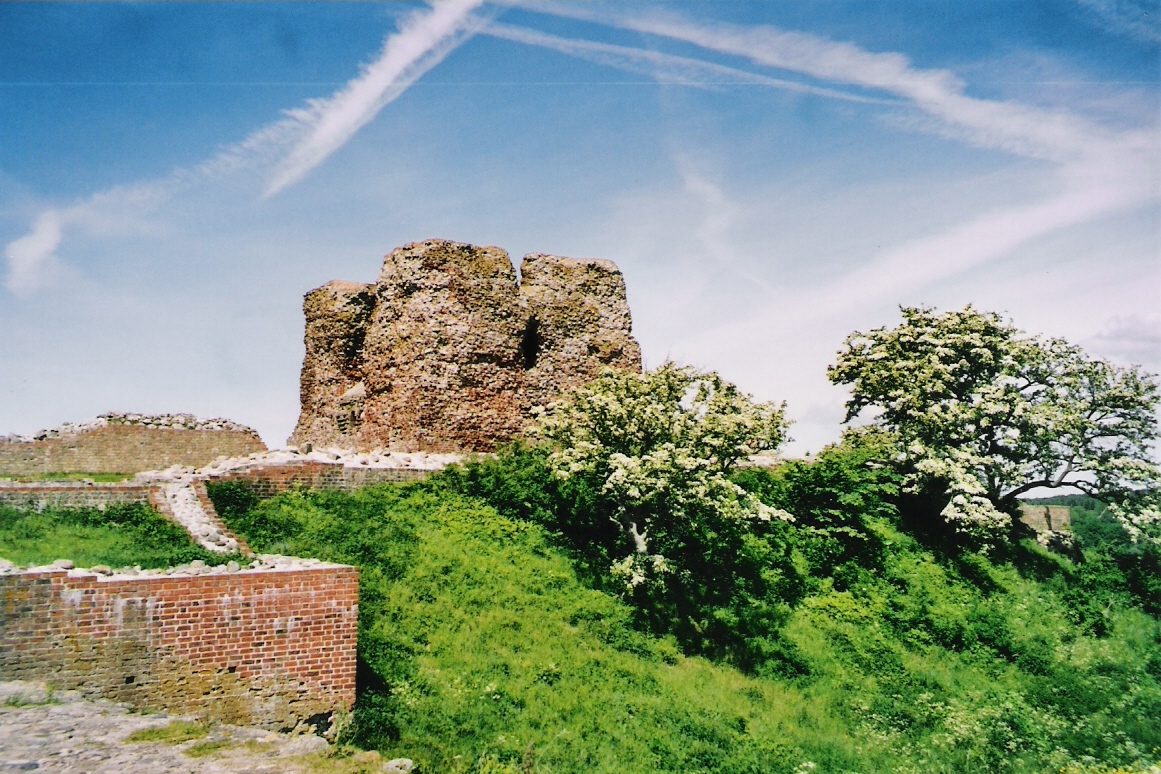
Below the ruin is a great treasure hidden - reportedly as much as the taxes in Denmark for seven years! It is not easy to find it and raise it, for it is well hidden and well protected somewhere in the ruin of Kalø. Probably under the big tower is a copper gate leading to a secret cave and a secret passage. The passage leads to Hestehave forest on main land and in the cave lies a dragon and guards a copper kettle filled with money.Many have tried to dig for the treasure but only a few have reached the gate. The first who entered the cave was a German, but the dragon attacked him and tore him into a thousand pieces. The next entering the cave were two peasants from the local district, the dragon could not hurt them for some reason, and the peasants spoke harsh words to the beast and made it so scared that it crept over into a corner of the cave, while the two men picked up the kettle and began to walk away. The poor dragon, who was the guard of the treasure, was now in a terrible pinch, which gave it a stomach ache - and in its embarasment it let a poisonous wind go. This was a rescue both for the dragon and for the treasure, for the two men rushed off coughing and sputtering up into the fresh air, and they never showed their face on Kalø again .
The only possible way in fetching the treasure was said to be in the summertime. The dragon was like all other dragons fire-breathing - and it was over heated in summer and had to fly to Norway to cool down. It was easy to see when it left for Norway - there was a trace of fire in the air from Kalø in the direction of Norway.
A manager who lived a Kalø drowned. He might have committed suicide. He had no rest in the grave, for he had done wrong against his landlord and the Kalø-farmers. He sometimes rode in the castle yard on a white headless stallion, but he was often also running around in the rooms as a big black dog, impossible to catch. Finally people succeeded to summon him down into a meadow, and a pole was driven through him.
Lynderupgaard.
Lynderupgaard is one of the finest timbered manors in Jutland, and it is rich in legends. Upon the castle yard the clear spring water runs down from the oldest fountain in the North into a cord of hollow oak logs , coming from a spring in the hills behind the house. It is said to be the best water in Denmark. The well might have a past as a holy spring. Once in the night when it is a full moon a black ghost dog comes running into the yard and drinks the clear water.Sseveral people have told that they saw a funeral procession coming out from Lynderupgård. It came out from the wall in the west wing and went across the open moat and disappeared on the other shore. When one year they digged on that spot at the castle castle bank they found traces of an entrance from the house and across a bridge across the moat.
It was told that when landlord Friis in 1777 took over Lynderupgård there were two skeletons upon the attic. He let them bring down to be buried, but there was never again any rest on that attic.
In the old days was in the park a carved wooden sculpture under which a nun was buried. Maybe it is she who each night sits upon the "Virgin bench" with a baby on her lap.
People at Lynderupgård have met a priest when they at night went in the great halls and rooms. No one knows who he is, but he might have been there ever since Lynderupgård's stone house was a part of a bishop's manor.
When big changes have to happen in the family at Lynderupgård, mostly sad changes, a big black and white cat, named Whitehead, comes jumping across the floor in big clumpsy hops and disappear under some furniture, but when you look for it there is no cat.
Skaføgaard.
One of the owners of Skaføgaard had sold himself to the devil, and he even knew when his time has come. When he was dying the devil arrived in the form of a black dog and sat by the head end of the bed. Now the man regretted that he had signed such a contract, and he called for seven priests to come and save him, but no one was able to drive the devil out - not until the eigth priest arrived the devil had to give up. Unfortunately the priest made a fatal error already in the initial maneuvers.He used a wrong word about God, and the devil - who is a terrible stickler, worrying about the smallest trifles - attacked the priest and turned his head, so it was awry for the rest of his life and his voice took lasting damage. In spite of these handicaps he was able to talk so resourceful that he drove away the devil. He drilled a small hole in the window where the devil had to disappear through. So the priest had now saved the landlord's soul.But when the priest togtether with his coach was on his way home he started to talk about what had happened, still before they were out from precincts of Skaføgård. Each clerk could have told him that this was the work of a crazy man to talk like that - and it did not last long before the devil attacked him again. The priest succeeded in jumping down from the waggon and pull off one of the rear wheels. Now he had peace, for the devil had to walk instead of the wheel. When they came to the vicarage the coach drove the waggon out upon the dunghill, and the devil had to stand in manure up to his knees until he was free at sunrise and could run home to his great-gandmother.
About the landlord is said that he did not get peace after his death. He has still been haunting at Skaføgaard.
Source: Gorm Benzon, Sagnenes Danmark, bd. 2. Himmerland, Ommersyssel, Djursland og dele af Midtjylland. Aarsleff og Friis 1984.
photo GB: Rugaard, Sebber kloster, Kalø slot og Skaføgaard:
photo wikipedia: Lynderupgaard .
Wednesday, December 05, 2018
Danish Christmas Cookies: Klejner - Recipe
Klejner
500 gram flour
125 gram butter
125 gram sugar
1 teaspoon cardamom
sliced peel of 1/2 lemon
3 eggs
2 table spoon cream
1/4 tea spoon carbamate
Palmin for cooking
(this is coconut fat, and I've found out that for a portion like this they use 1 kilo for cooking) .
1.
Crumble together the dry ingrediences (flour, sugar, butter, carbamate) . This gives best result if the butter is cold.
2.
Add cream and eggs, work the pastry well. Divide the pastry in five balls, cover them and let them rest for a couple of hours in the fridge. ( you may also let the pastry stay in the fridge till next day). Roll the pastry thin upon a flour-sprinkled table, cut the pastry into ruder (like diamonds in a cardplay), scratch a cut in the middle of each diamond.
3.
Wring the klejner, put them upon a dish. It is important to wring 1/2 of the klejner before start cooking. Heat the palmin, try if it is hot with a match. If it is sizzling around the match the oil is okay. You can start cooking now. Do not put too many klejner into the oil. They must not touch each other too much. Cook until they are golden on both sides. Remember to turn them.
4.
Put the klejner for draining upon fat-absorbing paper. When they are cold put them in a cake tin.
See to that the palmin has a good temperature all the time, or the klejner will become grey and dull.
Advice:
If the oil is too hot the klejner are burnt outside and pasty inside, if the oil is too cold the klejner absorb fat and get heavy.
Good luck!!Friday, November 30, 2018
Christmas Spices
A Lovely Scent in the House at Christmas Time.......
A very special scent during Chistmas time is the
aroma of clove, vanilla, cinnamon and cardamom. Most of the spices we
use today- and especially around Christmas - origin from the Far East,
one of the reasons why the Arabs during the Middle Ages and later the
Dutch grew very rich on the spice trade. The Arabs dominated the world's
spice trade from the eleventh century
while the Dutch were the dominating part about six
centuries later. For hundreds of years spices were so expensive that
only rich people could afford them. They were kept in a locked box to
which only the lady of the house had the important key in her bunch of
keys. Today spices are available to everyone, and especially around
Christmas the kitchen is a place with a lovely scent that fills the
whole house.
Clove/Nellike/Eugenia caryophyllata
Clove is dried flower buds from an evergreen tree, originally from the group of islands, the Moluccas, but it is also cultivated in other tropic places. Clove was one of the first spices arriving in Europe. It came with the Portuguese after the discovery of the sea route to India.
The custom placing clove in an orange derives from the nineteenth century where people placed the clove-covered orange in the closet to make their clothes smell good. Today we often hang the clove-orange in a red silken band at Christmas. It is best to cover the orange in full with cloves. In this way the orange will not rotten but will be completely conserved and continue to spread its delicious scent in the room for a long time.
Many lard the pork roast with whole clove, it is also good in a roasted smoked ham, eventually finished with a mustard glazing, a custom for the Swedish Christmas-Ham. Clove has a very strong taste and is easy to overdose. It has to be used with care and suit the other spices in a dish.
Grounded
clove is used for baking and in various delicatessen and in Christmas
cookies and many sorts of spiced cakes. It is also good in fruit dishes
and in stewed fruit and it gives a perfect finishing touch on
apple-pies. Grounded clove is also good in strong soups and sauces - or
put two whole cloves in an onion to boil it together with the dish.
Whole clove is especially fine in vinegar pickling and in green pickled
tomatoes, hips, pumpkins and plums - and it is indespensable together
with the other good spices in the Christmas Punch (Juleglögg).
Old advice: Spice oil rubbed upon a sore tooth is said to remove the worst pain - and chewing a couple of whole cloves reduces the urge for alcohol. No guarantee!
Vanilla/Vanilje/Vanilla planifolia
Vanilla
comes originally from Mexico. The Totonaco-indians were the first to
use it, they considered it a gift from the gods. Later the Azteks used
it in chocolat. In the 1500s the Spanish conqueror Hernando Cortez
brought vanilla to Spain and then it spread throughout Europe, but in
the beginning it was used mainly in cocoa-drinks. First around 1600
vanilla became an independent spice. The first time vanilla is mentioned
in Denmark was in 1770 in a book about Natural history.
The
biggest production today comes from Madagaskar. The vanilla sticks are
dried seed capsules from a tropical orchid, vanilla planifolia. The fine
flavouring is extracted in a complicated process and the genuine
vanilla is rather expensive. Bourbon vanilla is considered the best ,
followed by Tahiti-vanilla. A good vanilla-stick has to be dark, soft
and lustrous. The seeds and the fruit pulp is scraped out from the
vanilla-stick and used in creme, icecreme, fruit-dishes, baking, pickled
green tomatoes and pumpkins.
Vanilla
sugar is made from vanilla seeds and sugar.Vanilla-essence is dealed in
small bottles and easy to dose. The empty vanilla-stick keeps the scent
for a long time -put it in the sugar jar and the sugar can be used as
vanilla-sugar. The vanilla-stick can also be halved and cooked in milk
for pudding - or simmer with the milk for hot cocoa.
Vanilla is indispensable in the dessert-kitchen like the salt is in the salt-kitchen. Like salt vanilla brings out the taste from other ingredienses. Vanilla-stick is usual in desserts and cakes, but is also delicious in general baking and a thrilling spice in hot dishes where it is not expected, fx in poultry together with orange, basil and onion.
Vanilla
is used in cakes, icecreme and candy all over the world. In Mexico
vanilla is also used in sauces and in Paris in perfume. The sweet and
strong taste of vanilla is good for more than cookies and dessets. The
spice is also used in sauces and fish soups, since it brings out the
full taste of the whole dish. And the lovely scent of vanilla is easy to
recognize and it also brings good memories of Christmas time and the
Christmas kitchen.
Cinnamon/Kanel/Cinnamomum zeylanicum.
The
best and the most expensive cinnamon is from Sri Lanka. The spice is
the bark from a tree which after peeling and drying rolls together into a
little reed. Another cinnamon species is the Cassia-cinnamon which
derives from China and mainly is cultivated there. The genuine cinnamon
from Sri Lanka is easy to recognize since the reed is light brown and in
more layers, while the Cassia-cinnamon-reed is dark brown and only has
one layer.
Cinnamon was known as a spice for thousands of years. In the Old testament cinnamon is mentioned as the most distinguished of all spices and a gift for gods and princes. The Chinese knew about cinnamon about 4-7.000 years ago - it is mentioned in the earliest Chinese herbal books. The Chinese call it "kwei" - and it is mentioned in the Chinese emperor's herbal book from ab. 2.700 b.c. and again in the herbal book "Rha-ya" from ab. 1.200 b.c.
Cinnamon came to Eruope in the 1400s.
Cinnamon
is especially in England used for adding a fine sweet taste to hot
buns, fruitcakes and raisin-apple dishes and spiced wine. Both whole
cinnamon-reed and grounded cinnamon is used, the grounded cinnamon
mostly for baking purpose. Cinnamon is also used in stewed fruit and in
various pickling - and for the Christmas punch, (juleglögg) and toddy.
Grounded cinnamon in apple pie and mixed with sugar strewed upon the
rice porridge. A mix of grounded cinnamon, nutmeg and clove is often
used in spiced bread and cakes, and the same mix is good in a dish with
fat meat. But cinnamon can also give a fine effect in fish dishes and
fried meat dishes. In India cinnamon is commonly used in meat- and rice
dishes and as an ingrediense in the spice mix garam masala and in
curry-mix.
An old advice: Cinnamon prevents wind in the stomach. And if people strewed cinnamon and cardamom upon a buttered roast piece of bread it was a good means against indigestion.
Cardamom/Kardemomme/ Elettaria cardamomum
Cardamom
is the seeds from a tropical plant from India. The small seeds are
inside triangular capsules , they are dried and used either whole or
grounded. The grounded cardamom is the cheapest, but there is a grounded
variety called "decorticated" made from the seeds only.
Cardamom
is fine together with orange and lemon either in cakes or in various
orange-desserts, and it is an important ingrediense in curry mix and in
garam masala. An extra additon of cardamom to a curry dish brings out
the good taste. The spice is also a good ingrediense in forcemeat for
poultry eventual with parsley. But only in small quantities.
Commonly
used in yeast bread, spiced cakes, apple dessert, panncakes, patés, and
as mentioned also in oriental curry dishes and in some forcemeat dishes
with parsley. In Scandinavia and in Russia cardamom is used for
promoting the taste of Liqueur, and in the Middle East coffee is made
tasty and spicy with a couple of cardamom-seeds. Some spiced buns
(Krydderboller) with cardamom are very popular in Denmark.
Through
3.000 years cardamom was used in Chinese medicine. It was imported to
Greece in the 4th century b.c. and was later used by Greek physicians.
The English herbalist William Cole described in the 1700s cardamom as
the "seed above all seeds" and told that it removed a phlegmatic temper,
both from head and stomach.
copyright grethe bachmann
![]() |
| Viggo Johansen, Familiejul , 1881, Hirschsprung-samlingen |
![]() |
| Antique Persian spice box |
Clove/Nellike/Eugenia caryophyllataClove is dried flower buds from an evergreen tree, originally from the group of islands, the Moluccas, but it is also cultivated in other tropic places. Clove was one of the first spices arriving in Europe. It came with the Portuguese after the discovery of the sea route to India.
The custom placing clove in an orange derives from the nineteenth century where people placed the clove-covered orange in the closet to make their clothes smell good. Today we often hang the clove-orange in a red silken band at Christmas. It is best to cover the orange in full with cloves. In this way the orange will not rotten but will be completely conserved and continue to spread its delicious scent in the room for a long time.

Many lard the pork roast with whole clove, it is also good in a roasted smoked ham, eventually finished with a mustard glazing, a custom for the Swedish Christmas-Ham. Clove has a very strong taste and is easy to overdose. It has to be used with care and suit the other spices in a dish.
Grounded
clove is used for baking and in various delicatessen and in Christmas
cookies and many sorts of spiced cakes. It is also good in fruit dishes
and in stewed fruit and it gives a perfect finishing touch on
apple-pies. Grounded clove is also good in strong soups and sauces - or
put two whole cloves in an onion to boil it together with the dish.
Whole clove is especially fine in vinegar pickling and in green pickled
tomatoes, hips, pumpkins and plums - and it is indespensable together
with the other good spices in the Christmas Punch (Juleglögg).Old advice: Spice oil rubbed upon a sore tooth is said to remove the worst pain - and chewing a couple of whole cloves reduces the urge for alcohol. No guarantee!
Vanilla/Vanilje/Vanilla planifolia
Vanilla
comes originally from Mexico. The Totonaco-indians were the first to
use it, they considered it a gift from the gods. Later the Azteks used
it in chocolat. In the 1500s the Spanish conqueror Hernando Cortez
brought vanilla to Spain and then it spread throughout Europe, but in
the beginning it was used mainly in cocoa-drinks. First around 1600
vanilla became an independent spice. The first time vanilla is mentioned
in Denmark was in 1770 in a book about Natural history.
The
biggest production today comes from Madagaskar. The vanilla sticks are
dried seed capsules from a tropical orchid, vanilla planifolia. The fine
flavouring is extracted in a complicated process and the genuine
vanilla is rather expensive. Bourbon vanilla is considered the best ,
followed by Tahiti-vanilla. A good vanilla-stick has to be dark, soft
and lustrous. The seeds and the fruit pulp is scraped out from the
vanilla-stick and used in creme, icecreme, fruit-dishes, baking, pickled
green tomatoes and pumpkins.Vanilla is indispensable in the dessert-kitchen like the salt is in the salt-kitchen. Like salt vanilla brings out the taste from other ingredienses. Vanilla-stick is usual in desserts and cakes, but is also delicious in general baking and a thrilling spice in hot dishes where it is not expected, fx in poultry together with orange, basil and onion.
Vanilla
is used in cakes, icecreme and candy all over the world. In Mexico
vanilla is also used in sauces and in Paris in perfume. The sweet and
strong taste of vanilla is good for more than cookies and dessets. The
spice is also used in sauces and fish soups, since it brings out the
full taste of the whole dish. And the lovely scent of vanilla is easy to
recognize and it also brings good memories of Christmas time and the
Christmas kitchen.Cinnamon/Kanel/Cinnamomum zeylanicum.
The
best and the most expensive cinnamon is from Sri Lanka. The spice is
the bark from a tree which after peeling and drying rolls together into a
little reed. Another cinnamon species is the Cassia-cinnamon which
derives from China and mainly is cultivated there. The genuine cinnamon
from Sri Lanka is easy to recognize since the reed is light brown and in
more layers, while the Cassia-cinnamon-reed is dark brown and only has
one layer.Cinnamon was known as a spice for thousands of years. In the Old testament cinnamon is mentioned as the most distinguished of all spices and a gift for gods and princes. The Chinese knew about cinnamon about 4-7.000 years ago - it is mentioned in the earliest Chinese herbal books. The Chinese call it "kwei" - and it is mentioned in the Chinese emperor's herbal book from ab. 2.700 b.c. and again in the herbal book "Rha-ya" from ab. 1.200 b.c.
Cinnamon came to Eruope in the 1400s.
Cinnamon
is especially in England used for adding a fine sweet taste to hot
buns, fruitcakes and raisin-apple dishes and spiced wine. Both whole
cinnamon-reed and grounded cinnamon is used, the grounded cinnamon
mostly for baking purpose. Cinnamon is also used in stewed fruit and in
various pickling - and for the Christmas punch, (juleglögg) and toddy.
Grounded cinnamon in apple pie and mixed with sugar strewed upon the
rice porridge. A mix of grounded cinnamon, nutmeg and clove is often
used in spiced bread and cakes, and the same mix is good in a dish with
fat meat. But cinnamon can also give a fine effect in fish dishes and
fried meat dishes. In India cinnamon is commonly used in meat- and rice
dishes and as an ingrediense in the spice mix garam masala and in
curry-mix.An old advice: Cinnamon prevents wind in the stomach. And if people strewed cinnamon and cardamom upon a buttered roast piece of bread it was a good means against indigestion.
Cardamom/Kardemomme/ Elettaria cardamomum
Cardamom
is the seeds from a tropical plant from India. The small seeds are
inside triangular capsules , they are dried and used either whole or
grounded. The grounded cardamom is the cheapest, but there is a grounded
variety called "decorticated" made from the seeds only.
Cardamom
is fine together with orange and lemon either in cakes or in various
orange-desserts, and it is an important ingrediense in curry mix and in
garam masala. An extra additon of cardamom to a curry dish brings out
the good taste. The spice is also a good ingrediense in forcemeat for
poultry eventual with parsley. But only in small quantities.
Commonly
used in yeast bread, spiced cakes, apple dessert, panncakes, patés, and
as mentioned also in oriental curry dishes and in some forcemeat dishes
with parsley. In Scandinavia and in Russia cardamom is used for
promoting the taste of Liqueur, and in the Middle East coffee is made
tasty and spicy with a couple of cardamom-seeds. Some spiced buns
(Krydderboller) with cardamom are very popular in Denmark.copyright grethe bachmann
Subscribe to:
Posts (Atom)