
The Eurasian bittern or great bittern is one of the most peculiar birds in Denmark. The Danish name is Rørdrum.
It is a wading bird of the heron family Ardeidae, and it is one of the species to which the Agreement on the Conservation of African-Eurasian Migratory Waterbirds AEWA applies.
The Eurasian bittern is a medium-size heron with a lenght-striped, goldenbrown pliumage. When it is disturbed it shows its striped underside and stretches the head and neck up into the air. This makes it almost invisible in the reed beds. The bittern is a rare sight, it is extremely well camouflaged, it lives very hidden and is very shy - but in return the male bittern delivers the mystic song in spring - in Denmark called PAUKEN - which is so strong that the sound can be heard for miles.
The Eurasian bittern is spread in Europe and in a broad belt through Asia and North Africa, except in the northerh Scandinavia. It breeds spread in most of Europe, but is most numerous in eastern Europe, while it breeds only sporadically in the British Isles and in southern Europe.

The Danish Eurasian bittern is probably a resident bird as far as the winter climate allows. If the habitats are frozen, the bittern has to seek other habitats, or it might overwinter primarily in western and southern Europe.
The bittern's food is fish, amphibians and other little animals.
photo: habitat of the bittern in Lille Vildmose


Folklore/ Legend
No other bird in Denmark is surrounded by so much mystery as the bittern. Both the hidden ways of living, the owl-like flight and the strange voice, which sounds like the roar of a bull, have contributed to this mystery. People were scared of this mystic bird who had a voice as strong as any mammal, and furthermore it was prancing around in the night hours - and when people met it in the dark of the night they were convinced it was a ghost.
The voice of the bittern created legends about the farmer's water cows roaring and yearning to get ashore.
A brutal landlord from Limfjorden was hated by everyone, and after his death his spirit was hazarding like a big black bird across the landscape, flying with silent wing beats and crying the hoarse scream of the bittern.
In the 1600s the voice of the bittern was compared to the roar of a bull, which is also seen in the Latin name Botaurus. With its beak stuck under wing or down under water, mud or eath its roar could be heard far away.
The sound is also compared to deep tones from a far away bell buoy, or a foghorn, as when the wind is howling into a barrel. The voice of the bittern was called the rarest sound in Denmark, a strange hollow voice like the hooting of a distant steamer ,or the sound you made as child when you were blowing into an empty water bottle. it is called the rarest sound in denmark , a strange hollow voice like the hooting of a distant steamer or like the sound you made as child when you blew in an empty water bottle, but only much more powerful.
The farmers took many omens from the voice, if it was heard early spring it would be a fertile harvest.
If the bittern was pauking in the reed rain and storm would come. If the bittern was pauking for a long time it meant that war would come.
The claws were - mounted in gold or silver- used as toothpicks.
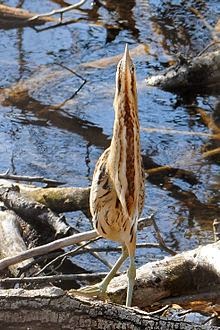
photocopy: wikipedia
source: Brøndegårdsamlingen, folk og flora 2 ; DOF Danmarks fugle,
photo: grethe bachmann, Lille Vildmose, July 2014.


.jpg)
