Sunday, February 22, 2009

Milvus milvus
Red Kite/Rød glente


photo 2008 Skagen: stig bachmann nielsen, Naturplan Foto

The red kite is a fantastic flyer. With its long, forked tail, its long wings with a span of 145-165 cm and the rust-red colour it is a beautiful and striking bird of prey.

The Danish name glente derives from Old Norse gleda, which belonged to Indo European glend(h) , meaning to glide. The English name kite because it hangs for hours like a"kite" above the forest, marking its territory.

Its habitat is mostly inside Europe. In the beginning of the 1900s the kite was almost exterminated in Denmark because of shooting and putting down poison, but after a total protection from 1922 the species re-immigrated in the 1970s from the growing Swedish and German population and has since spread slowly in Denmark.

2007 was a breakthrough year with 46 breeding couple in Denmark. The South Swedish population of kites has grown from 20 breeding couple in 1960 to over 1200 in 2007. But the kite is still threatened, among other things because of direct persecution on their overwintering places in Spain. The international pressure has diminished the problem.

In Denmark the kite is on the Red List which is an international commitment. The Danish Red List was updated in 2005.

The red kite plays an important role as Nature's garbage man. It also feeds on amphibians, reptiles, mice, rats, little birds, crows and seagulls.

Weather Omens, Superstitions etc.:
If the kite was white beneath the wings when arriving in spring you had to be prepared for still another snowy weather.

It the kites fly high playing with one another the weather will be beautiful; if the kite screams a lot then rainy weather is on its way - and if it flies down into the farm yard it will be stormy weather.

The maid in a vicarage stole a pair of scissors and the vicar - who was a "wise man" - changed her into a kite, therefore its tail is forked.

You must not look for at kite, it has a hole in its wings and it is dangerous to look through it.

When the little birds fight they make the kite a judge.


photo 2008 Skagen: grethe bachmann
Along the Beach.


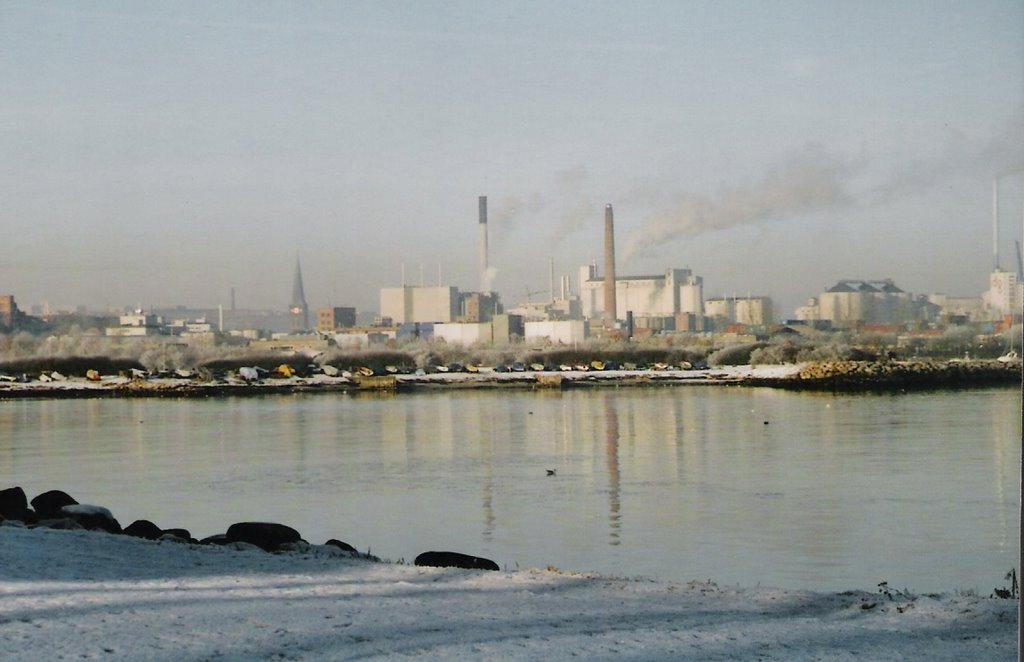
airy smoke in harbour
people working
cathedral vanishing behind chimneys
but it is still there


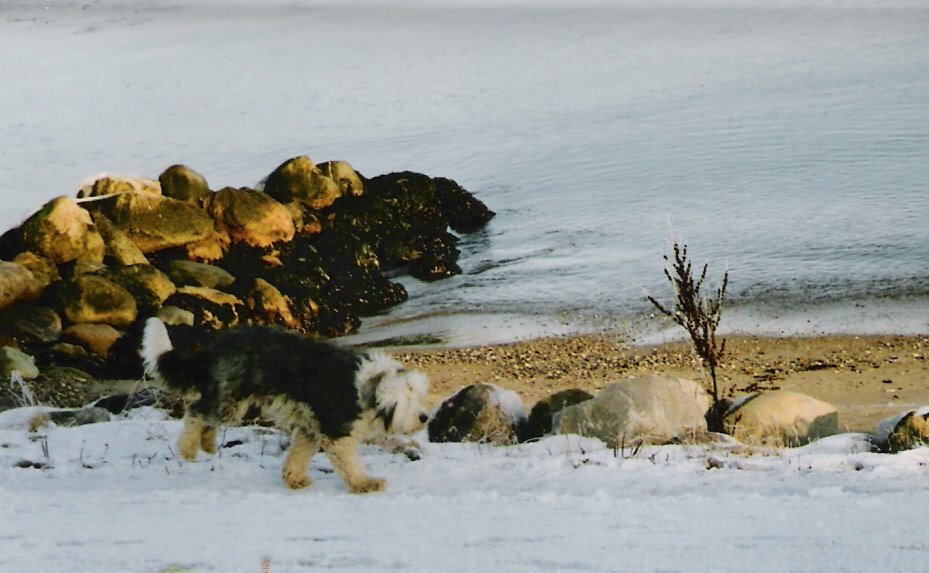
hey you dog on the beach!
lost in a dog's world
dressed in bushy eyebrows
and Tibetan fur from Benedikte Utzon?


sea and sky in one
pearly blue
fluorescent lavender
screaming seagulls
ducks and seaweed


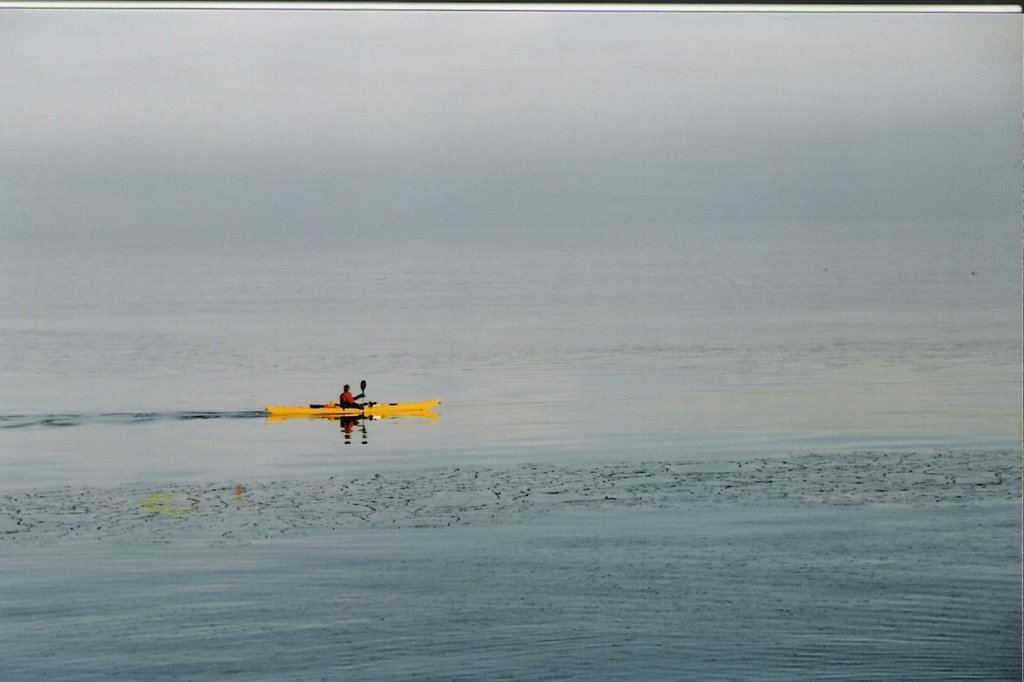
red man in yellow boat
sailing in blue space
enjoying life
on a cold day in February.

photo: gb, Strandvejen Århus
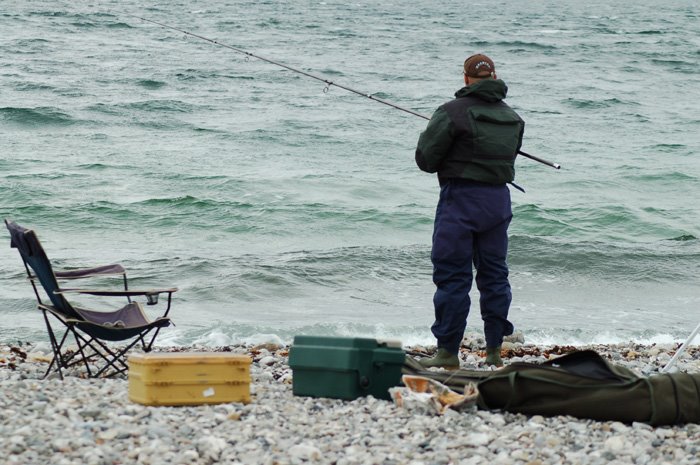
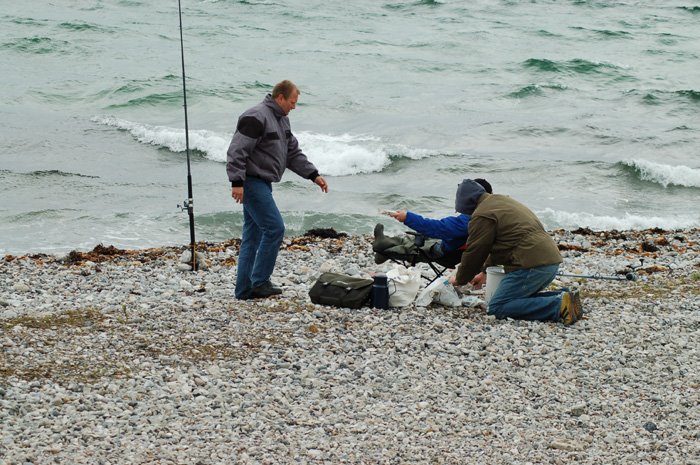
Sletterhage, Helgenæs, A Fishing Day


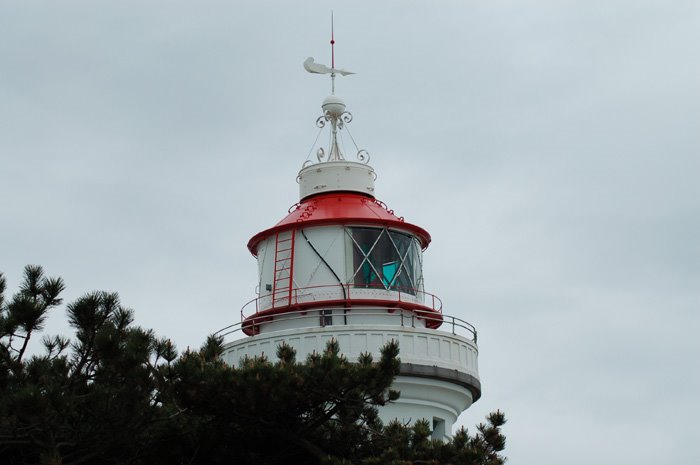
Sletterhage Lighthouse on Helgenæs, Djursland, Jutland


It has always been my private conviction that any man, who pits his intelligence against a fish and loses, has it coming.
John Steinbeck


The fishing was good, it was the catching that was bad.
NN


An angler is a man, who spends rainy days sitting around by the beach doing nothing, because his wife won't let him do it at home.
NN

photo: grethe bachmann, Sletterhage, Helgenæs

Tuesday, February 17, 2009

Quote of the Day


Asger Jorn /Vejle Museum of Art

Humans need fantasy to be human. To be the place where the falling angel meets the rising ape.
Terry Pratchett.

photo 2009: gb, Vejle Museum

Monday, February 09, 2009

Canoeing on a Cold Morning...


To follow the drops sliding from a lifting oar,
Head up, while the rower breathes,
And the small boat drifts quietly shoreward...
Theodore Roethke (The Shape of Fire)

photo:grethe bachmann, Århus Bugt

Sunday, February 08, 2009

STREETART

Vejle Museum of Art /
Vejle Kunstmuseum


A special exhibition in Vejle Kunstmuseum is STREETART which takes its starting point in the graffiti as it is seen in the public area, but also in streetart in general. Most artists at the exhibition are former graffiti-painters. The artists are Anders Reventlov Larsen, Clean, Frodo Mikkelsen, HuskMitNavn, OEPS Crew, Rene Holm and Søren Behncke (Papfar). They express themselves in traditional painting and sculpture but the figures from their streetart are often still there. Their art is cunning and underneath there is a sharp criticism of society - although it also has a humorously touch.

Link
Vejle Kunstmuseum

photo January 2009: grethe bachmann, Vejle Kunstmuseum, southeast Jutland

Ebeltoft Glasmuseum - Exhibition "antARCTIC"


Artist: Peter Bremers, NL


The artist Peter Bremers from the Netherlands was inspired from his travels to Antarctic, Greenland and Svalbard. At first he was told that creating these glass sculptures would be impossible , but the final result is absolutely stunning. There is much more of those brilliant sculptures in the exhibition - in all the fantastic colours of the ice-landscape. The turquoise and blue shades are so beautiful and here are a few examples.

Link:
Ebeltoft Glasmuseum

photo February 2009: grethe bachmann, Ebeltoft Glasmuseum, Ebeltoft, East Jutland

Tuesday, February 03, 2009

February


February when the grey days of winter seem endless
Misty days when the faithless sun has gone
To another place
How far?


February when all flowers hide their little heads
Hopeful days when the lovely sun returns
Spring is near.
That's all.

photo February 2009: grethe bachmann, country road by Haraldskær, southeast Jutland

Tuesday, January 27, 2009

THE CAT


Vejle Kunstmuseum, section of painting, Albert Bertelsen: Persian Cat

Our sweet little cat is nothing less than a mini-tiger. But in spite of the close kinship to a dangerous carnivore like the mighty tiger it is the most charming and friendly little pet. Like other cats the domestic cat is an individualist. It has kept its independence and its wild instincts uninfluenced by humans although it has been a pet during thousands of years.

The cats nice paw-tracks lead back to Egypt where it was a common domestic animal in the period around 1600 BC according to old inscriptions. In the 19th century a temple on the river Nile was excavated and a graveyard with 300.000 mummified cats were found. They were sent to England and sold as a fertilizer, but fortunately a few made it into museums. Some scientists mean that the Egyptians in the beginning only used the cats for religious purposes and later discovered their utility value.

In Egypt it was once believed that the life-giving rays of the sun were kept in a cat's eyes at night for safekeeping. Sacred cats kept in a sanctuary in ancient Egypt were carefully tended by priests who watched them day and night. They made their famous predictions by interpreting the smallest purr, stretch or whisker twitch.

After the Roman had conquered Egypt they brought cats to Rome and later the cat was spread with the Roman armies and traders to all of Europe and Asia. In the East the cat was domesticated later that by the Egypts, probably about 4000 year ago in China and ab. 1600 years agot in the rest of Asia. The American continent first knew cats when Columbus brought ships cats with him. In Rome the cat also had a religious significance sine the Queen of Heaven, the moon goddess Diana ( Greek mythology Artemis), was often pictured with cats at her feet as a symbol of freedom. In Rome the cat races were mixed and thus the European domestic cat came into existence.

A Japanese myth says that cats turn into super spirits when they die. According to Buddhistic religion the body of the cat is the temporary resting place of the soul of very spiritual people. A Thai legend tells of cats that guarded a temple from Burmese invaders. They saved the temple treasure, a golden goblet belonging to the Buddha, by hooking their tails around it and not letting go. This accounts for the kink at the end of almost all Thai cats. Another story is that when a princess went to bathe and gave her rings to a cat to guard it, kinked its tail so they wouldn't fall off.

Traits associated with cats include cleverness, unpredictability, healing and witchcraft, since in ancient times it was believed that witches took the form of their cat at night. Folklore has it that if a witch becomes human her black cat will no longer reside in her house. It was largely in the Middle Ages that the black cat became affiliated with evil. Because cats are nocturnal and roam at night, they were believed to be supernatural servants of witches or even witches themselves. Partly because of the cat's sleek movements and eyes that glow at night they became the embodiment of darkness, mystery and evil, possessing frightening powers. If a black cat crossed a person's path without harming them this indicated that the person was then protected by the devil. Often a cat would find shelter with older women who were living in solitude. The cat became a source of comfort and companionship, and the old woman would curse anyone who mistreated it. If one of these tormentors became ill, the witch and her family were blamed.

In the 1500s houses had thatched roots - thick straw, piled hight, with no wood underneath. It was the only place for animals to get warm , so all the pets - dogs, cats, and other small animals, mice, rats, bugs lived in the roof. When it rained it became slippery and sometimes the animals would slip and fall off the roof. Hence the saying: "It's raining cats and dogs."

In the mountains of Transylvania and other eastern European countries it was common wisdom that if a cat jumped over a dead body the unfortunate corpse was doomed to eternity as a vampire. Immigrants from eastern Europe surrounded the coffins of their dearly departed loved ones with hundreds of blazing candles to keep the curious cat from leaping over it and preventing the spirit from resting in peace.

Denmark:
Findings of cat skeletons by Dannevirke show that the cats came to Denmark in Roman Iron Age ( ab. 1 -600 AC) At this time the Scandivanians were trading with the Romans who had conquered Germania. From the same period are found cat remains in Sweden. It is presumed that the cat was a very welcome animal because the black rat was a big problem at the farms. In the Viking period the cat had found its place in the Norse mythology as a fertility symbol and as a follower of the witches of both sexes. Freya, the goddess of love and fertility, drove in a chariot pulled by two black cats. Some versions claim they became swift black horses possessed by the devil. After serving Freya for 7 years the cats were rewarded by being turned into witches, disguised as black cats.

But when Christianity came to the North in the end of the Viking period the cat went into a gruesom future. The monks who came to the Scandinavia could not impress the Vikings with gold. Therefore they started a savage persecution of everything connected to the old world of the old gods. Unfortunately the cat was the follower of the witches and Freya's special friend and a symbol of the old religion which the monks and priests now wanted to exterminate . During the Middle Ages the cat was hunted with all means and considered the devil's messenger and a vermin. Later when the witch burnings took fart black cats were burnt at the fire together with the witches.

The history about the cat is a long and dramatic story, from a wild animal in pre-historic time, during centuries where it was worshipped as a holy creature and after this degraded to be a tool of the devil. But today the domestic cat is a popular and beloved pet. Its popularity as a house pet is both because of its beautiful looks and its inner qualities. There is an atmosphere of peace and quiet from a sleeping cat in on the soft blanket in the best armchair. Worth much in our rush of modern life.

Link:
Vejle Kunstmuseum

photo Vejle Kunstmuseun january 2009: grethe bachmann

Friday, January 23, 2009

Quote of the Day


In all things it is better to hope than to despair.

~Johann Wolfgang von Goethe


photo: grethe bachmann, Dandelions

Wednesday, January 21, 2009

Flax and Fairy Flax

Flax /Hør =Linum usitatissimum
Fairy Flax/ Vild Hør =  Linum catharticum


Linum austriacum/Flax/Østrigsk hør
Møn 2008
(invasive plant)

Linum catharticum/Fairy Flax/Vild Hør
Svinkløv 2008

Flax is native to the temperate climates of Europe.The flowers are skye-blue and the fruit is a ball-shaped capsule. Flax has been cultivated for about 700 years for its oily seeds and linen has been produced from its fibres. It is now mostly cultivated for the oil and the seeds in Europe, North America and Asia, while the linen production was reduced when cotton came to. Linseed oil is also used in cooking and as a mixture by painters.

Medicine.
Flax was always a treasured plant. The Greeks soaked flax in water and called it linon. They drank it as a softening means for the intestine. Seeds soaked in water is mildly laxative and eases an irritated mucous membrane -and various flax-remedies are still used against constipation in the alimentary canal. It was also used in a compress in order to ease pain and to get rid of an abscess. Flax tea was effective against stomach pains and disorders in the urinary system.

Superstition
Straying flax in front of the door was considered necessary in order to keep away the Devil and other evil spirits. It people were obsessed with sinful thoughts they had to throw flax behind their shoulder in order to get rid of these thoughts. To sow flax-seeds upon the grave prevented the dead from haunting the house. Flax seed was put into amulets against evil eyes. In ancient Egypt the mummies were swept in a fabric which contained linen beacuse it gave a good sleep.

photo 2008: grethe bachmann

Friday, January 16, 2009

Bittersweet Nighshade/ Bittersød natskygge
Solanum dulcamara


Bittersweet Nightshade with green and red berries.

Bittersweet nightshade is native to Europe and Asia and widely naturalized elsewhere. The purple flowers in loose clusters are star-shaped with five petals and yellow stamens. The fruit is an ovoid red berry, (unripe it is green), soft and juicy and poisonous to humans and livestock but edible for birds. As with most Solanum species the foliage is also poisonous to humans. It has caused loss of livestock and pet poisoning and has caused death in children who accidentally picked the berries, probably because it was growing with black berries. Most animals will avoid it because it has a strong unpleasant odor.

Solanum was derived from the same Latin word as solace and was likely given as a name for this weed becuase of its many medicinal uses. Dulcamara is a combination of Latin words meaning sweet-bitter. The common name refers to a toxin in bittersweet nightshade that is said to leave a bitter and then sweet taste if ingested.

Bitter nightshade was used to treat asthma, bronchitis, jaundice, kidney problems, rheumatism, skin diseases, syphilis and to counteract witchcraft. Today it is used in naturopathy and herbalism and is considered by some to be a herbal remedy for treating herpes and allergies.

Other common names for Solanum dulcamara include trailing nightshade, bittersweet, climbing nightshade, blue bindweed, fellenwort, dogwood, poisonflower, snakeberry etc.


photo 2008: grethe bachmann, Krap Vejle, North Jutland

Wednesday, January 14, 2009

January Afternoon

The light is gradually returning


and darkness will be a sunset soon..........


the beginning is a rosy horizon in the afternoon.........


and the whooper swan is singing.

photo January 2009: grethe bachmann, Egå Engsø, Århus
A Happy Dog


The dog was created specially for children. He is the god of frolic.
~Henry Ward Beecher

photo January 2009:grethe bachmann, Moesgård Strand, Århus

Monday, January 12, 2009

10th of January 2009


Icy lake
Howling wind
Now it is the time for home.

photo 10/1-2009: gb
The Tollund Man from Iron Age /
Tollundmanden
Silkeborg Museum, Jutland


The Tollund Man was discovered by two brothers from Tollund in 1950 in a bog in Bjældskovdal. (close to Tollund and Bølling Sø). He is probably the most well-preserved body from pre-historic times in the world. He was approximately 30 to 40 years old when he died. The examinations showed that he measured 161 cm when he was discovered, but it is likely that he shrank a little during his stay in the bog. The head is amazingly well-preserved - he looks as if he is sleeping. His hair is short and covered in a leather cap made of sheepskin. He had a rope around his neck, one of the indications which told the forensic examiners that the Tollund Man had been hanged. He was probably a sacrifice to the gods.

The stomach contents were examined by a specialist in plants from the Iron Age. There were no traces of meat, fish or fresh fruit, only traces of grains and seed. The meal consisted of some kind of porridge or gruel made primarily of barley and flaxseed, false flax and knotgrass and about 40 different kinds of seeds.

Read the full story: The Tollund Man (permanent exhibition: Silkeborg Museum )

photo 10/1-2009: stig bachmann nielsen Naturplan foto

Iron Age Fashion/ Hairstyle/ Frisurer i Jernalderen


Silkeborg Museum, Jutland


Some hair styles from a comprehensive Iron Age exhibition in Silkeborg Museum, Jutland. Many findings from the Iron Age makes it possible to imagine how people looked and how they were dressed in that period.


The exhibition is constructed around artefacts and replicas, fx textiles and clothing. In a heath, Lønne Hede by Varde was in an Iron Age burial found a young girl who wore a pretty dress in blue and red colours. The blue colours came from the plant vajd (Isatis tinctora)and bands and edges were in fine red-blue patterns. The blouse on this reconstructed model is kept together with jewelry pins which were found upon a burial place in Vinding ab. 20 km south of Silkeborg. The dress to the right is a reconstruction of a dress worn by a woman who was found in a moor, Huldremosen at Djursland . Her clothes were a cape of sheep skin and a woolen skirt woven in a fine check pattern.

Link: Silkeborg Museum

photo Silkeborg Museum 10/1-2009: grethe bachmann, Silkeborg Museum, Mid Jutland

Thursday, January 01, 2009

The First January Afternoon 2009


"January is the quietest month in the garden. - But just
because it looks quiet doesn't mean that nothing is happening.
The soil, open to the sky, absorbs the pure rainfall while
microorganisms convert tilled-under fodder into usable
nutrients for the next crop of plants. The feasting earthworms
tunnel along, aerating the soil and preparing it to welcome
the seed and bare roots to come."

- Rosalie Muller Wright, Editor of Sunset Magazine


photo 1/1-2009: grethe bachmann, Årslev Engsø

Sunday, December 21, 2008

The Hardest Part of Skating is the Ice


photo Dec.2008: grethe bachmann, Randers, East Jutland
Ancient Belief in the North.


Ancient Belief.
The ancient belief in the gods were the attempts of humans to explain the mighty powers of nature and life. They felt dependent and wanted to be on good terms with these powers. During Stone Age they sacrificed to creatures which they believed lived in nature, in trees, in water streams and in fire. In Bronze Age was invoking the heavenly phenomenons especially in force. The god of thunder,Thor was considered a god who kept an eternal fight against the trolls which destroyed the crop and sent diseases. The gods were worshipped in the open, especially in sacred groves where the sacrificial feasts were celebrated. In the same place people had thing meetings and from this origin came thing places like Lund in Scania and Ringstedlund at Zealand.

During Iron Age the gods were of a more personal character. People built gudehuse/Hov = temples and carved the pictures of the gods in wood. The significance of the gods was more like a relation to the people. The god Thor became a guardian of human life in all forms and not least of the peace in the things and the sepulchral monuments, he killed the evil vætter (demons) with his stone hammer Mjølner .The young Balder became a special good too.The west German tribes worshipped another god whose fame spread stronger and stronger to the North. This was Odin , and elderly man, always hunting on wild travels, riding the storm horse. In the storm he takes the souls from the dead along to the dark land of the dead, Hel, which becomes a sinister and disgusting woman, or they are brought to Valhal, the valley of the those killed in the war. He is the god of those killed in the war "Valfader and the giver of victory" and he was therefore especially envoked by warriors. In this way every nature force was invented into a good and supernatural human. The reasonable friendly gods were called Aser.


In fjeldene/the mountains lived the huge misanthropic jætter (giants), in lesser rocks and stones lived the little dwarfs, the finest of all blacksmiths. In the meadows lived elves and fairies. In lakes, water streams, everywhere lived supernatural vætter which humans had to beware of.

But also dead people did live. They returned to the surviving, especially at night and weighed heavily upon them and scared them in their dreams. In the ancient language it was not called "I dream" - it was called "I dream me", i.e. "it weighs heavily upon me". When a father died the son had to give him jewels, a horse and a ship with him in the grave hill where the dead now had to live. He had to bring sacrifices at the grave so the dead would not grow angry and injure him. From all these spirits in the hills, in the air, from ghosts and dreams wise men and women could find out secrets and legends, make magic and be fortune tellers. They were sitting out in the open on sacred nights mostly on cross roads to receive messages from the spirits.


The Nordic people knew of no special priesthood. The worldly chief herse (the leader of the district, the earl or the king were at the same time a sacrificial priest.) The sacrifice was always bloody , animals as a rule, sometimes humans, prisoners of war or trælle (slaves). The Blot (sacrifice) took place in sacred places , in a holy grove or a temple, a hov. The blood was spread on the walls of the temple or over the crowd. Then there was a feast and the drinking horns were emptied sending a message to the gods about the wish for a good harvest and luck in war etc. Sometimes people gathered from big areas for the big Fællesblot (common blot) , either when spring came or when summer ended - and especially in midwinter, when the sun Freyr returned promising light, warmth and fertility.

A Greek historian Prokopios from the 500s tells much about the North. He knew the tribe of the Danes upon the Jutland peninsula and says that the finest sacrifice in their opinion was the very first prisoner of war. They sacrificed to the highest god(Odin) and they did not just sacrifice the prisoner, they also hang him in a tree or threw him upon thorns or tortured him in other ways. Songs and legend tell about the god's/aserne's fight against the jætterne (giants)- especially during the Viking Period there was a rich poetry describing the gods, which is preserved by the Icelandic people in den ældre Edda and den Yngre Edda.

photo 2005/2006 grethe bachmann