Wednesday, January 13, 2010

Bird's Foot Trefoil/Kællingetand

Lotus corniculatus


Lotus corniculatus, Bird's-Foot Trefoil is native to Eurasia and North Africa, but it grows in most of Europe and also in Denmark, where its Danish name Kællingetand means "Old Woman's Tooth". It is a perennial herbaceous plant, similar in appearance to some clovers. The name Bird's Foot Trefoil refers to the appearance of the seed pods on their stalk. It can survive fairly close grazing, trampling and mowing and is most often found in sandy soils. It flowers from June until September.It is also known in cultivation in North America as Birdfoot Deervetch. It has become an invasive species in some regions of North America and Australia.

The plant has many common English names in Britain, but they are now mostly out of use. The names were often connected with the yellow and orange colour of the flowers, fx "eggs and bacon" or "butter and eggs". A double flowered variety is grown as an ornamental plant. It is used in agriculture as a forage plant. In the beginning of the 1800s it was cultivated at a farm in Mid Jutland, but was given up and first cultivated again from the 1880s. The plant was mentioned in 1910 as the only one, which could replace the red clover, and in perennial grass fields it was indispensable. But many farmers did not acknowledge this.

The plant is an important nectar source for many insects and is also used as a larval food plant by many species opf lepidoptera such as Six-spot Burnet.

Fresh Birds Foot Trefoil contains cyanogenic glycosides and is thus poisonous to humans.

The plant is one of the few flowers in the language of flowers that has a negative connotation, symbolizing revenge or retribution.

In folk medicine Birds Foot was dried and put on snaps or in tea, this was used as a stomach medicine. The roots were used as a blood cleansing remedy.

The plant gives a fine yellow in yarn dyeing.

Source: Folk og Flora, Dansk Etnobotanik 3, V.J.Brøndegaard

photo Stigsholm Sø 24. May 2009: grethe bachmann
Hjerl Hede
Settlement Stone Age /Neolithic Age
School Classes

Reconstruction of Stone Age house and a field with fences.

The Stone Age settlement at Hjerl Hede is a reconstruction of a settlement from bondestenalderen= Neolithic Age ab. 2800 BC. Upon the settlement are made some experimental archaeology via practical tests of various techniques and tools based upon archaeological findings - which can bring a better understanding of the conditions of life in the Neolithic Age. During the last decade the experiments have primarily been reconstructions around production of flint tools, ceramics, skin tanning, making a dugout, copying Stone Age clothes, making bows and arrows, archery and hunting techniques and cooking methods.


Reconstruction of Stone Age house

The Stone Age settlement at Hjerl Hede has been occupied since 1955, and every summer is shown how daily life was ab. 5000 years ago. The present houses in the settlement haven been constructed in consultation with the National Museum in 1989 and 1994 from archaeological findings from Limensgaard and Grødbygaard at Bornholm.


Stone Age Oven

Ab. 4000 BC the knowledge of agriculture and cattle breeding came to Denmark. From being wandering hunters, people now settled down permanently. The settlements were placed in areas with a varied landscape, where there were good possibilities for farming, animal husbandry, hunting, fishing and gathering wild plants and berries.

The settlers first cleared and burnt some forest in order to create farm land for cultivation. Findings show that they used a primitve plough called an ard, and they cultivated rye and wheat.The Stone Age farmer had pigs, cattle, sheep and goats. From archaeological excavations are seen that the farming demanded new tools like sharp-edged flint axes, flint sickle and clay vessels. Later, ab. 1700 BC the Danish people were really farmers, the tamed animals were used more effectively, the cattle was milked and the fields were ploughed with wagons and draught animals. The wool of sheep was more than earlier used for clothes.

The Danes were farmers, and the main part of the population continued to be for the next ab. 6000 years. First at the breakthrough of the industrialism in the late 1800s the Danish farmer society began to march towards the industrial society, and up till the 1930s Denmark was still an agricultural country.


oak boats/dugouts

At the Stone Age Settlement at Hjerl Hede is each summer educations for school classes and other teams, who want to learn about life in Stone Age.

At the settlement are fire places , oven and flint-work, tanning and other working processes. The classes at the stone age settlement are meant to bring the students a feeling of technology and life conditions ab. 5000 years ago, where flint, bone and wood were among the most important raw materials, and where food and clothes had to be obtained from wild animals and plants in the nature, which surrounded the humans.


photo Hjerl Hede: grethe bachmann

Tuesday, January 12, 2010

Omens about Winter


The crow is a wise bird - it takes care not to get too close to humans. According to the omen there will be hard frost and driving snow, if the crows seek to town.

If many eiders gather in the inlet, the winter will be severe.

The winter will become hard if the wren seeks to human homes.

If you see the herons standing along brooks and water streams inside the country at autumn and winter time the cold will be hard and the winter will draw out.

If the mice gather much corn the winter will be hard.

Finally a positive one:
If the swans migrate north in January , spring will arrive early.


Notice 22. January:
Much sun on that day is a sign of that winter will soon be over.


photo:gb
Blue Tit/Blåmejse


They are the most charming little birds
Do you think he's showing off this little fellow?

photo: gb

Sunday, January 10, 2010

Spring in Advance
"Now I shall go and buy hyacinths" says a sweet little spring song. The scent of hyacinths is wonderful. It is just like standing in the middle of spring a long time before the sun begins to give us some warmth, and one of the best ways to survive the long and dark winter. The hyacinths are for sale in December and in January they mark the transition from winter to spring.

In Greek mythology Hyakinthos was a young man admired byApollo andZephyr,but killed by a discus in a jealous fight between the two gods. The flower was allegedly named after him when it sprang from his blood.

It has a long history of cultivation as an ornamental plant, grown across the Mediterranean region and later France(where it is used in perfumery), the Netherlands(a major centre of cultivation) and elsewhere. The Garden Hyacinth flowers in the early spring. They grow best in full sun to part shade in well-drained, but not dry,soil. It requires a winter dormancy period, and will only persist in cold-weather regions. It is grown for the clusters of fragrant, brightly-coloured flowers. Over 2,000 cultivars have been selected and named, with flower colour varying from blue, white, pale yellow, pink, red or purple; most cultivars have also been selected for denser flower spikes than the wild type, bearing 40-100 or more flowers on each spike.

The plant is pollinated by different insects such as honey bees. The flowers are very fragrant and attract the insects as rewarding them with nectar.

H. orientalis contains alkaloids and is toxic if eaten in large quantities. The bulb, however, is the most poisonous part and should not be ingested under any circumstances.


And now it is high season for tulips - not in the garden but in the gardeners' hot houses. It's a luxury to buy a large bouquet of tulips and bring it back home.

The tulip origins from Turkey and Persia (Iran) where it was a popular and cultivated plant long before it came to Europe. Tulip bulbs and seed arrived to the European countries in the late 1500s. Those lovely flowers are in so many colours and shapes that it must have been wonderful to experience the first unknown bulbs in bloom. The history says that an Austrian envoy in Constantinople sent tulip seed and bulbs to Vienna in the middle of the 1500s. From here the tulip spread to Germany, France; Netherlands and England. The colourful bulb-plant became quickly popular by the European nobility, but it was rare and very expensive. Tulips became an investment object with no parallels and beyond reason.

In an old garden lexicon is an example of a trade with tulips: For one bulb of the sort Viceroy is paid two load of wheat, four loads of rye, four fat oxen, two fat pigs, 12 sheep, two hogshead wine, a bed with linen, a suit and a silver cup - all valued at 2500 guilden. This was crazy and called "tulipomania" - and this disease raged first of all in the Netherlands in the period 1630-37. Then the prizes rattled down - the tulip was willing to reproduce.

The tulips came to Denmark after 1900,but it has become one of the most popular cut flowers in this country.

Have a Nice Day!

Sainfoin /Esparsette

Onobrychis viciifolia

Høvblege, Møn , at calcareous soil.

Sainfoin is a very attractive wild flower with pinnate leaves and dense spikes of pretty pink flowers with darker veins. Onobrychis means "devoured by donkeys" from Ancient Greek ónos (donkey) and brýkein ("to eat greedily"), referring to sainfoin's good properties as a forage plant for large mammalian herbivores. Sainfoin is derived from Old French sain foin = healthy hay.

In northern European languages that have been less influenced by French the plants' name usually derives from esparceto, the Provencal term for the similar-looking and closely related sweetvetches (Hedysarum). Examples: Danish esparsette, Dutch esparcette, German sparsette, Russian espartset (Эспарцет) and Swedish esparsett.

Sainfoins are Eurasian perennial herbs of the legume family. About 150 species of sainfoins are presently known. The flora Europaea lists 23 species of Onobrychis; the main centre of diversity extends from Central Asia to Iran. Onobrychis viciifolia is naturalized throughout many countries in Europe and North american grasslands on calcareous soils. Sanfoins are mostly subtropical plants, but their range extends throughout Europe as far north as southern Sweden.These plants grow on grassland, agricultural land and wasteland.

These highly nutritious plants were an important forage for heavy working horses in agriculture, and are still an excellent source of nectar for honey production as well as pollen for bee food. Onobrychis species are used as food plants by the caterpillars of some Lepidoptera species.


Høvblege, Møn, a hillside with lots and lots of various flowers.

Sainfoin was probably from the middle of the 1700s cultivated in Denmark but it never had a large distribution. It was said that sainfoin when used as a fodder for the cattle increased the milk yield and made oxen fat, but horses must have it mixed with other fodder "or else they will grow too fat". It was tested as a fodder in several places with unsatisfying results - but then it was cultivated as an ornamental plant. Not until 1875 the sainfoin became popular and considered a good fodder for cattle in general, since it had a larger nutritional value than clover and lucerne. The milk gets bluish if the cows eat sainfoin.

The birth of Jesus in a humble stable has given ample opportunity for several legends. While the tired parents slept, Jesus was placed in a manger filled with sainfoin. When they awoke they were astonished to find that the dry hay had blossomed, and the baby was surrounded by its beautiful red flowers. Ever since sainfoin has been known as Holy Hay.

In George Orwell's "Coming Up for Air", travelling salesman George Bowling regularly reminisces about the smell of sainfoin in his father's seed shop in Lower Binfield.

photo
Høvblege, Møn June 2007: grethe bachmannn.

Friday, January 08, 2010

Time for Tea.


I'm mostly a coffee-drinker, but I also like tea. Coffee in the morning and when I need some energy, sometimes tea in the afternoon and a mild tea in the evening hours when it's soon go-to-bed time.

Tea is as we all know something special in England, but it seems that some of the English customs are slowly being adapted in Denmark. We have now got some good tea-shops, but not places where you can go and have a good cup of tea, we've still only got coffee-places, lots of Baresso cafés etc. - and the terrible tea bags are what you usually get in cafés and restaurants here. So you can only have a good cup of tea at home, when you brew it yourself - but I'll leave the complicated tea-traditions to be told by an Englishman.


In Chinese the word tea is c'ha, which became te in Malaysian. The European languages all have their tea-word from this. German and Dutch tee; French thè and English tea. People drink it all over the world but have various customs. In Russia tea is still brewed in a samovar - in Australia and Ireland they brew the strongest tea. The Arabs are known for their mint-tea served in glasses. The Dutch usually do not put milk in their tea, in China the second cup is considered the best and in Japan they nearly always serve tea for food. Last but not least the English have their Afternoon Tea.


It is said that the tea-bush was discovered more than 5000 years ago by the Chinese emperor Shen Ning. The legend says that the emperor, who was at war, found shadow under a tree, while he was boiling some water for drinking. A leaf from the tree fell down into the boiling water and a wonderful scent spread. The emperor tasted the drink and was delighted.

The tea plant has been cultivated for thousands of years in the subtropic countries around the Equator, i.e. China, India, Ceylon, Indonesia and East Africa. The tea-drink came to Europe in the middle of 1600s via the Dutch traders and it is today drunk as a common soft drink. But originally tea was considered a medicine. A cup or two was taken on an empty stomach and was said to remove fever, headache, stomach ache and pain in the joints.


Black Tea
The top class of black tea is sorted i.e. in Flowery Orange Pekoe, Orange Pekoe and Pekoe. Flowery means that there are many leaf buds in the tea. Orange is the name of a grading and has nothing to do with oranges. The roughest leaves are sorted i Pekoe Souchong and Souchong. The crushed tea leaves are also being sorted. The finest are Broken Pekoe and Broken Tea. The names varie in the various tea-districts. What is left after the sorting is sold as Fannins or Dust. This is what often is found in the tea-bags! The idea of tea-bags is said to origin from 1904, where an American trader sent his tea-samples out in little silken bags. The customers were too lazy to take the tea out of the bags when they made tea in order to test the samples. They just put the silken bags in hot water.

Green and White Tea.
Green tea is sorted in grades where Gunpowder, small young leaves rolled into little pellets, is the finest and most costy. Green tea has in thousands of years been famous for its healing qualities, which is caused by its content of vitamines, minerals and the calming substance tannin. The tea is also said to prevent holes in the teeth. Green tea is a good tea for beginners, it is mild and very aromatic in a soft way. The last new hit is White tea with a soft and almost fat taste. White tea are young withered "tips", which are being dried in natural sunlight. Like the green tea it is unfermented and has a hight content of antioxidants and a low content of tein.

Earl Grey
The aroma-tea is black tea mixed with dried fruits or spices or tasted with evt. fruit oils. The legend says that when Earl Grey himself once was invited to tea in China, he bit in a bergamot-fruit ( kind of citrus) which his hosts told him to do, and in this way he got the idea to put this bergamot-oil in the tea. Earl Grey tea is extremely popular all over the world .

photos: "History of Tea" at Silkeborg Kunstcenter, Mid Jutland: grethe bachmann

Wednesday, January 06, 2010

Red Squirrel/Almindeligt Egern

Sciurus vulgaris fuscoater (in DK)


Squirrel eating fungus............

The Latin name for squirrel is sciurus and means - 'he who sits in the shadow of his tail'. The Danish name egern is an ancient word with roots in Indo-European and Sanskrit language. In Old Norse its name is ikorni. It has been living in Denmark for a very long time, archaeologists have found squirrel-bones which are 8-9000 years old. Today the squirrel is totally protected in Denmark.

In Norse Mythology Ratatosk (Sharp Tooth) is a little squirrel that runs up and down with messages in the world tree Yggdrasil and spreads gossip between Vedrfolnir at the top of the world tree and Nidhoggr beneath its roots. Vedrfolnir (the one bleached by the weather) is the hawk sitting between an eagle's eyes, and Nidhoggr is the snake (dragon) eating of the world tree's roots. Ratatosk is the messenger between worlds -and he can move from ice to fire and everywhere in between. He speaks with everyone, both the As-Gods and the Norns. Today Ratatosk is in many modern appearances, in books, novels, poems and games.

The red squirrel is protected in most of Europe, as it is listed in Appendix III of theBern Convention; it is listed as Least Concern on theIUCN Red LIst.

The red squirrel used to be widely hunted for its pelt. In Finland squirrel pelts were used as currency in ancient times, before the introduction of coinage.The expression "squirrel pelt" is still widely understood there to be a reference to money.

The squirrel is a charming little fellow, with strong energy and eternal curiosity. Its menu is manyfold, cones, nuts, buds, beech nuts, acorns, fungi, fruits, berries, larva, insects. It's also a little egg-thief, stealing eggs from little birds and from wood pidgeons and pheasants.

The red squirrel is easy to recognize and is common in Denmark - especially in forest areas. It lives alone and defends its territory against other squirrels. It is active in the day hours and sleeps and rests at night in a nest. The squirrel usually builds several nests inside its territory. The nests are made by branches and twigs, inside lined with grass, moss and leaves. They are ball-shaped with a diameter of 25-40 cm and the squirrel can close the hole when it stays in the nest. The nests are often placed in a tall fir and not easy to catch sight of. The nest might also be built in a hollow tree or in a large nesting box. The female gives birth each year to two litters each with 3-6 cubs.

Danish squirrels (except at Bornholm) belong to the sub-species Sciurus vulgaris fuscoater.

photo 2008 Forstbotanish have, Århus: grethe bachmann

Tuesday, January 05, 2010

Ribe
A Pretty Birthday Girl is 1300 Years Old


One of the greatest birthdays this year in Denmark happens when the city Ribe celebrates her 1300 years birthday. The earliest traces of Ribe are dated to 710, and it is the oldest town in Denmark. The official opening is Friday 8. January - and the birthday is celebrated with lots of arrangements all year.


Riberhus castle bank and the cathedral.

Ribe has got many fine museums. Especially two Viking museums are a great experience. The museum: Ribes Vikinger has many thousand findings from new archaological excavations. The museum has also a multimedium. At Ribe Vikingecenter 2 km south of the town is reconstructed special plans from the Viking period, among others a market place from ab. year 720. At Ribe Kunstmuseum is an exquisite collection of pictures from Ribe during the centuries, and Danish art from the middle of the 1700s and two centuries ahead, names like Eckersberg, Købke, Rørbye, Marstrand, Anna Ancher, Hammershøi, Krøyer, L.A.Ring, Zahrtmann, the Funen painters and classic modernists.

photo Ribe 2003: grethe bachmann

Sunday, January 03, 2010

January

Anglo Saxon Wolf Monath


It is exciting to know how people lived in ancient times, and the legends are fascinating reading IMO! I have a soft spot for the Anglo-Saxons and this legend fits for January.

The Anglo-Saxons called the first month Wolf monath because wolves came into the villages in winter in search of food. In Teutonic Europe many pagan people were devoted to the wolf, evidenced in the popularity of Wolf or Wulf in place and personal names: Beowulf, Athelwulf, Wolfram etc. The old Saxon sacred year began with Wolf-monath - Wolf month - and the wolf skin was believed to impart power and healing, while its teeth were worn as an amulet. Cults such as that of the Great Goddess Lupa and Lupa-Kali - an Oriental goddess in wolf form - had many devotees, while the Amazones who worshipped the Triple Goddess had a tribe named the Neuri who were said to turn into wolves for several days each year while a similar tale is told of an Irish tribe.

The 1st of January was a highly significant day in medieval superstitions regarding prosperity, or lack of it, in the year ahead. A flat cake was put on one of the horns of a cow in every farmyard. The farmer and his workers would then sing a song and dance around the cow until the cake was thrown to the ground. If it fell in front of the cow that signified good luck; to fall behind indicated the opposite.

Calennig is the Welsh tradition of New Year gift giving. A Calennig is an apple with three twig legs stuck with dried fruit, cloves and a spray of evergreens stuck into the top. It is a traditional Welsh decoration to give friends and families on New Years day to with them luck during the new year. Placing a calennig on the window sill or shelf will bring luck to the house. Calennig is a Welsh word meaning "New Year celebration/gift," though literally translates to "the first day of the month," deriving from the Latin word kalends. The English word "Calendar" also has its root in this word.

In the beginning of the new year is the time to make New Year resolutions:
1) ?
2) ?
3) ?

I'll think about that to-morrow like Scarlet did!

photo: gb

Wednesday, December 30, 2009

Avalon


Come oh traveller to our home
The home of other ways
Travel to Avalon's misty shore
And look at her smiling face.

My island of Avalon lies out there on the other side of the bay. In the real world it is the island of Samsø, but this doesn't matter if the imagination is strong. I like to walk down to the bay at Århus in the morning. The island is often floating on shimmering air out there in the mist.

At present, the celebration of New Year is a major celebration worldwide. Many large-scale events are held in major cities around the world New Year's Eve being accompanied by the largest fireworks events. In the western culture of the 21th century New Year's Eve is celebrated with fireworks and champagne. In Denmark New Year's Eve also often includes marzipan ring cake, the Queen's New Year's speech and on TV: "The 90 year's birthday". The culmination is when the clock at the Town Hall of Copenhagen strikes 24 and the new year begins.

Celebrating New Year's Eve is not an old tradition in Denmark. In the old days people followed the church year, which meant that new year was celebrated on the first Sunday of Advent. Alternatively they could also consider the new year opening on 25. December on the birth of Christ. In the old agriculture society the custom was to eat dried cod and making fun on the evening of 31. December - the farm people might fire blanks or make noise by the help of empty buckets and jars covered in swine-blatter. The fun was mostly like teasing, and in the end the troublemakers had to be caught and invited into the house to have apple-pie, beer and snaps etc.

In Denmark is a special tradition in having boiled cod with mustard sauce for New Year's dinner. This has brought another tradition, in which the tabloid paper "Ekstrabladet" each year gives a prize "Cod of the Year" to a person who has been extremely stupid in the past year. They have never had any difficulties in finding a prize winner!

Happy New Year to Everyone and thank you for your interest and your nice letters in 2009!

Thyra

Monday, December 28, 2009

Agrimony/Agermåne

Agrimonia eupatoria


Agrimony is native for Denmark. It grows along roadsides, wasteland, hedges and banks. Its natural habitat is woods and fields, but it takes to cultivation easily. Both the yellow flowers and the notched leaves give off a faint characteristic lemony scent when crushed.

In Greek Agrimone means ' to heal the eyes' and the Greeks used the plant to treat ailments affecting the eyes. The Anglo Saxons used the plant for snake bites and treatment for wounds. It contains tannin and bitter substance plus ethereal oil. It was used for leather tanning and dyeing. The whole plant yields a yellow dye.

The medicinal use of Agrimony in Denmark goes probably back to the Viking period, since its fruits were found in the Oseberg ship. It was a common used medicinal plant in monastery gardens. Monks and physicians used it for many ailments: liver and gallblatter disease, inflammation of the urinary system, compress for wounds and other skin damage, and as gargling water for inflammation in mouth and throat.

Folkmedicine
In the 1400s: the seeds were eaten as a protection against various diseases, they seeds were cruched and mixed with honey and goat's milk rubbed against headache, the leaves were used in compresses against fever and lung diseases, the juice from the plant in stomach trouble , warts were rubbed with the plant crushed in vinegar, a "blue eye" was treated with agrimony and egg white, etc.
Christiern Pedersen in 1533: the plant juice mixed with destilled water from Rumex to drink against the plague, winedecoct against malaria, juice against snake bite.
Henrik Smid 1546: destilled water from the plant stops cough, good for patients with malaria, kill intestinal worms.
Simon Paulli 1648: the doctors gave a syrup or a decoct of agrimony for a blocked up liver, the plant mixed in a herbal extract against syphilis, cooked with the root of alant used for bathing frost-bites in hands and feet.

Agrimony was also used as a tea or mixed in herbal teas.

Dried agrimony hung in beer prevents it from getting sour. The plant was also used in fodder for sheep.


Today
Agrimony is not commonly used today, but has its place in traditional herbal medicine. It is frequently used in alternative medicine as a herbal mouthwash and a gargle ingredient and is applied externally in the form of a lotion to minor sores and ulcers.
Caution: this is an astringent herb, do not use if constipated. Do not use internally during pregnancy without discussing with your obstetrician.

Folklore
Witches used it in spells to dispel negative energies and to ward off hexes. Agrimony was said to cause deep sleep. When placed beneath a man's head this sleep would last until it was removed. This passage is from an old English medical manuscript:

'If it be leyd under mann's heed
He shal sleepyn as he were deed;
He shal never drede ne wakyn
Till fro under his heed it be takyn.'

It was also said that the Anglo Saxons included Agrimony in charms and dubious preparations of blood and pounded frogs.

Snaps
Dried spikes are poured over with a neutral snaps (in bottle or jar). Drawing time is about one week, then filter it and let it draw for some time. Thin your drink according to your taste.

Source: V.J. Brøndegaard, Folk og Flora, Dansk Etnobotanik 3, 1979
photo
: grethe bachmann

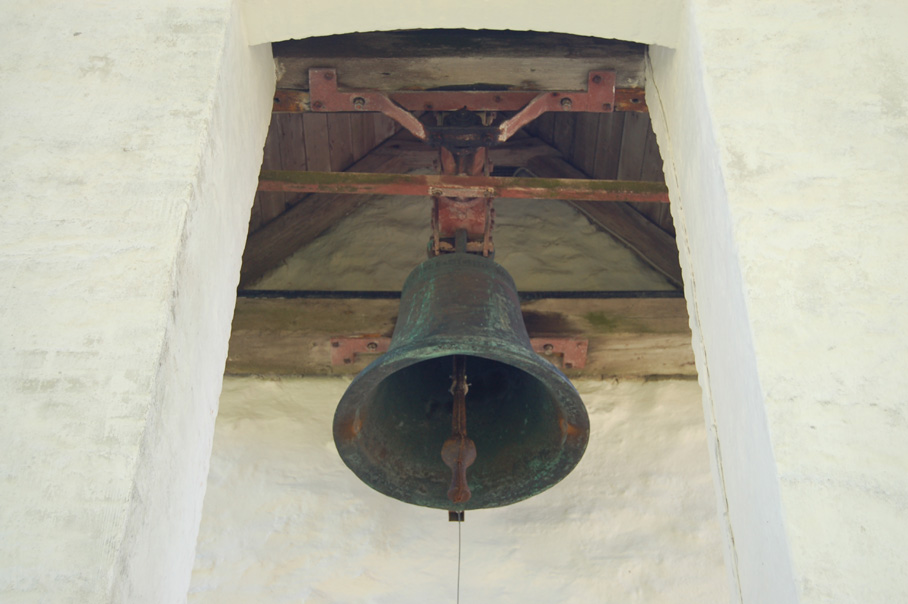
Church Bells


Skanderup Church, Mid Jutland

Church bells became common in Europe in the early Middle Ages. They were first common in northern Europe, reflecting Celtic influence, especially that of Irish missionaries. Before the use of church bells, Greek monasteries would ring a flat metal plate to announce services. The signa and companae used to announce services before Irish influence may have been flat plates like the semantron rather than bells. The oldest surviving circle of bells in the world is housed in St. Lawrence Church, Ipswich.

In World War II in Great Britain, all church bells were silenced, to ring only to inform of an invasion by enemy troops. The episode "The Battle of Godfrey's Cottage" of the BBC sitcom Dad's Army included a scene where the church bells rang by mistake, leading the Home Guard to believe that an invasion was taking place.

The process of casting bells is called bellmaking or bellfounding, and in Europe dates to the 4th or 5th century. The traditional metal for these bells is a bronze of about 23% tin. Known as bell metal, this alloy is also the traditional alloy for the finest Turkish and Chinese cymbals. Other materials sometimes used for large bells include brass and iron.

Bells are also associated with clocks, indicating the hour by ringing. Indeed, the word clock comes from the Latin word cloc meaning bell. Clock towers or bell towers can be heard over long distances which was especially important in the time when clocks were too expensive for widespread use. In many languages the same word can mean both "clock" and "bell". In the case of clock towers and grandfather clocks a particular sequence of tones may be played to represent the hour. One common pattern is called the "Westminster Quarters", a sixteen-note pattern named after the Palace of Westminster which popularized it as the measure used by Big Ben.


Ræhr church, North Jutland

Some church bells are electronically timed to chime automatically. Clocks generally automatically strike, but in the United Kingdom, bells for services, etc., are still almost always rung by people. Some churches use recorded or digitally synthesized bells. In the Eastern Orthodox Church there is a long and complex history of bell ringing, with particular bells being rung in particular ways to signify different parts of the divine services, Funeral tolls, etc. This custom is particularly sophisticated in the Russian Orthodox Church. Russian bells are usually fixed, and are tolled by pulling on a rope that is attached to the clapper so that it will strike the side of the bell.

In the Western world its most classical form is a church bell or town bell, which is hung within a tower and sounded by having the entire bell swung by ropes, whereupon an internal hinged clapper strikes the body of the bell. A set of bells, hung in a circle for change ringing is known as a ring of bells. In the Eastern world, the traditional forms of bells are temple and palace bells, small ones being rung by a sharp rap with a stick, and very large ones rung by a blow from the outside by a large swinging beam.


Tæbring church , Mors, North Jutland, outside bell tower.

The striking technique is employed worldwide for some of the largest tower-borne bells, because swinging the bells themselves could damage their towers. In the Roman Catholic church and among some High Lutherans and Anglicans, small hand-held bells, called Sanctus or sacring bells, are often rung by a server at Mass when the priest holds high up first the host, and then the chalice immediately after he has said the words of consecration over them. This serves to indicate to the congregation that the bread and wine have just been transformed into the body and blood of Christ, or, in the alternative Reformation teaching, that Christ is now bodily present in the elements, and that what the priest is holding up for them to look at is Christ himself.

Famous Bells

The Great Bell of Dhammazedi (1484) may have been the largest bell ever made. It was lost in a river in Myanmar after being removed from a temple by the Portuguese in 1608. It is reported to have been about 300 tonnes in weight. The Tsar bell by the Morotorin Bellfounders is the largest bell still in existence. It weighs 160 tonnes, but it was never rung and broke in 1737. It is on display in Moscow, Russia, inside the Kremlin. The Great Mingun bell is the largest functioning bell. It is located in Mingun, Myanmar and weighs 90 tonnes.

Pummerin in Vienna's Stephansdom is the most famous bell in Austria and the fifth largest in the world. The South West tower of St. Paul's Cathedral in London, England houses Great Paul, the largest bell (16,5 tons) in the British Isles. One can hear Great Paul booming out over Ludgate Hille at 1300 every day. Big Ben is the third largest bell in the British Isles. It is the hour bell of the Great Clock in the Clock Tower at the Palace of Westminster, the home of the Houses of Parliament in the United Kingdom.

The Liberty bell is an American bell of great historic signifance, located in Philadelphia, Pennsylvania. It previous hung in Independence Hall and was rung on July 4, 1776 to mark American Independence. Little John, named after the character from the legends of Robin Hood is the bell within the clock tower of Nottingham Council House. It was the deepest toned clock bell in the United Kingdom until Great Peter of York Minster was incorporated into a new clock chime to celebrate the Queen Mother's centenary. Great Peter is deeper than Little John by only a few Hz. The sound of Little John is said to be heard over the greatest distance of any bell in the UK, occassionally on quiet days being heard in Derby.

photo: gb

Sunday, December 27, 2009

Happy New Year!
Various Customs Around New Year


The New Year is celebrated worldwide with great fun and fervor, it's a perfect time to think of the year ahead and forget the past and at the same time remember to enjoy the celebrations with family and friends. New year is a time for new hopes, festivities and indulgences. The exact date of New Year was not known until the Romans gave the date for the New Year celebrations to be January 1st. It depends on the time zone of the country for the exact time of the New Years Eve.

The regional traditions and customs like taking part in the New Year parade, dancing, singing, enjoying fire works and indulging in parties are all a part of the New Year celebrations worldwide. Gifts are exchanged and people wear gorgeous clothes to make the New Year celebration worldwide more complete. New year is the time to visit families and friends and enjoy eating delicious mouthwatering recipes. Making New Years resolutions on New Year is a custom that is observed worldwide. This custom dates back to the early Babylonians.


Various New Year Customs
Medieval Feast of Fools
In Medieval Britain, January 1. was the Feast of Fools, also celebrated in Paris from about 1198-1438, a day of licensed jesting – a kind of religious April Fool's Day. It was a crazy day on which low clerical officials could swap places with the higher ones, a mock pope was elected and churchmen parodied religious rituals - for just one day. It harkens back to the feast of Saturnalia in ancient Rome, for several days from December 17. when a Lord of Misrule was appointed to rule temporarily for Saturn. It was also known in Latin by various names, including festum fatuorum, festum stultorum and festum hypodiaconorum and was like various other celebrations, such as the Feast of Asses, and the Feast of the Boy Bishop.

Although the festivities often became anti-ecclesiastical, anti-clerical and even blasphemous, for centuries, the Church allowed the people to revel on this day. In 1440, theologians in Paris argued, in defence of the Feast of Fools, that even a wine vat would burst if the bung-hole were not opened occasionally to let out the air. However, there were often objections raised: In Paris in 1199, Bishop Eudes de Sully imposed regulations to ensure that the abuses committed in the celebration of the January 1 Feast of Fools at Notre-Dame didn’t happen again, and perhaps they didn’t for a time. The Bishop of Lincoln, England, was another who condemned the feast mercilessly. The celebration of the Feast of Fools was eventually outlawed in 1555.

Britain
When Scots and northern English people welcome a first-footer (the first person into their home after the stroke of midnight on New Year’s Day), they hope it is a fair-haired man for luck. He must enter by the front door and leave by the back, symbolising the old and new years.
The people of Yorkshire and northern England have among their many old customs the tradition of guising on New Year’s Eve. Guising is a centuries-old practice of going from door to door singing songs - trick or treating at Halloween derives from guising. The Welsh open the back door before midnight on New Year’s Eve to let the Old Year out, then they lock it. At the last stroke of midnight on the clock they open the front door to welcome the New Year.
Ancient Britain gives us many well and sacred spring customs. The first water drawn from a well on January 1 is supposed to bring fortune and happiness, and is called the Cream of the Well. It is customary to leave petals floating on the water. The wells at Wark, in Northumberland, UK, are supposed to have magical powers on New Year’s Day. In Wales, drawing fresh spring water as a New Year’s Day custom might have survived at the town of Tenby as late as the 1950s.

Continental
Polish tradition is for vagabond players to put on street pantomimes on New Year’s Day. Gypsies, too, are on the streets, fortune telling. A century ago the Sicilians on New Year’s Day ate lascagne cacate, or “crappy noodles”, a kind of lasagne. To eat any other sort of pasta today was considered bad luck. Their saying went “Whoever eats macaroni today will have a bad year”. People of Madrid, Spain, have an interesting old New Year’s custom: at the stroke of midnight each person eats twelve grapes. The cinemas will even stop running a movie at midnight to allow the patrons to eat their grapes.

Asia
As in many parts of the world, in Japan the New Year is brought in with noise. Here, temple bells sound, ringing out the old year. Then the joyano-kane, or nightwatch bell, rings in the new with precisely 108 chimes. This, according to Buddhist tradition, helps free mankind from the 108 “earthly desires”. A good idea has swift feet - the chiming of bells rings in the New Year in Japan and England as well as in Bulgaria, Serbia, Macedonia and Romania. As in many parts of the world, in Thailand the New Year is brought in with the tolling of bells – temple bells. People say "Kwam Suk Pee Mai!", meaning Happy New Year! Today Thai children will exchange presents with family and friends, and the general populace will present Buddhist monks a thanks offering of rice and other food.

Russia
The Russians don’t have Santa Claus, even though Saint Nicholas is patron of Moscow. They have Grandfather Frost (D’yed Moroz) at New Year, with his comely and daintily named assistant, Snegourka the Snow Maiden. They bring presents to children on this day. The people of the former Yugoslavia have their Deda Mraz. Like Santa, he brings presents to the children. He arrives a week before Christmas and asks what gifts they would like, delivering them on January 1. The Russian have New Year trees instead of Christmas trees, with more than 50,000 decorated trees erected in Moscow public places and 700,000 in private homes of Moscovites.

photo: gb

Friday, December 25, 2009

Yellow Wagtail/Gul Vipstjert

Motacilla flava


The Yellow Wagtail is a small passerine in the wagtail family Motacillidae, which also includes the pipits and longclaws.This species breeds in much of temperate Europe and Asia and has a foothold in North America in Alaska. It is resident in the milder parts of its range, such as western Europe, but northern and eastern populations migrate to Africa and southern Asia.
Yellow wagtail is like the other wagtails characterized byt its long tail, which gave the bird its name. There are various species with very varied looks, but what is shared is the male bird's yellow belly and olive back, the belly of the female birds is light yellow. The head pattern of the male is various in various species. The most common wagtail in Denmark is yellow wagtail (M.flava) with a blue-grey head with a clear white eye and beard-stripe. The male of northern yellow wagtail (M.thunbergi) which is a common migrating bird in Denmark, lacks the white eyestripe, and the head is darker than the common yellow wagtail. The male of yellow-headed yellow wagtail (M. flavissima) which is sporadicly seen in West Jutland, has an olive head with a yellow eye stripe. Neighbouring wagtails differ most, maybe because the female bird prefers the male of their own species with the clearest features - pairs of the same species have a better breeding succes than mixed pairs.
In Denmark the wagtail mostly breeds in meadows with a low grass growth, mainly along the coast and at fjorde with beach meadows. It also breeds in inland moors. The largest population in Denmark is at the birds' sanctuaries Vejlerne and Tipperne in North Jutland and at coast areas near Copenhagen and along the bay of Køge. The Danish breeding birds mainly belong to common Yellow Wagtail.
In migrations time the northern Yellow Wagtail is a common guest in Denmark. It is seen at the migration areas or resting at meadows and large grass areas, i.e. golf courses all over the country. The European wagtails overwinter in tropical Africa, while the East Asian wagtails overwinter i India and South East Asia.
The yellow wagtail's food is insects which it catches upon the ground or in the air. Lesser flocks can hunt mosquitoes in the morning- and evening hours above waters, while they in the day hours separately hunt manure flies which gets easily started from cow pats. The long tail supports the balance when the bird catches insects in the air or while running on the ground.
The yellow wagtail has declined as a breeding bird in Denmark during the last decades. This is due to that its preferred habitat, grazed moist areas have decreased either by draining, cultivating or overgrowth.
Dansk Ornitologisk Forening

Photo Margrethekog, Vadehavet : grethe bachmann
Twelfth Night in England


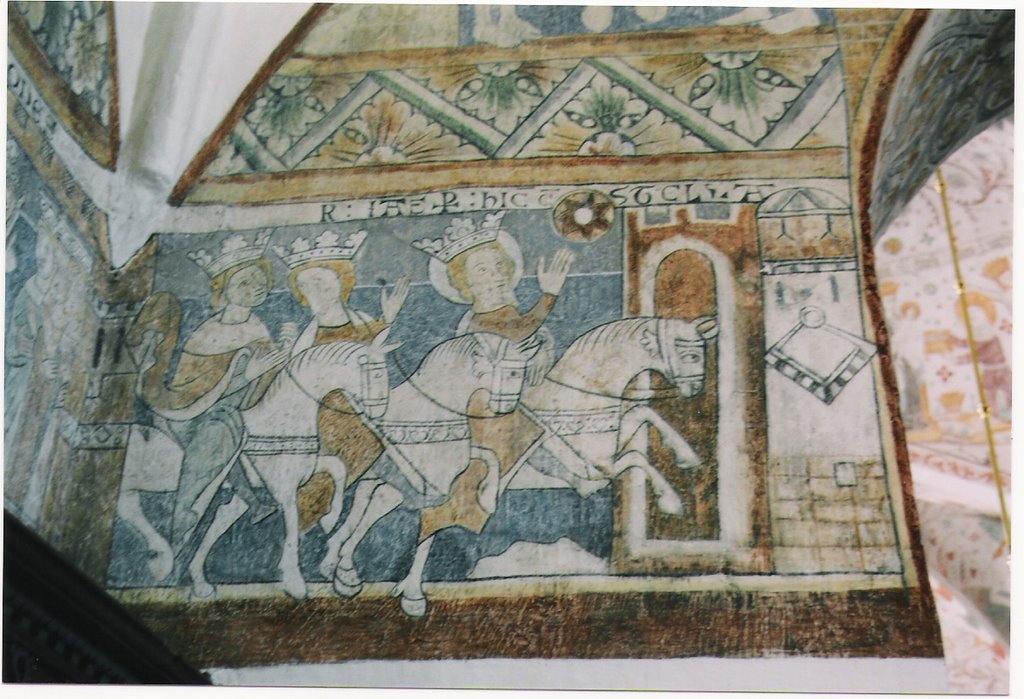
Keldby Church, Møn

Some European and Scandinavian cultures had combined the twelfth night of Christmas with pagan festivals celebrating the changing of the year. These were usually associated with driving away evil spirits for the start of the new year. From its earliest days the twelve days of Christmas festival involved masked dancers and play actors, who cavorted through the streets and visited homes unannounced to beg for holiday treats and drink. In Tudor England the Twelfth Night marked the end of a winter festival that started on All Hallow's Eve.

The twelfth night of the twelve days of Christmas is the official end of the winter holiday season and one of the traditional days for taking down the Christmas decorations. In England people used to have parties on Twelfth Night, and it was traditional to play practical jokes. This was also a traditional day for wassailing the apple trees. Wassail the drink of good wishes and holiday cheer has been associated with Twelfth Night since the 1400s. The name comes from an Old English term "Waes hael", meaning "be well". The popular song "Twelve days of Christmas" is usually seen as simply a nonsense song for children. Some have suggested that it was dating from the 16th century wars in England, but there are many theories.

A King or Lord of Misrule would be appointed to rule the Christmas festivities and the Twelfth Night was the end of his period of rule. The common theme was that the normal order of things were reversed. This tradition can be traced back to the pre-Christian Europe like in the Celtic festivals of Samhain and the Ancient Roman festival of Saturnalia. Twelfth Night itself was a traditional day for plays or "mummings", and it is thought that Shakespeare's play "Twelfth Night" took its name from the fact that it was first performed at Middle Temple Hall, London, during the Twelfth Night celebrations of 1602.

Twelfth Night elsewhere in Europe

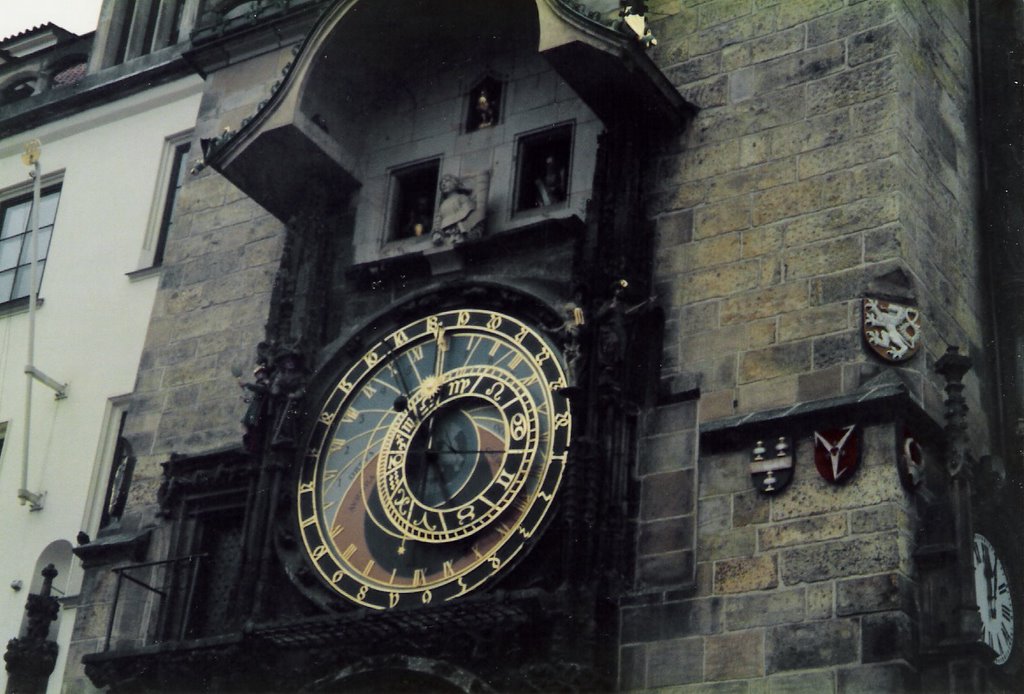
Prague, Old Town Square

In the old Czechoslovakia the Christmas tree was taken down after Twelfth Night, and the wood from the tree would be put into the woodstove - and good coffee should be made on the stove. This custom was said to bring joy and happiness. Costumed kings would visit all the farmsteads, not exactly regally dressed; they wore long furs and hats woven from thick sheaves of straw with berry branched. The kings brought each house good wishes and the farmers showered them with gifts. In exchange for the gifts the farmers received the blessings of enjoyment, love and peace.

In Russia this was a night for divination. Everyone put a ring into a dish and then traditional songs were sung, which predicated events like bereavement or marriages. Then a ring was chosen random from the dish and the fate of the song ascribed to its owner.

In the South European tradition Twelfth Night was celebrated with marches and music in the streets, where men dressed in Oriental costumes gave candy or small gifts to the children.
In Italy it was considered the beginning of Carnival, associated with jokes and tricks. An Italian tradition was also an old "witch"woman , called La befana, who came with gifts in a sack for the children. Naughty children got coal in the sack instead of gifts. La befana rode reverse on a broomstick, and in some places in Italy a figure of La befana was burnt at stake, which might be a trace from ancient rituals celebrating the beginning of a new year.

In Denmark a tradition was to read signs from the period. The weather in the next year's twelve months could be predicted by the weather in the twelve days of Christmas. People had special symbols, "Sun signs", for the weather, which they wrote with chalk upon the beams in the living room. On Twelfth Night the girls had to stand by an open window looking into a mirror, and then they were able to see their future husband. The Christmas tree must not be taken down until the day after Twelfth Night- or else grief would come to the house. A custom still used is to lit the candles on the Christmas tree for the last time on Twelfth Night and to eat small round apple cakes baked in fat and served with blackberry jam. Another traditon was to celebrate Twelfth Night and the end of Christmas with a special candle formed like a fork divided in three. 3 kings and 12 apostles and one "star carrier" with the special candle marched through town. This traditon is still kept alive in a few places in Denmark

photos Møn & Prague: grethe bachmann

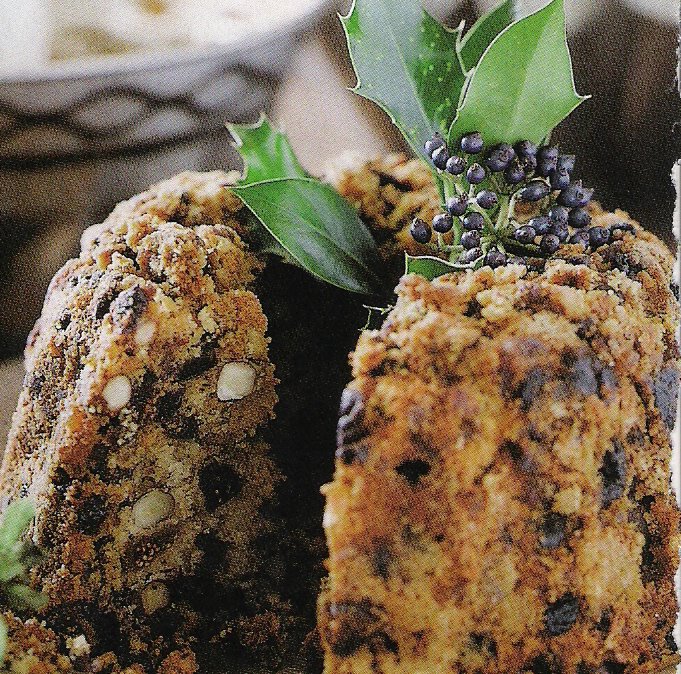
Twelfth Night, The King's Cake

The ancient Roman tradition of choosing the master of the Saturnalia revels by baking a good luck bean inside a cake was transferred to Twelfth Night. French and English celebrations included a Kings' cake.


In England the cake was usually a rich and dense fruit cake which contained both a bean and a pea. If you got the bean you were King or Queen of the Bean, and everyone had to do what you told them to do. But there were also other items in the cake. If you got a glove, you were a villain, if you got a twig you were a fool, and if you got a rag you were a tarty girl.
In France the special cake served on Twelfth Night was the Galette des Rois. It was thin and round and cut into pieces in the pantry, always one more piece than there were guests, and carried into the room covered with a white napkin. A small china doll was baked into the cake, and the person receiving this became the Queen or King and got to choose a consort. The extra piece was called "le part a Dieu", and was set aside for the first person to come through the door.

Monday, December 21, 2009

Parsnip/Almindelig Pastinak

Pastinaca sativa var. sativa


In Denmark: Parsnip/Almindelig Pastinak (Pastinaca sativa var. sativa) is common in the glacial land. In the heath and sanded land it is mostly found along roads and more sparsely.

Wild parsnip/Vild Pastinak (Pastinaca sativa ssp. sylvestris) has a vigorous hairy stem, and it might be found in Denmark, but not yet for certain.

Like carrot, celery, parsley etc. parsnip belongs to the Umbelliferae. It origins from wild parsnip in Central and southern Europe. It is not for certain described as a cultivated plant until the 1600s. In the 1700s an attempt was made to have it imported to Denmark as a fodder for cattle, sheep and fat pigs, and in Italy it is still used as a fodder plant. The parsnip is richer in vitamins and minerals than its close relative, the carrot, and it is also a good source of dietary fiber.

The name comes from Latin pastinum, a kind of fork, whose ending was changed to -nip by analogy with turnip because it was assumed to be a kind of turnip. Greek and Roman literary sources are a major source about its early use, but there are some difficulties in distinguishing between parsnip and carrot in classical writings, since both vegetables seem to have been sometimes called pastinaca. In Roman times, parsnips were believed to be an aphrodisiac. When the Roman Empire expanded north through Europe, the Romans brought the parsnip with them. They found that the parsnip grew bigger the farther north they went.Parsnips are not grown in warm climates, since frost is necessary to develop their flavor. The parsnip is a favorite with gardeners in areas with short growing seasons.

Until the potato arrived from the New World, its place in dishes was occupied by the parsnip and other root vegetables such as the turnip. Parsnips can be boiled, roasted, microwaved or used in stews, soups and casseroles. Roasted parsnip is considered an essential part of Christmas dinner in some parts of the English-speaking world and frequently features in the traditional Sunday Roast.In the United States, this plant was introduced fairly early in history by British colonists as a root vegetable. In the mid-19th century, it was replaced in popularity by the potato and consequently escaped from cultivation. Today, most states have wild parsnip on their list of noxious weeds or invasive species.

Parsnip is a biennial, which develops the eatable root in the first year. If it is allowed to stay, it will in the second year develop into a plant as tall as a man with large yellow-green flower umbels in July-august. They are very decorative and are visited by hoverflies. Parsnip is used as a food plant by the larvae of some Lepidoptera species.

Parsnip/Almindelig pastinak is found wild in the nature and is considered unwanted. The sap of the plant combined with sunlight can give burns and sores on the skin, but in a milder degree than hogweed.

NB:
When picking wild vegetables it is easy to mistake poison hemlock (Conium maculatum) for parsnip. This can have deadly consequences since all parts of hemlock are poisonous. Poison hemlock contains volatile alkaloids that have been used as poisons since ancient times, notably in the death of Socrates. A reliable source should be consulted to differentiate the two.


photo Rebild 30. July 2007: grethe bachmann

Friday, December 18, 2009

Great Spotted Woodpecker/Stor Flagspætte


Great-spotted woodpecker/Stor Flagspætte

Dendrocopos major

The great-spotted woodpecker is a striking black and white bird with bright red under the tail. Males have a distinctive red patch on top of the head and young birds have a red crown. This bird is distributed over an immense range covering almost the entire Palearctic from Britain in the west to Japan in the east and reaching North Africa and the Canary Islands in the south-west. In recent times the great spotted has become the most familiar woodpecker due to regularly visiting bird tables in observer's gardens. The Great spotted woodpecker is an exciting garden visitor, and during the summer adult woodpeckers may be accompanied by their youngsters learning about the food available and how to obtain it.


In summer the great woodpecker live mainly of insects, especially caterpillars , in winter mostly of cones. A cone is harvested by the woodpecker holding it with one foot while attacking the stalk until it breaks. After wedging the cone in the anvil it is worked by rotation at regular intervals in order to obtain the seeds from all sides. An ornithologist recorded a single woodpecker which used two adjacent anvil trees and dealt with some 2000 cones in a single winter.

When hidden by the foliage, its presence is often advertised by the mechanical drumming, a vibrating rattle, produced by the rapidly repeated blows of strong bill upon a trunk or branch. This is not merely a mating call or challenge, but a signal of either sex. It is audible from a great distance, depending on the wind and the condition of the wood, a hollow bough naturally producing a louder note than living wood. The call is a sharp quet, quet.

Great woodpecker has like other woodpeckers some adjustments for its special habits. A unique cranium-construction does that the bird gets no concussion from drumming. This work combined with opening the cones in winter wear out the horn of the beak - and three beak-lengths are worn out during one year.

Great Woodpecker/Dansk Ornitologisk Forening

photo 2007: grethe bachmann

Tuesday, December 15, 2009

Winter Solstice in the Ancient North


Latin: Solstice = Standing-still-sun.
Danish: Vintersolhverv, Solhverv from Old Norse: hverfa = vende (turn).

The winter solstice marks a crucial part of the natural cycle. In a real sense, the sun begins to renew its journey toward longer days, times of new growth and renewal of the world once again. In a spiritual sense, it is a reminder that in order for a new path to begin the old one must end and that spring will come again. No one is really sure how long ago humans recognized the winter solstice and began heralding it as a turning point - a day that marks the return of the sun. The ancient fear was that the failing light would never return unless humans intervened with celebrations.

According to ancient belief people thought that everything fastened would loosen in the moment the sun turned at winter solstice. It was strictly forbidden to do some work which required to turn round something.

Poskær Dyssen, Djursland
In old times the evening of dec. 21. was called Mother's Night and the feast Jólablot (Christmas Ceremony) began. This big blót or feast was held for several days. The number of days varies from source to source and the days have presumably adjusted to regional circumstances, since the feast lasted, until all the brewed mead had been consumed. In Olaf Haraldsson's Saga is described, how two brothers-in-law spent half Christmas in one brother's house and the other half in the other's. People went Christmas visiting like people do today (jólavist), and they had Christmas lunch (jólabod). The purpose of the days of Christmas was to celebrate a fertile and peaceful (jólafridh) year.
When king Olaf's skjald Sigvard in the beginning of the 11th century was on a travel in Norway and Värmland, he experienced that people sacrificed to the elves; they were also worshipped in connection to winter solstice, which from ancient days was a feast for the deceased. The elf cult might have been a death cult, but there are some disagreements among experts about this theory. In several sources is mentioned that the elves lived in hills, and most legends about the underground elves are connected to burial mounds or to places of executions, and maybe also where murders had been committed.

Yggdrasil (Old Norse) The World's Tree, Yggdrasil ("Odin's Support") was the link between the humans upon Mother Earth and the ancestors/the gods in Heaven. It is the ash tree - because of the production of "honey dew" for mead - which is considered to be the World's Tree. During the celebration of winter solstice (jólahald) , a pine was until 1810 used as an outdoor Christmas tree/ World's Tree.


The winter solstice, also known as Midwinter, occurs around December 21 or 22 each year in the Northern hemisphere, and June 20 or 21 in the Southern Hemisphere. It occurs on the shortest day or longest night of the year, sometimes said to astronomically mark the beginning or middle of a hemisphere's winter. The word solstice derives from Latin, Winter Solstice meaning Sun set still in winter. Worldwide, interpretation of the event varies from culture to culture, but most hold a recognition of rebirth, involving festivals, gatherings, rituals or other celebrations. Many cultures celebrate or celebrated a holiday near the winter solstice; examples of these include Christmas, Hanukkah,Kwanzaa, New Years, Pongal, Yalda and many other festivals of light.

The solstice itself may have remained a special moment of the annual cycle of the year since neolithic times. This is attested by physical remains in the layouts of late Neolithic and Bronze Age archeological sites like Stonehenge and New Grange in the British Isles. The primary axes of both of these monuments seem to have been carefully aligned on a sight-line framing the winter solstice sunrise (New Grange) and the winter solstice sunset (Stonehenge). The winter solstice may have been immensely important because communities were not assured to live through the winter, and had to be prepared during the previous nine months. Starvation was common in winter between January to April, also known as the famine months.

In temperate climates, the midwinter festival was the last feast celebration, before deep winter began. Most cattle were slaughtered so they would not have to be fed during the winter - it was nearly the only time of year when a supply of fresh meat was available. The majority of wine and beer made during the year was finally fermented and ready for drinking at this time. The concentration of the observances were not always on the day commencing at midnight or at dawn, but the beginning of the pre-Romanized day, which falls on the previous eve.


photo Mindeparken/Poskær stenhus: grethe bachmann

Monday, December 14, 2009

The Iceland Pony


The Iceland Pony descends from the horses brought to Iceland by the Vikings, when they settled in Iceland in the 9th and 10th century. Supposedly the Vikings brought with them horses various in looks and colours, and therefore the Iceland horse breed has such a fine colour variation today. There hasn't been any import of horses to Iceland since the Viking-period, and therefore this unique horse breed exists today - the original thorough breed of Scandinavia.


Those Viking horses have through centuries lived in a tough climate which made them healthy and tough, and the Icelanders' demand for a versatile horse for transport has created an unusual reliable, strong and comfortable horse , incredibly safe on its legs and with lots of temper and will to run.


In ab. 1920 they began to write closed studbooks, which have to be traced back to Iceland. There have been no new blood in the Icelandic pony since 1240. An Iceland pony must of course have an Icelandic name, therefore people often use words from the Icelandic language, which describe colour or state of mind, or names from Norse mythology or from the nature in Iceland.


The Iceland Pony is first of all a horse for everyday use, where the riding abilities are the most essential. It has to be brave and independent, willing and cooperative. It has to be easy to keep, it must have a good adaptability and first of all - a good disposition. All in all - a fantastic and pretty little horse. Good for both children and grown-ups. No wonder it was the Viking's horse - and no wonder it is still so popular today.

photo Strands, Begtrup Vig, Mols August 2007: grethe bachmann