Sunday, October 15, 2006

Water People in October -


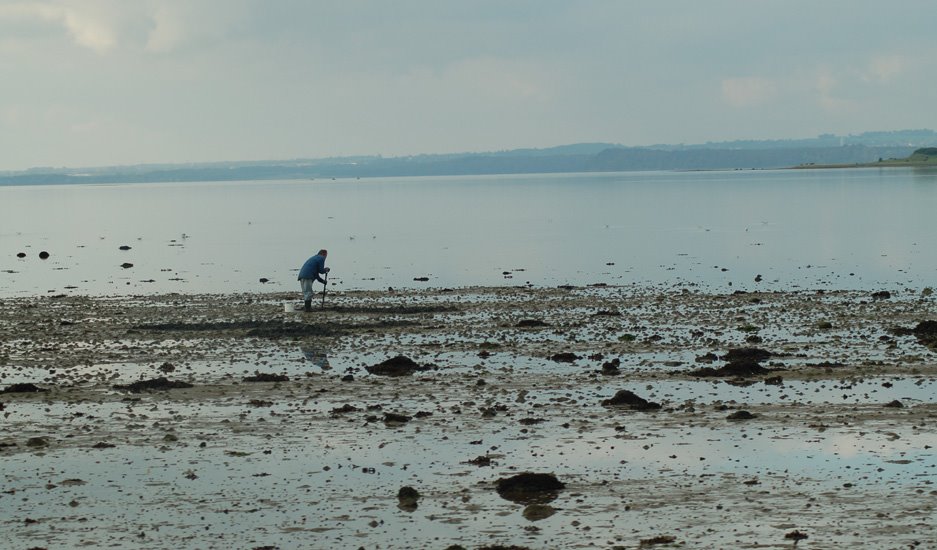
 - digging for lug worms


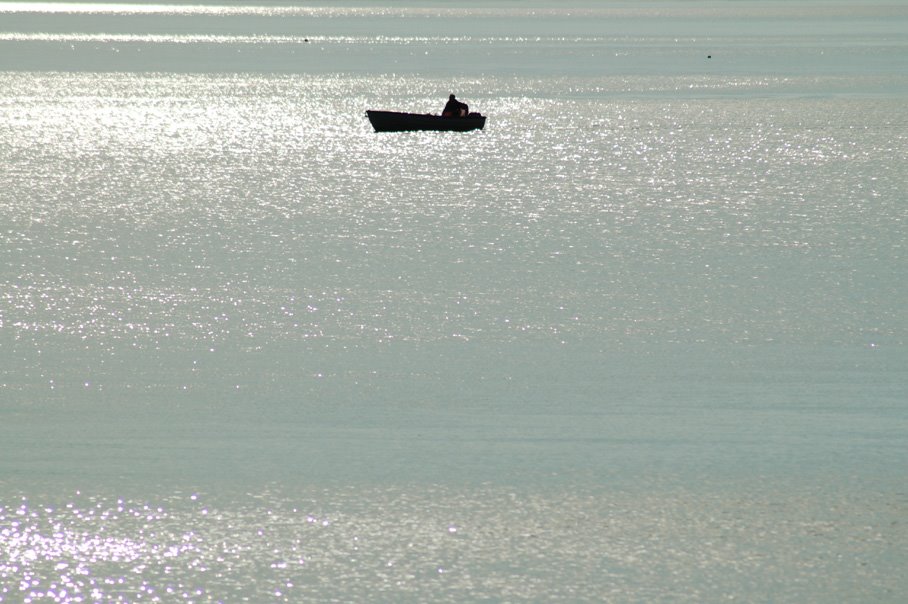
the old man and the sea


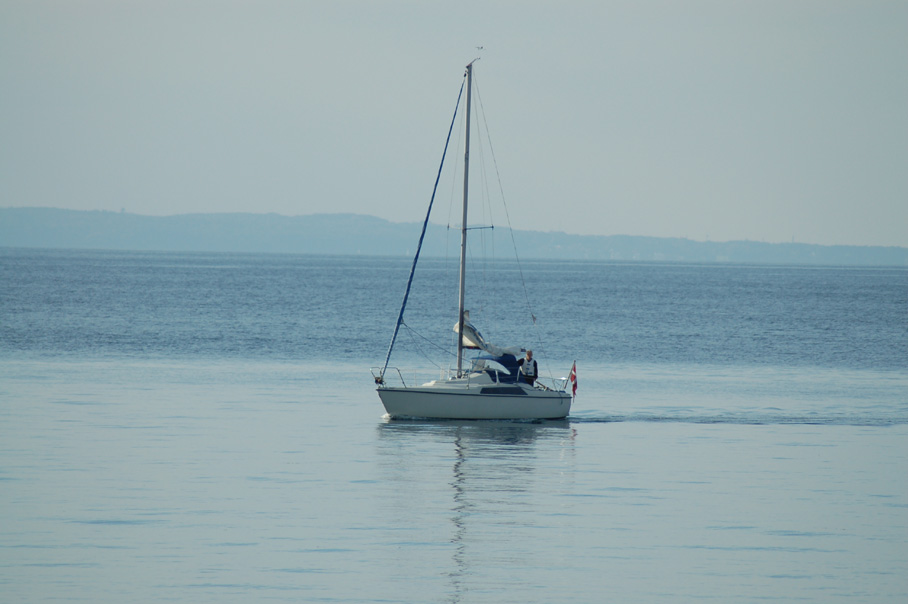
sailing on silken water


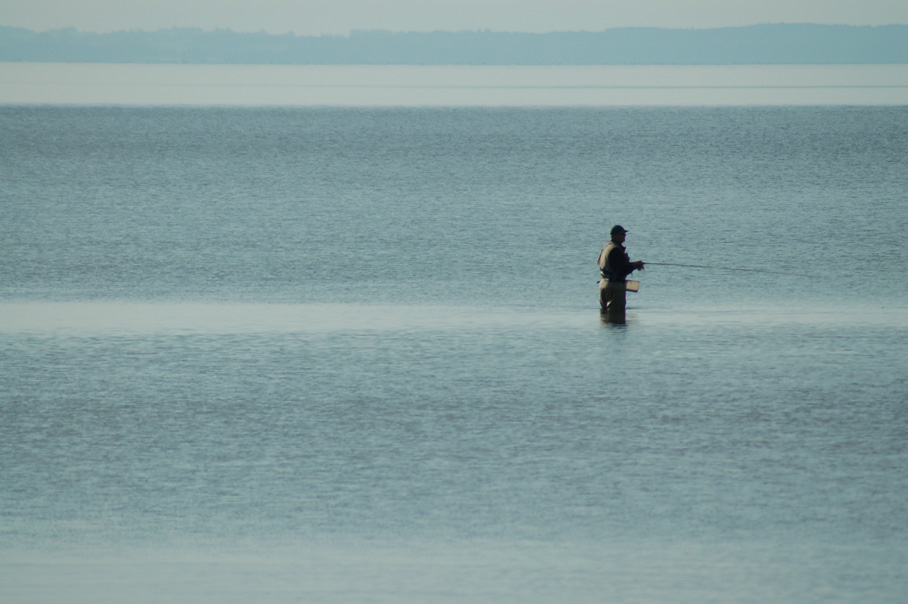
inshore fishing, medicine for the soul


Eider hunters, all those birds cannot be for private use...


caught some trouts after a long days fishing


cormorants drying their wings late afternoon
photo: grethe bachmann
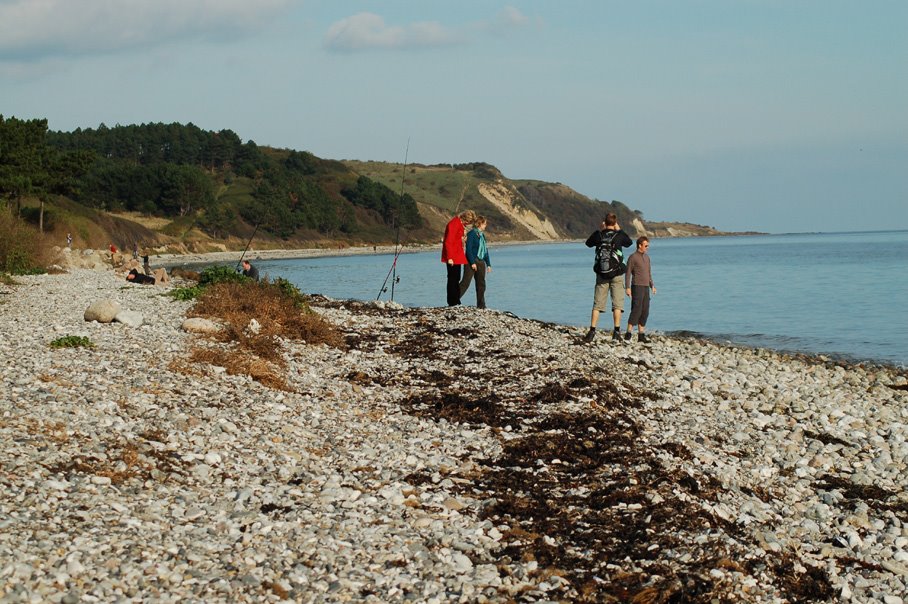
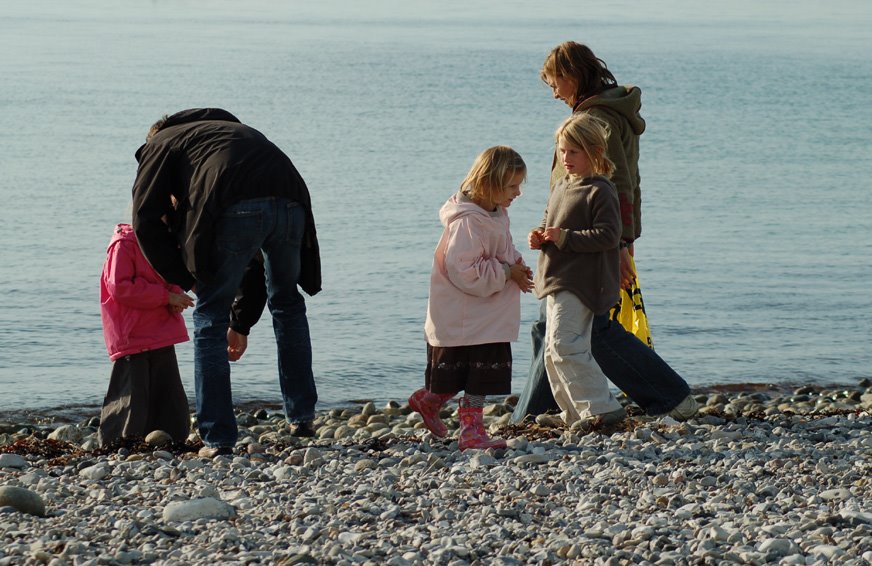
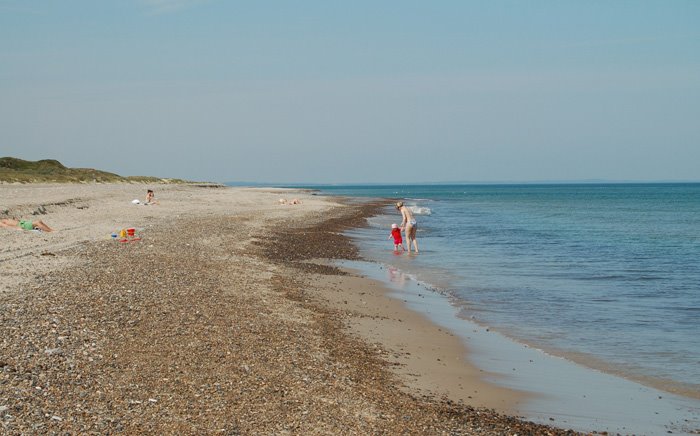
A Mild October's Day on the Beach


photo: grethe bachmann
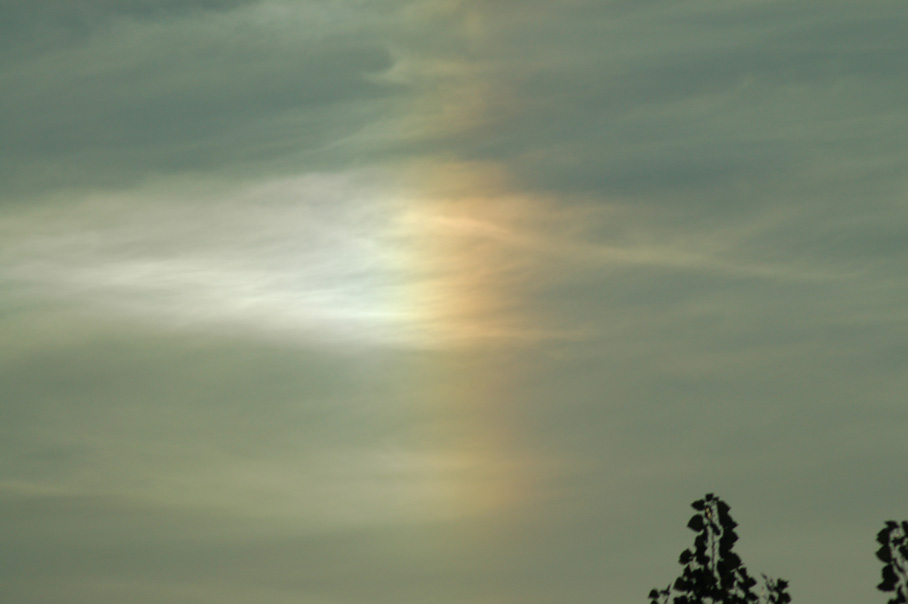
Sun Dogs/ Bisole


West of the sun

East of the sun

Sun Dogs are light spots on both sides of the sun, they are due to refractions in ice crystals in thin clouds.


photo 140506 Saturday afternoon: gb

Friday, September 22, 2006

Rosa rugosa/ Hybenrose


Rose hips/hyben are the orange , red, brown or black fruits of the rose. The most common wild rose in Denmark is Rosa rugosa, which came to country in the midst of the 1800s. It's growing by beaches and along the edges of roads. The fruits are eaten by fruit-eating birds such as trushes and waxwings, which then disperse the seed in their droppings.

Rose hip is very rich in C-vitamin, it's among the richest sources of any plant, it also has a good amount of A-vitamin and calcium.

The rose hips are good for jelly and marmelade, juice, tea, soup. Rosehips are also commonly used externedly in oil form to restore firmness to the skin by nourishing and astringing tissue.
It's the outer peel of the fruit that's used. The seeds are filled with itching powder.

In some pagan mythologies no undead or ghostly creatures (i.e. vampires) may cross the path of a wild rose. It was thought that to place a wild rose on a coffin of a recently deceased person would prevent them from rising again.

photo: grethe bachmann

Thursday, September 21, 2006

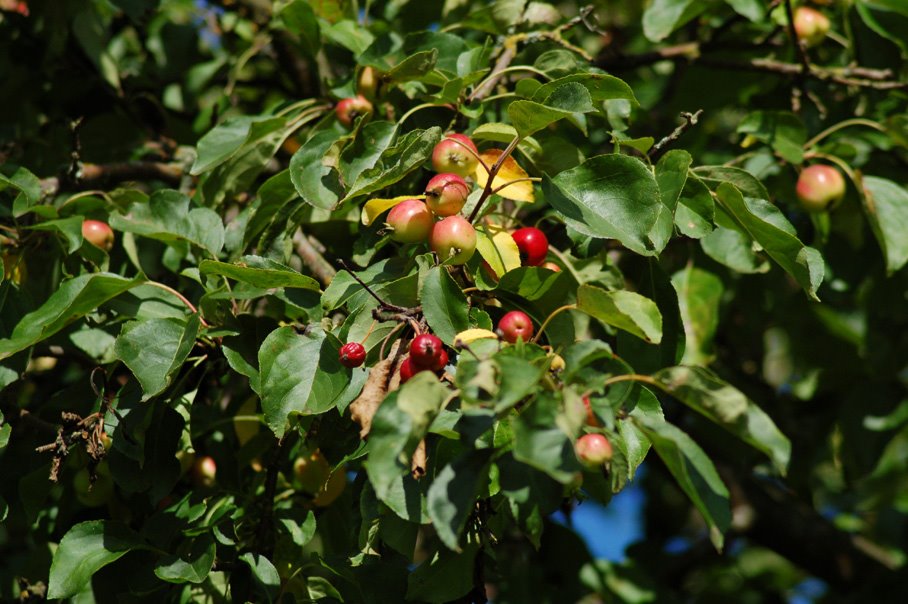
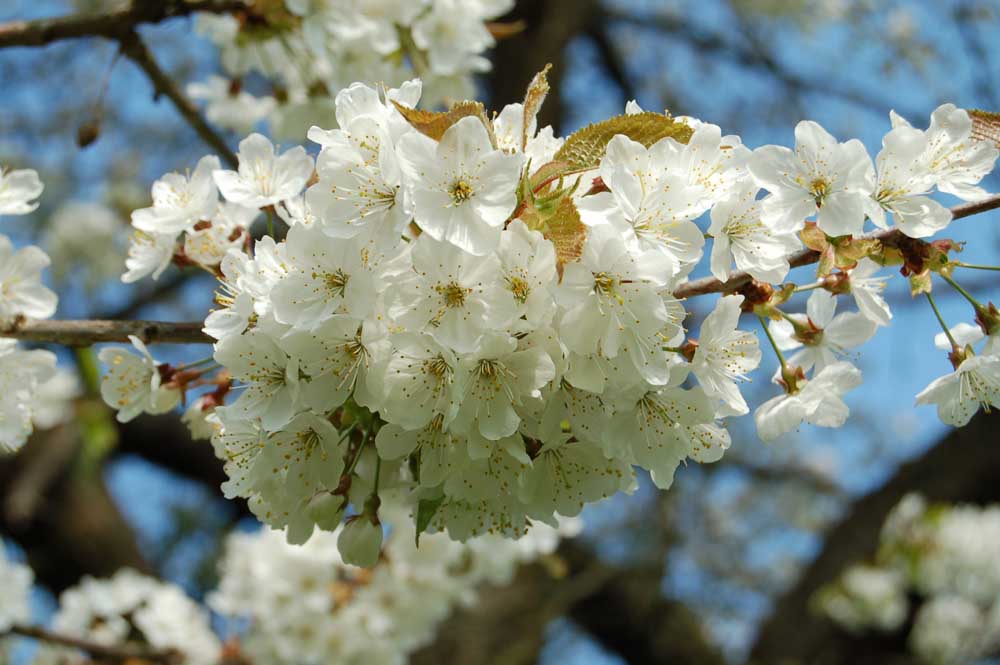
Paradise Apple/Paradisæble /Malus species


Paradise Apple is a lovely little tree with bunches of beautiful flowers in the spring and lots of miniature apples in yellow or red colours in the autumn. They are hardy trees and are found in many sorts, some of them grow in gardens and parks, other in fences or feral in forest and thicket. Most of the sorts origin from East Asia. There is place for a paradise apple tree even in the smallest garden.

The fruits are still on the trees a long time after leaf fall, and they are very much sought after by birds.

De biggest fruits are fine in jelly and gelé. They can also give an extra special taste to a snaps - whole preserved paradise apples are an excellent and pretty accompaniment for many desserts - and raw paradise apples cooked in pies, cakes or fermented into cider - the taste can be sweet and pleasant.


photo: grethe bachmann

Tuesday, September 19, 2006

Cherry Plum/Kirsebærblomme ('Mirabelle')
Prunus cerasifera


Cherry Plum grows wild in the countryside, but is also found in gardens both in fence and as a pretty standard tree. The fruits have a fine yellow-orange to red colour. They can be eaten fresh in some forms, being sweet with a good flavour, while others are sour, but excellent for jam-making. They are also used in snaps and liqueur. Cherry plum is also called Myrobalan (plum).

Kirsebærblomme is mostly known as Mirabelle in Denmark, although they are not quite the same species. It is popular served as stewed fruit with double cream. This year, 2006, has been an immensely rich fruit season, also for the 'Mirabelles', and the windfalls have been fermenting on the ground making the wasps and other insects drugged and confused. They have also in some degree attracted a special butterfly, Camberwell Beauty (Sørgekåbe) , which is sucking alcohol from the 'Mirabelles' .

Camberwell Beauty (Nymphalis aniopa) is rare in Denmark, but this year there was an 'invasion'. Maybe the warmer climate is due to this.

photo: grethe bachmann

Monday, September 04, 2006

Tuesday, August 15, 2006

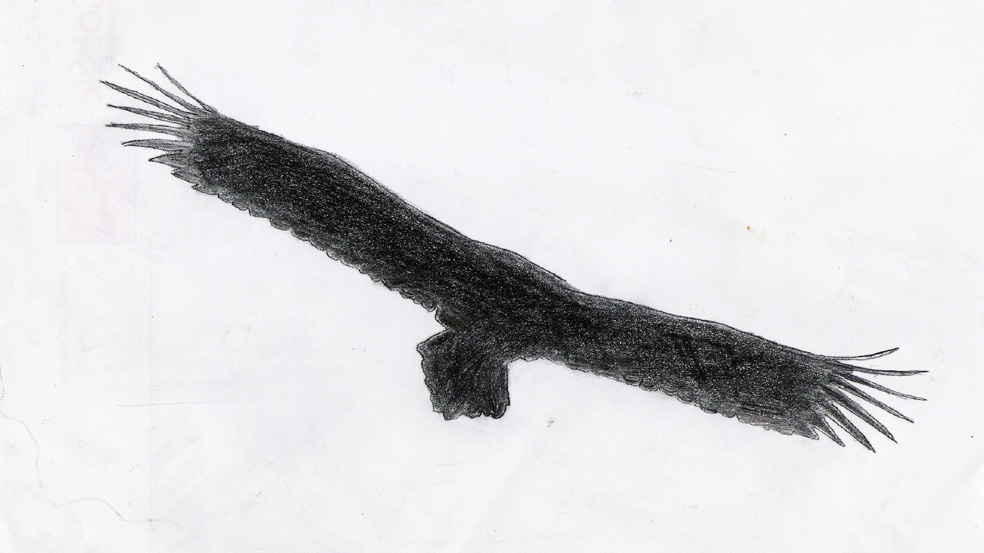
The White-Tailed Eagle/Havørnen in Denmark


This year was an extremely good year for the white-tailed eagle in Denmark. 11 out of 16 pairs have breeded, three pairs even got triplets, and 24 young eagles are on their wings in 2006. Now there are in all 112 white-tailed eagles who have grown up in the Danish nature, informs project manager Lennart Pedersen from Dansk Ornitologisk forening.

The white-tailed eagle is North Europe's biggest bird of prey - sometimes called 'The Flying Door' - and it was a Danish breeding bird since Stone Age, but suffered like many other birds of prey from persecution in the beginning of the 1900s and was exterminated as permanent breeding bird in the 1920s. Fortunately it returned permanently in the 1990s. The white-tailed eagle in Denmark is especially nesting in big manor estates with lakes and forests, where there's no public access in the breeding time. On Zealand are seven pairs with permanent territory, Lolland five, Jutland three and Funen one.

Today the shy white-tailed eagle is one of the bird species who enjoys the results from the latest 20-25 years of nature restoration, hunting restrictions and efforts against DDT and other pesticides in agriculture.


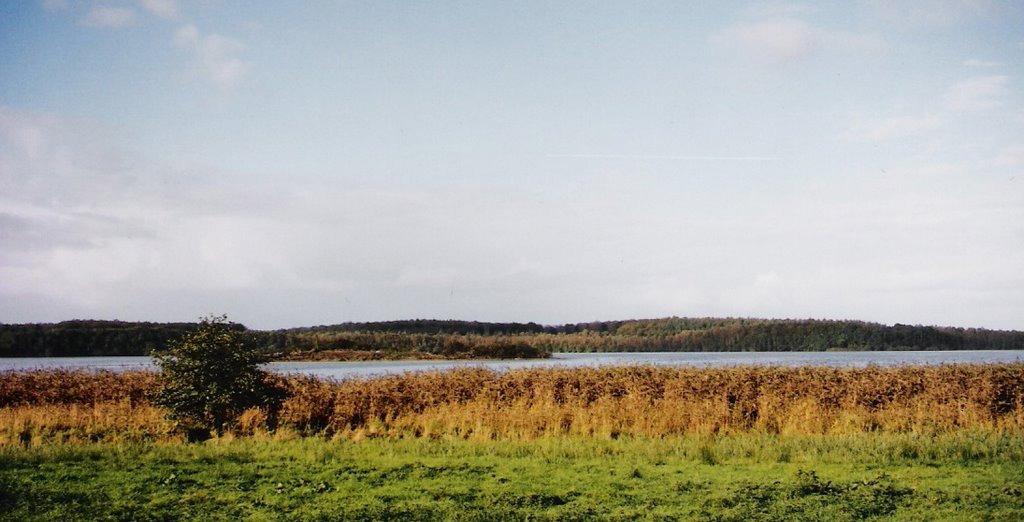
Arreskov sø and the manor

Brændegård sø

The white-tailed eagle pair on Funen is nesting in Arreskov estate, but the forest is closed in summer during the breeding time. There are no boats on the lakes and only little fishing in this period, and the farmer takes care not to cut down trees in a certain distance from the nest. If the eagle feels threatened, it will leave the nest. But in August and September it is possible to go to Arreskov and Brændegård Sø and experience, when the eagle parents take the young ones out to learn them how to catch a cormorant.

photo and silhuet: grethe bachmann

Friday, August 04, 2006

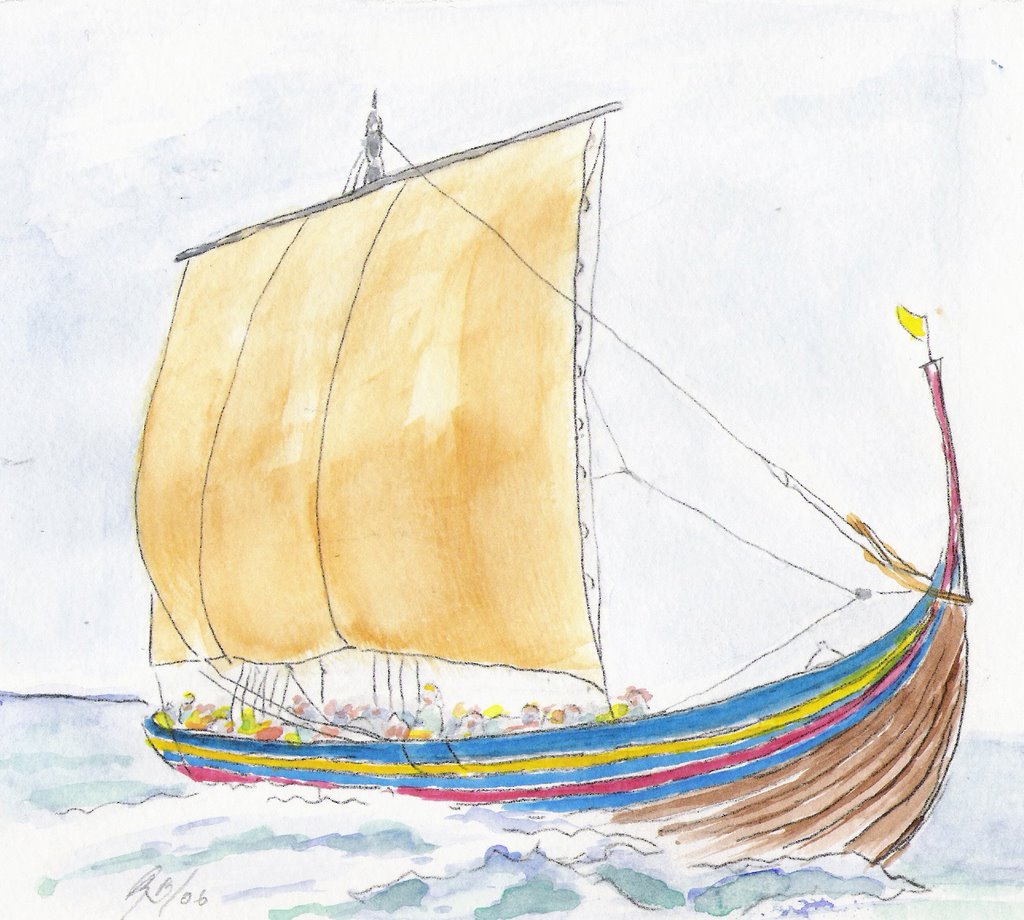
'Sea Stallion from Glendalough'
(Havhingsten fra Glendalough')


Today, August 4th at 13.00, the world's biggest reconstruction of a viking ship, 'Sea Stallion from Glendalough' (Danish: 'Havhingsten fra Glendalough') returned to Roskilde after a four weeks' summer expedition to Norway and back home. The expedition was a test for next year's challenge, where the longship sails to Dublin. The original viking ship - by the museum named Skuldelev 2 - was built in Dublin in 1042, and in the 1060-1070s the ship sailed from Dublin to Roskilde, where it was found some years ago at the bottom of Roskilde Fjord. (See link). Considering its size and history the viking war ship from Glendalough might have played a role in the power struggle in England in the 1060s.

The building of the 30 meters long reconstruction of the viking ship has meant that some myths about the viking society had to be changed. The popular opinion that bearded vikings were sitting dead drunk and cheering for the next robber expedition holds no water. In real life the viking society had to be very well organized. Much power and riches were required in order to build, fit out and man a longship, and the ships known from the sources were all built at the king's or some magnate's command.
Large sections of people from a big area were involved in the building. It required special knowledge, able workmen and a rational production of i. e. sails and ropes. Olav Trygvasson's Saga tells that many people participated in the building of 'Ormen hin Lange.' The Viking Ship Museum in Roskilde used 27.000 effective working hours on the hull of 'Sea Stallion' alone.

' Sea Stallion from Glendalough' and the sailing project is considered a dream and a huge challenge, and it wasn't difficult to get volunteers for the crew. The summer expedition in Skagerak and Kattegat did prove how seaworthy viking ships were. The voluntary crew found out how to sail most effectively and how to cook for 65 men with only two gas rings. The viking museum reports that the 65 men kept a high spirit and learned a lot about long expeditions in open sea.

'Sea Stallion from Glendalough' will sail to Dublin in 2007. There are great expectations as to the speed of this longship. The slender, lithe ship with the long waterline is built for speed. This is a thoroughbred of the sea.

Links in English:
http://www.havhingsten.dk/index.php?id=295&L=1

http://www.rgzm.de/navis/ships/ship002/Ship002Engl.htm

drawing: grethe bachmann

Saturday, July 01, 2006

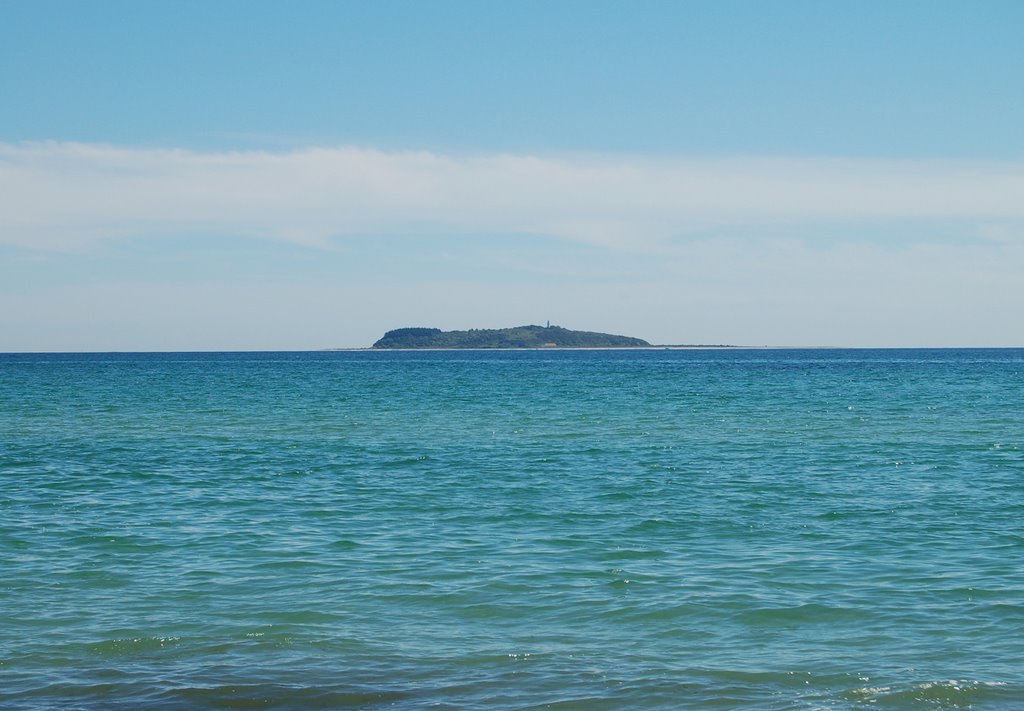
HJELM


Hjelm in Kattegat outside Djursland, the island where Marsk Stig Andersen Hvide built a castle upon the highest place in the late 13th century. There are three ramparts upon the island and the rest of a counterfeiting.
Stig Andersen Hvide was a grand landowner in Eastern Jutland end became the Marsk of the Kingdom in 1275. He was among the Danish magnates in 1276, who denied paying homage to the king's son Erik (Menved ) as heir to the throne; he was presumably also among those, who in 1282 extorted the first coronation charter from Erik Clipping. He seems to have promoted the war of succession in the royal family, which was in the interest of the Danish nobility's growing power. After the murder of Erik Clipping in 1286 he was in dubious rights outlawed as an accessary, and after this he ravaged the Danish coasts, first from his asylum in Norway and later from his base on Hjelm in 1290.

photo: grethe bachmann

Tuesday, June 20, 2006

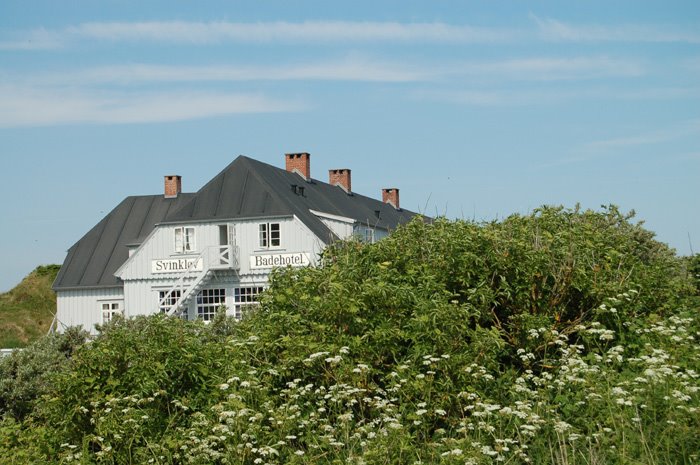
Svinkløv Badehotel, North Jutland


Svinkløv Badehotel (Seaside Hotel) is one of the country's few intact relics from the fashionable seaside- and holiday life which became a must around the year 1900. The hotel is looking exactly like it was then, and the pretty main building is one of Denmark's biggest preserved wooden houses.
The position of the hotel is unique in a large preserved area and a beautiful nature far away from other habitation and less than 200 m from the North Sea.
All rooms are in light colours and Scandinavian interior and furthermore smokeless zones. The hotel is marked by alternative arts and crafts exhibitions. Svinkløv is famous for its excellent food, the cuisine has a very high standard with new menues and specialities every day.


photo: grethe bachmann

Saturday, May 27, 2006

Maj-Gøgeurt/Marsh-Orchid

Orchis Majalis


Maj-Gøgeurt (Cuckoo-herb) is blooming at the same time as the cuckoo's arrival and cuckoo call; it's the most common species in the wild orchid-flora in Denmark; in spring it is decorating moors, moist meadows and forests with its flower spikes in shades of red.

photo:gb

Friday, May 26, 2006

Monday, May 08, 2006

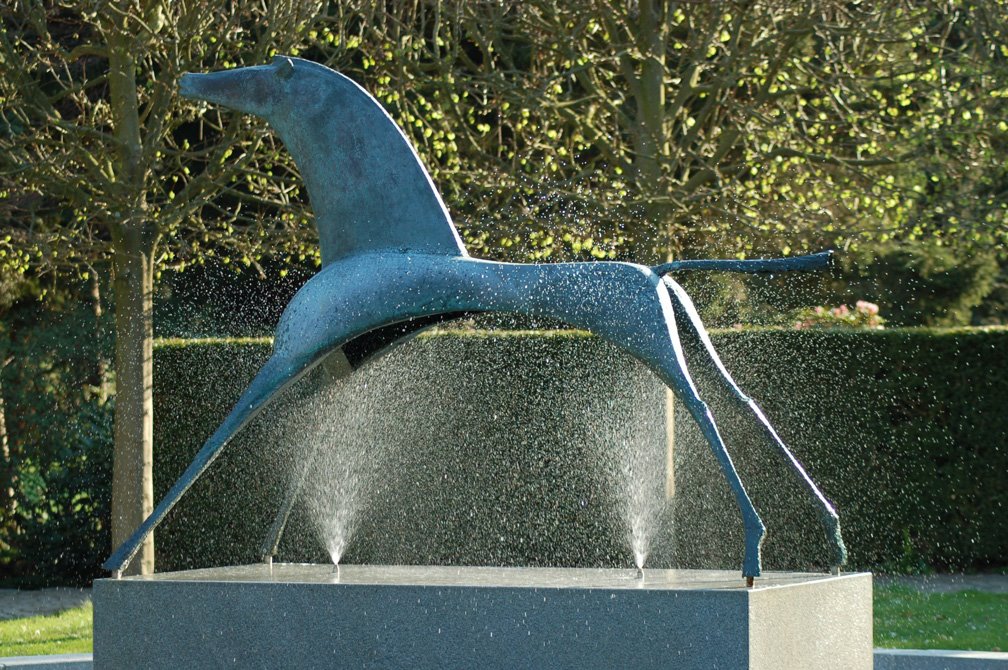
The Sun Horse


The Sun Horse, Mindeparken, Århus
sculptor: Valdemar Foersom Hegndal

photo: gb

Sunday, April 30, 2006

Walpurgisnight/Valborgsaften

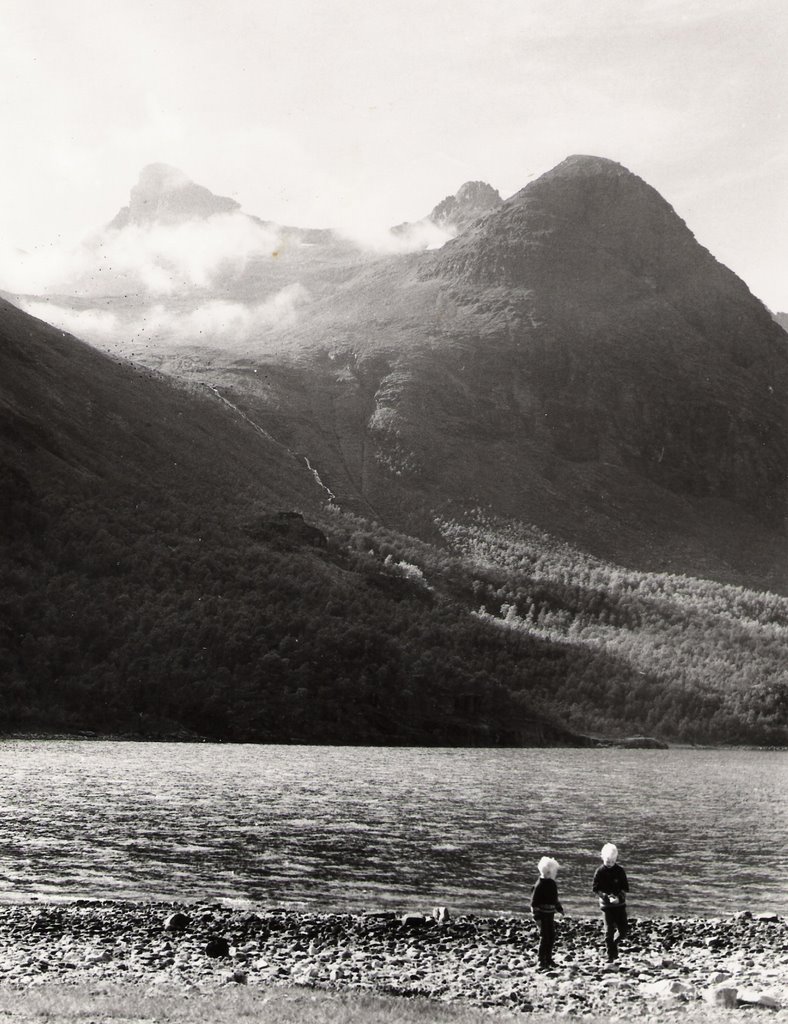
Andørja in Troms
photo: Kai Bachmann

The legend.
Walpurgisnight on April 30th is one of the nights, where witches according to Danish protocols and legends travelled to Troms Church in Norway. The image of the witches' travels to the North was alive among people up to present time, and Troms had a central place in the legends. 'At ride eller fare til Troms' (To ride or race to Troms) was a common way of speech in Denmark, especially in Jutland. The witches rode on fast flying cats, and in the old days people kept their cats indoors before that night. It was told that a cat was found dead in the morning after Walpurgisnight wearing a bridle. In Troms Church the witches had a good time playing games, dancing, eating, drinking and enjoying themselves with the Devil.
Maybe this type of folk tales can be traced back to a papal letter from Clemens V in February 1308. Here is referred to a church in Troms, consecrated to Virgin Mary and situated on the utmost border by the heathens ('sancte Marie de Trinis; iuxta paganos'). A Scottish folklorist and painter, John Francis Campbell (1822-1885) wrote: 'Tromsø was supposed in the olden time to be the headquarters of the Northern witches'.

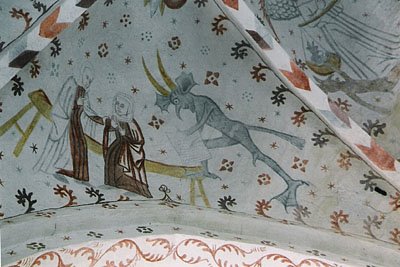
Fanefjord Church on Møn
Two Women and the Devil
photo:grethe bachmann

The witch trials.
Near Horsens in Eastern Jutland is a place Bjerrelide with a hill , Purhøj . This was once a thingstead ,where 'bystævnet' (the city council) once a year held a meeting, in which they chose an 'oldermand' (master of guild), but it was also a place, where the witches gathered on Walpurgisnight. In one of many witch-trials from 1600s' Denmark, a couple of the accused women admitted that they were upon this hill on Walpurgisnight together with hundreds of trolls and witches, and they were all carried to the hill by she-devils.
In 1623 Kirsten Ibsdatter was sentenced a witch and burnt at the stake in Jutland. From her confession is read that she often used to travel with the other witches to Troms Church. Kirsten told that she had her own demon to divert herself with there. The demon was named Plett (Spot), and as a sign of his pact with Kirsten he put his mark upon her stomach. She told that when all the witches arrived to Troms, the Devil himself was preaching, but he spoke Latin and German, and they didn't understand a word of it. Kirsten had passed on the witchcraft to her son, who often travelled together with the witches to Troms as their servant boy.

How they made those poor women confess to witchcraft is quite another story. One of the attempts was to put a supposed witch in a sack and throw her into the water. If she drowned she wasn't a witch, if she floated she was, and then she was burnt at the stake. So this was a brief respite.

The bonfires.
The bonfireswere lit on the hills to keep people awake in order to avoid them from being taken by surprise by the underground people. Up to the middle of the 1900s Walpurgisnight was still celebrated with bonfires and fun and merriment in Denmark, especially in EasterJutland, but the tradition has almost vanished, and our bonfires are now concentrated on Midsummer's Eve, June 23. (Sankt Hans Aften).

Valborg was the name of an English princess and abbess, who died in 779. She was a nun in Hildesheim in Germany. Her relics were considered miraculous, and they were in 871 transferred to the city Eichstädt.)

Thursday, March 30, 2006

April


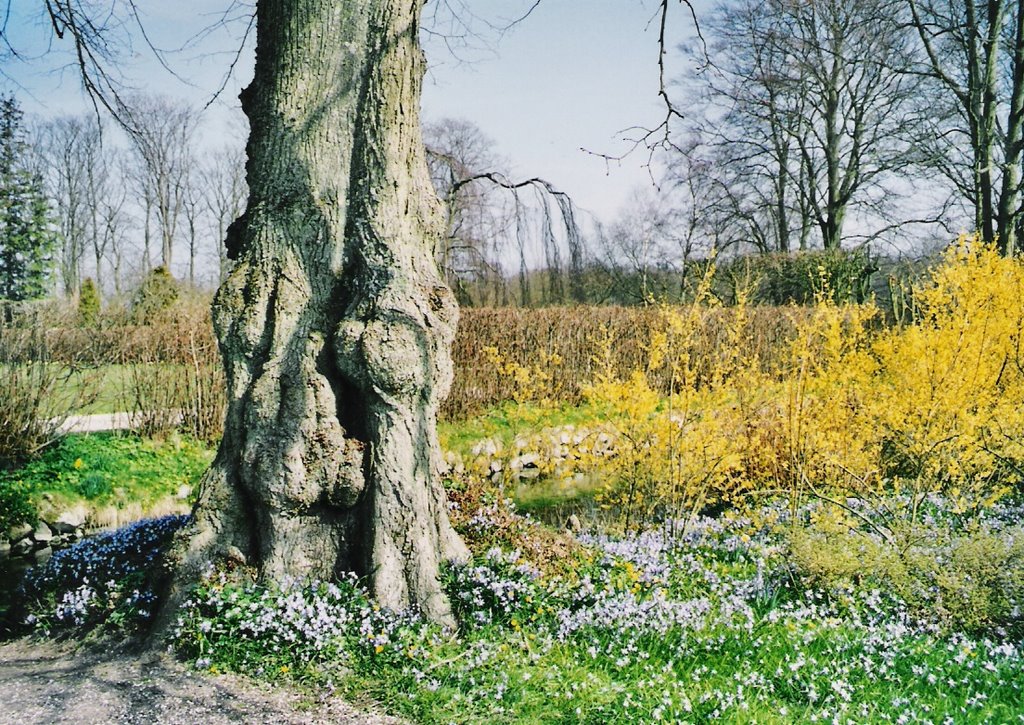
Park by Gl. Estrup Manor. Jutland

The sun was warm but the wind was chill.
You know how it is with an April day
When the sun is out and the wind is still,
You're one month on in the middle of May.
But if you so much as dare to speak,
A cloud comes over the sunlit arch,
A wind comes off a frozen peak,
And you're two months back in the middle of March.

Robert Frost

photo: gb

Sunday, February 26, 2006

March

March wind is a jolly fellow;
He likes to joke and play.
He turns umbrellas inside out
And blows men's hats away.
He calls the pussy willows
And whisper in each ear,
'Wake up you lazy little seeds
Don't you know that spring is here'?

photo: gb

Tuesday, February 14, 2006

Liselund Slot at Møn and The White Lady

Liselund Slot.
The owner of Marienborg Manor on the western part of Møn, Antoine de Bosc de la Calmette, created around 1790 a lovely white summerhouse (Lystslot) for his beloved wife, Lise Iselin. The house was situated at the high part of Møn and surrounded by a piece of land, meant for an English garden, but the couple died both in a very young age and could not see, how the place grew into a beautiful park. It is said that Lise Calmette still walks around in the park as The White Lady and keeps an eye on the caretaking of the park and the buildings on it.

The Swiss Hut.

Hans Christian Andersen was often a guest at different manors , and he had also been a guest at Liselund, where he overnighted in the Swiss Hut. It is said that he from his window could see a big hollow stump of tree , which gave him the idea to his Fairy Tale: 'The Tinderbox'.
photo: grethe bachmann
Holtug Church, Stevns, Zealand


Holtug Church:
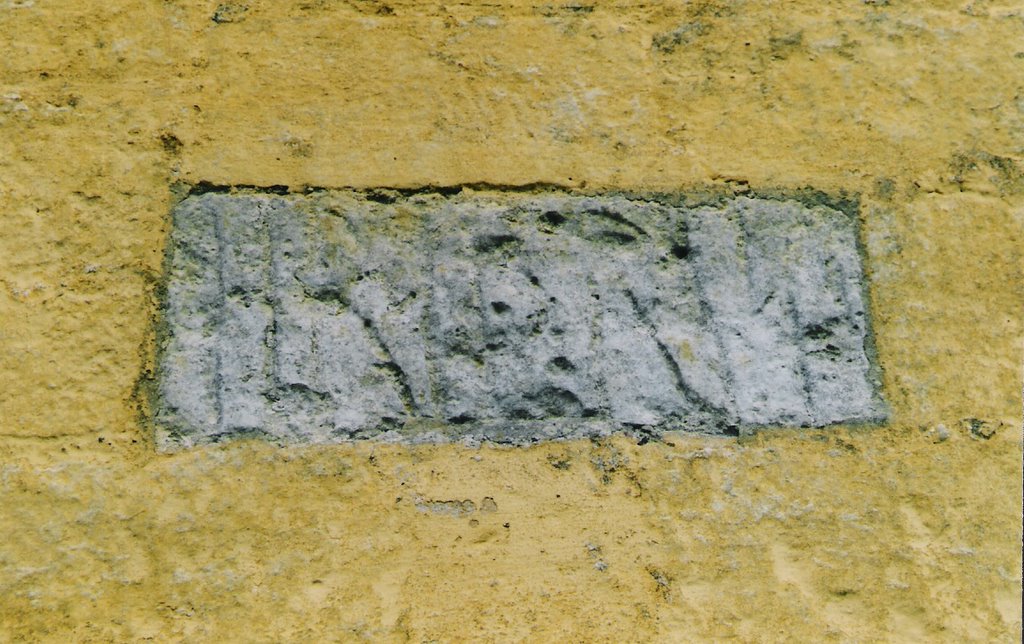
Runic inscription on church wall: "RISTI?"

Monday, January 30, 2006

Kyndelmisse/Candlemas/Missa Candelarum

If Candlemas day be fair and bright
Winter will have another flight
But if Candlemas day be clouds and rain
Winter is gone and will not come again.
Danish: Kyndelmisse, English: Candlemas,
Latin: Missa Candelarum.
Denmark:
Kyndelmisse was in the Catholic period a celebration of Mary’s purification 40 days after the birth of Christ. Before the reformation the day was used for candle light processions and consecration of those wax candles, which had to be used in the church the following year. In 1770 the Secretary of the Danish Cabinet, minister J.F. Struensee abolished Kyndelmisse as Holy Day together with a couple of other Holy days in Denmark. Even though February 2. for over 200 years has had no official status in Denmark, there are still today several churches marking Kyndelmisse with special candle services and musical services.

The word "KANDELABRIS" carved in runes in chorus.
Mosbjerg Church, North Jutland (try to enlarge picture)
Candle celebrations can be traced back to the 6th century. It was a Christian feast, and the feast of lighted candles is mentioned by Bede, but like so many other holy days the candle celebrations have their roots in folklore. The celebration of Kyndelmisse is the celebration of Midwinter , and February 2. was often seen as the turning point of winter, from where we go towards brighter times – towards spring and summer. In the Catholic church are still Candlemass celebrations with consecration of wax candles and candle light processions in the honour of Virgin Mary.

Newly ploughed field.
Folklore:February 2. was an important day. People reckoned that winter had now half gone. In western Europe this was the time for preparing the fields for the first plant. There was a tradition for a ritual midwinter ploughing , where a young girl went behind the horses and a young guy worked the plough. This was supposed to give good crops. The fields were purified and offerings were made. In England a medieval Anglo Saxon plough charm was said by the farmer while cutting the first furrow:
Whole be thou Earth
Mother of men
In the lap of god
Be thou as growing
Be filled with fodder
For fare –need of men.

When it snows on Kyndelmisse spring will arrive early.
Weather signs were read for February 2., some are similar in various European countries:
A green Kyndelmisse gives a cold Easter.
A dark Kyndelmisse makes the farmer a squire.
If it snows on Kyndelmisse spring will arrive early.
As long as the lark sings before Kyndelmisse, as long she has to cry after Voldermisse (May 1.)
If the lark is heard for the first time on Kyndelmisse-day spring will arrive early.
If a hedgehog can see his own shadow on Kyndelmisse winter will last still 6 weeks.(This is a sign of high pressure, which will take some time to disappear.)
Kyndelmisse-thaw is as good as 100 loads of hay.
In former times people in Jutland said that if the wind on February 2. was so strong that 18 bitches could not hold on to the 19th bitch, then spring would arrive early. On Zealand they said the quite opposite. If it was possible on Kyndelmisse-day to put a wisp of straw outside without it blowing away, then spring was just around the corner.


Kjørmes is an old Danish expression for Kyndelmisse, and the day is often called "Kjørmes-Knud", which refers to that February 2. was considered the coldest day of the year. "Kjørmes-Knud" means hard frost, as if the winter has turned into a knot of frost = a chilblain.
In folklore are descriptions of “Kjørmes-Feast” on February 2., a feast like many others in the peasantry, where everyone brought food and drink. On this day they had pancakes and drank beer or snaps. Other dishes were cabbage in white sauce with pork, brawn and sausages.
People had to eat pork in order to prevent hunger, and it was furthermore good for back pain. It was also a good advice to eat some of the Christmas bread, since it was said to ease the pain from a headache or a viper bite. The tradition of eating pancakes might originate from a pagan tradition of worshipping the sun and the light in spring; the pancake being round and yellow like the sun.

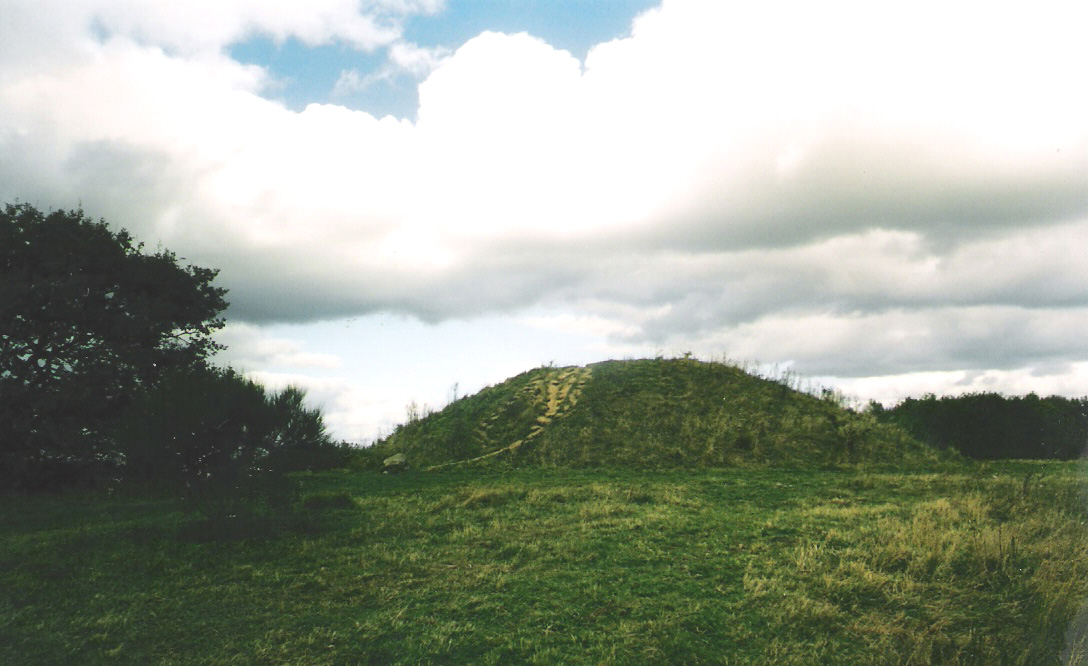
Huldremose (Moor of the Wood Nymph) , DjurslandCeltic:February 2. is halfway between the Winter Solstice and the Spring Equinox and signals the beginning of spring in the Celtic calendar. It was called Imbolc in pre-Christian times, meaning “in the belly” of the mother, because seed were starting to germinate and the sheep were pregnant. This time was sacred to Brigid the Earth Mother and goddess of fire, water, healing, poetry and fertility.
Imbolc was a fire festival celebrated with hilltop bonfires. It was also the day when people stopped using candles indoors because the days were getting longer. The fields were purified and blessed with candle light processions, and offerings were made to the goddess. Yuletide greens were burned and people cleaned and purified their homes. This custom lingers on as Spring cleaning.
Brigid was transformed into the Christian St. Brigit, who supposedly was converted from Druidism by St. Patrick. She remained associated with miracles and fertility. Originally Imbolc was celebrated on February 1., but the Catholic church transformed it into Candlemas on February 2.

photo: grethe bachmann