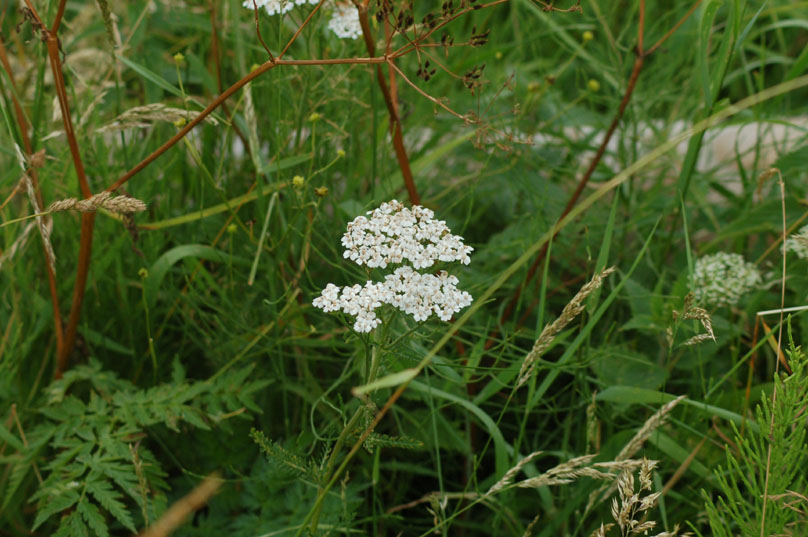
When considering the Middle Ages it is not easy to imagine how awful it must have been to experience terrible diseases like leprosy and plague. The help from magic, wise women, doctors and monks was not enough to help people, and common diseases were also treated in many mysterious ways. But while looking upon their paltry chances with today's eyes, people back then did not know anything else than what was at hand. I wonder if they trusted their healers? There are many awful stories about plague and leprosy. I have chosen to write it as objectively as possible.

A main part of medieval people believed that magic and wise women was the only available cure for a disease, and the saints of the church and the sacred wells were also considered miraculous healers. Physicians existed, but they did not possess such a divine power. Their knowledge about anatomy and infection was extremely limited. When the abbot Jan of Roskilde in 1182 was called to assist the feverish king, Valdemar the Great, he treated him with sweat-generating drugs. But in vain. In the morning lay the king dead in his bed, and the contemporary chronicle writer Saxo, who told the story, was unsparing in his opinion, as he wrote: "... his death was a clear evidence of how little you can rely on medical art."
The church established the frames of medical art, saying that it was more important to cure the soul than the body. The pastoral care had a greater significance than the medical occupation, and the doctors were told not to do anything, which might bring the soul in danger.The body was considered a temple of the Holy Spirit, and therefore was surgery condemned by the church. It was preferably medicine, which was the education at most universities. A surgical practice had to develop outside the established medical circles, like by army surgeons or by the barber, in the bathhouse and even by the executioner. He had through his main job a certain possibility to do anatomical studies himself, while the medieval physicians - if they studied anatomy at all - stuck to the authority of the classic authors and to speculative theories. Not until in the beginning of the 1500s came a breakthrough for modern anatomy, based on dissections of the deceased.

 The
medieval physicians relied to the doctrine about the four elements,
earth, air, fire and water, combined with the four human temperaments,
the choleric, the melancholic, the phlegmatic and the sanguine. In much
medical treatment were the patients given emetics to drive out the
superfluous bile - or they were bled to drive out too much and harmful
blood. One method was to attach leeches to suck blood from the patient.
The leeches, still seen in some Danish moors, are probably descendants
from the leeches brought to the country by the monks. Another method was
the use of a bleed iron, a special, sharp-cut iron. And this was a
dangerous treatment. It was impressed in a document by king Erik
Plovpenning's personal physician, Henrik Harpestreng that the doctor had
to be very careful when doing this. He had to be absolute sober and
work in a well lit room; he had to know the right veins, and the iron
had to be shining and thin, not to give too deep wounds. There were more
riscs than these mentioned, and furthermore was it not advisable to
bleed children and old people. And slaves, for if it went wrong - if the
slave was wounded or killed - then there might be claims for
compensation. In the klosters was a "Brother Bleed", who treated his
fellow brothers with the bleed iron in order to curb their carnal
desires. But in 1163 came a new order from he pope that monks and
priests must not shed blood, so "Brother Bleed" was now unemployed.
The
medieval physicians relied to the doctrine about the four elements,
earth, air, fire and water, combined with the four human temperaments,
the choleric, the melancholic, the phlegmatic and the sanguine. In much
medical treatment were the patients given emetics to drive out the
superfluous bile - or they were bled to drive out too much and harmful
blood. One method was to attach leeches to suck blood from the patient.
The leeches, still seen in some Danish moors, are probably descendants
from the leeches brought to the country by the monks. Another method was
the use of a bleed iron, a special, sharp-cut iron. And this was a
dangerous treatment. It was impressed in a document by king Erik
Plovpenning's personal physician, Henrik Harpestreng that the doctor had
to be very careful when doing this. He had to be absolute sober and
work in a well lit room; he had to know the right veins, and the iron
had to be shining and thin, not to give too deep wounds. There were more
riscs than these mentioned, and furthermore was it not advisable to
bleed children and old people. And slaves, for if it went wrong - if the
slave was wounded or killed - then there might be claims for
compensation. In the klosters was a "Brother Bleed", who treated his
fellow brothers with the bleed iron in order to curb their carnal
desires. But in 1163 came a new order from he pope that monks and
priests must not shed blood, so "Brother Bleed" was now unemployed.
Well-educated monks came to Denmark with the klosters, they came from a warmer climate in southern Europe and brought a knowledge about kitchen gardens and orchards, which far surpassed the Vikings' cabbage yards with angelica, onion and cabbage. In excavations have been found testimony about the plant medicine the monks used, like the henbane, which flourished from the earth during excavations. There is no doubt that those plants are direct descendants from the plants in the medical kloster gardens. In many kloster sites grow today several plants, which go back to the period of the Catholic church, like columbine, hop, hound's tongue, sweet flag, comfrey, great mullein, Spanish chervil and soap wort. Herbal medicine is usually connected to medieval klosters, and many medicinal plants are mentioned popularly as "klosterplants", although the medical use of these plants go much further back in time. Seeds of henbane and other wellknown medicinal plants like common fumitory, madwoman's milk, Opium poppy, greater celandine og ground elder are found in Denmark in archaeological excavations in settlements from Iron Age and Viking Period. From far places like India, China and Egypt exist written sources with several thousand years' old descriptions of herbal medicine and disease treatment.

 According
to the Greek view of medical care, based on Hippocrates, was a good
health dependent on a maintenance or recovery of the balance between the
body fluids by the help of food intake, and first of all medicinal
herbs. Food and medicine were one and the same thing, like said in an
old English manuscript: "Food is the best medicine." The close
connection between medicine and food is exemplarily illustrated in
several manuscripts by the physician Henrik Harpestreng. His works
include books about herbs and stones: treatments with medicinal plants
and gemstones and semiprecious stones, and cookbooks with detailled
recipes with a frequent use of herbs and spices like cumin, saffron,
pepper, cinnamon and cardamom. Other manuscripts from the Middle Ages
include an anonymous work from the 1200s. Unlike Henrik Harpestreng's
works this manuscript is quite unscientific and filled with
superstition, and it describes some incredibly outrageous treatments, (
like using stools and urine from humans and animals, and this is even
the least repulsive treatment in the book). A book from 1546 by a
physician Henrik Smith ( king Christian 2.'s personal physician) shows
the niveau of Danish medical art at that time, and it was clearly based
on foreign authors like Hieronymus Bock and Leonard Fuchs. The book
attaches diet and includes medical advice and treatments for both
children, women, old, righ and poor. It has a whole chapter about the
plague, which killed the author himself in 1563. His books were
reprinted up till the 1900s, and they were used inside the established
medical science well into the 1800s.
According
to the Greek view of medical care, based on Hippocrates, was a good
health dependent on a maintenance or recovery of the balance between the
body fluids by the help of food intake, and first of all medicinal
herbs. Food and medicine were one and the same thing, like said in an
old English manuscript: "Food is the best medicine." The close
connection between medicine and food is exemplarily illustrated in
several manuscripts by the physician Henrik Harpestreng. His works
include books about herbs and stones: treatments with medicinal plants
and gemstones and semiprecious stones, and cookbooks with detailled
recipes with a frequent use of herbs and spices like cumin, saffron,
pepper, cinnamon and cardamom. Other manuscripts from the Middle Ages
include an anonymous work from the 1200s. Unlike Henrik Harpestreng's
works this manuscript is quite unscientific and filled with
superstition, and it describes some incredibly outrageous treatments, (
like using stools and urine from humans and animals, and this is even
the least repulsive treatment in the book). A book from 1546 by a
physician Henrik Smith ( king Christian 2.'s personal physician) shows
the niveau of Danish medical art at that time, and it was clearly based
on foreign authors like Hieronymus Bock and Leonard Fuchs. The book
attaches diet and includes medical advice and treatments for both
children, women, old, righ and poor. It has a whole chapter about the
plague, which killed the author himself in 1563. His books were
reprinted up till the 1900s, and they were used inside the established
medical science well into the 1800s.Not only exotic herbs and spices or imported, cultivated plants were considered effective - many home and quite common plants like stinging nettle and chickweed were ascribed important medical properties. Scientific analyses of deposits from archaeologic excavations deliver a wealth of informations about daily life. In the cities lived many people and animals close together. This resulted in accumulation of large quantitites of mainly organic waste, which could not be removed in a natural way. Some klosters had more elegant solutions of this problem, like at Øm kloster near Ry ( Mid Jutland), where in a drainage from the kitchen section were found rests of kitchen- and medicinal herbs like greater celandine, white horehound, ground elder, caper surge, black mustard, common mallow, Opium poppy, sage, great mullein, ironweed, madwoman's milk, drug fumitory and henbane. The material from Øm kloster shows also a content of kernels and stones from apple,cherry plum and Damson plum, maybe from trees in the kloster orchard. Other finds show that walnut and peach were possibly also cultivated at Øm kloster, and it seems that a fig-tree might have grown in a warm, southward spot in the Black Friar's kloster in Odense. (Funen)
 In
the cities were waste and garbage removed in a more accidental way than
in the klosters, especially in the first part of the Middle Ages. Rich
citizens might have stone-built latrines, but while other inhabitants
had to be content with more primitive solutions, the cities were very
marked by manure and waste, which must have caused a lot of illness. The
common hygiene standard was bad, and analyses of deposits from latrines
show that people must have suffered from intestinal worms, like
whipworm and eelworm. Clean drinking water was a large problem in the
medieval cities. The water came from lakes and rivers, often
contaminated with organic waste, and it was a major disease factor.
People preferred beer and drank huge quantities. Beer was brewed from
malted barley with addition of sweet gale or hop. The use of boiling
water during the making put the dangerous microorganisms out of action,
and people avoided miscellanous diseases from contaminated water.
In
the cities were waste and garbage removed in a more accidental way than
in the klosters, especially in the first part of the Middle Ages. Rich
citizens might have stone-built latrines, but while other inhabitants
had to be content with more primitive solutions, the cities were very
marked by manure and waste, which must have caused a lot of illness. The
common hygiene standard was bad, and analyses of deposits from latrines
show that people must have suffered from intestinal worms, like
whipworm and eelworm. Clean drinking water was a large problem in the
medieval cities. The water came from lakes and rivers, often
contaminated with organic waste, and it was a major disease factor.
People preferred beer and drank huge quantities. Beer was brewed from
malted barley with addition of sweet gale or hop. The use of boiling
water during the making put the dangerous microorganisms out of action,
and people avoided miscellanous diseases from contaminated water. The
food itself was of course also a very decisive factor in both sickness
and health. The beer was together with corn, legumes, vegetables, meat,
poultry and fish an important source of nutrition for common,
hard-working people. The bread was baked from rye- or barley flour;
wheat bread was a luxury for the rich. Oats was considered horse food,
while porridge from oats or barley was a common part of human food,
like millet was seen here and there. Examinations show that oil plants
like linen and big-seeded-false-flax might have been an ingrediense in
bread and porridge, and from about year 1300 and forward was buckwheat
also a part of the food. Vegetables are not very prominent in written
sources, and they are difficult to trace in analysis, but they must have
been of great importance in daily life. The word "cabbage" denoted not
only the cauliflower, but every edible green herb, and it might have
been so that cabbbage, gathered in nature, especially in spring, gave
an important addition of vegetables like the vegetables in the cabbage
yard.
The
food itself was of course also a very decisive factor in both sickness
and health. The beer was together with corn, legumes, vegetables, meat,
poultry and fish an important source of nutrition for common,
hard-working people. The bread was baked from rye- or barley flour;
wheat bread was a luxury for the rich. Oats was considered horse food,
while porridge from oats or barley was a common part of human food,
like millet was seen here and there. Examinations show that oil plants
like linen and big-seeded-false-flax might have been an ingrediense in
bread and porridge, and from about year 1300 and forward was buckwheat
also a part of the food. Vegetables are not very prominent in written
sources, and they are difficult to trace in analysis, but they must have
been of great importance in daily life. The word "cabbage" denoted not
only the cauliflower, but every edible green herb, and it might have
been so that cabbbage, gathered in nature, especially in spring, gave
an important addition of vegetables like the vegetables in the cabbage
yard. Medieval
people lacked our indispensable sweets, but they were avid collectors
of wild nuts and berries - like hazelnuts, raspberry, blackberry,
strawberry, blueberry and even sloe, when it had got its first night's
frost. The diet was versatile, but people in big parts of the medieval
society knew all too well powerty and famine. The balance on the edge of
starvation might have been the lot for a majority of people in the
Danish Middle Ages. Mortality was high among children and young people.
According to examination of skeletons from some medieval cemeteries died
about half of everyone born, before they were 20 years of age. The
cause of death is unknown. Most children and young people had no
symptoms in the skeleton of sickness or sign of serious disturbances in
their growth. Fertile women's mortality was higher than among men of
the same age, and death in childbirth was common, although the
midwives, who built their knowledge on the experience of centuries, were
quite good. In order to find out people's height were taken
measurements of skeletons, and they showed that the average height of
women was 155 centimeter and of men 165 centimeter. Although such
measurements are not precise it seems that the medieval Dane was a lot
smaller than the average Dane of today.
Medieval
people lacked our indispensable sweets, but they were avid collectors
of wild nuts and berries - like hazelnuts, raspberry, blackberry,
strawberry, blueberry and even sloe, when it had got its first night's
frost. The diet was versatile, but people in big parts of the medieval
society knew all too well powerty and famine. The balance on the edge of
starvation might have been the lot for a majority of people in the
Danish Middle Ages. Mortality was high among children and young people.
According to examination of skeletons from some medieval cemeteries died
about half of everyone born, before they were 20 years of age. The
cause of death is unknown. Most children and young people had no
symptoms in the skeleton of sickness or sign of serious disturbances in
their growth. Fertile women's mortality was higher than among men of
the same age, and death in childbirth was common, although the
midwives, who built their knowledge on the experience of centuries, were
quite good. In order to find out people's height were taken
measurements of skeletons, and they showed that the average height of
women was 155 centimeter and of men 165 centimeter. Although such
measurements are not precise it seems that the medieval Dane was a lot
smaller than the average Dane of today.Leprosy
 They
had no real knowledge about infectious diseases in the Middle Ages,
although they knew that some diseases were spread by infection. During
the plagues they tried to clean the air by burning fires without effect,
but the isolation of the leprous must be considered a precaution with a
certain effect.Leprosy is mentioned for the first time in Denmark in
1095, and the latest report about this was from 1270, about a leprous
lady, fru Kirstine from Linköping, who was sick in the fifth year, and
who had visited king Erik Plovpenning's sacred grave in Ringsted three
times. This is a testimony of that lepers from the Nordic countries
could move freely in the roads and be received in churches and shelters
until the end of the 1200s. After that time they are not mentioned in
reports, but only in wills and legal paragraphs, which tells us that
people had given up trying to cure the disease and now only tried to
protect themselves against the sick by isolating them in the newly
established leprosy-hospitals, *Sct. Jørgensgårdene.
They
had no real knowledge about infectious diseases in the Middle Ages,
although they knew that some diseases were spread by infection. During
the plagues they tried to clean the air by burning fires without effect,
but the isolation of the leprous must be considered a precaution with a
certain effect.Leprosy is mentioned for the first time in Denmark in
1095, and the latest report about this was from 1270, about a leprous
lady, fru Kirstine from Linköping, who was sick in the fifth year, and
who had visited king Erik Plovpenning's sacred grave in Ringsted three
times. This is a testimony of that lepers from the Nordic countries
could move freely in the roads and be received in churches and shelters
until the end of the 1200s. After that time they are not mentioned in
reports, but only in wills and legal paragraphs, which tells us that
people had given up trying to cure the disease and now only tried to
protect themselves against the sick by isolating them in the newly
established leprosy-hospitals, *Sct. Jørgensgårdene. * Sct. Jørgen = Sct. George
 In
Denmark was at least 31 Sct. Jørgensgårde in the Middle Ages. The
responsibility for doing a diagnose was not left to a sole man, but to a
commission of special experts. A leprosy diagnose was crucial, it was
the same as a death sentence. A procession of priests lead the patient
to the church, while family, friends and neighbours joined the
entourage, thereby showing last respects to the unfortunate. A requiem
was held, which the patient heard with covered face. After the service
gave the priest him cape, hood, gloves, belt, knife and a rattle and led
him out from the church yard. Here poured the priest earth over his
head three times, saying: " My friend, you are dead in this world." The
procession started again; they went to Sct. Jørgensgård, where they
were received by the superintendent and the king's bailiff. The leper
was told about several bans he had to comply - like he must not be where
people had gathered, he must not touch a child or give it something he
had touched himself, if he walked across a bridge or along railings he
had to wear gloves, if he went begging in the city he had to walk in the
middle of the street using his rattle etc. He now had to live in Sct.
Jørgensgård for the rest of his life.
In
Denmark was at least 31 Sct. Jørgensgårde in the Middle Ages. The
responsibility for doing a diagnose was not left to a sole man, but to a
commission of special experts. A leprosy diagnose was crucial, it was
the same as a death sentence. A procession of priests lead the patient
to the church, while family, friends and neighbours joined the
entourage, thereby showing last respects to the unfortunate. A requiem
was held, which the patient heard with covered face. After the service
gave the priest him cape, hood, gloves, belt, knife and a rattle and led
him out from the church yard. Here poured the priest earth over his
head three times, saying: " My friend, you are dead in this world." The
procession started again; they went to Sct. Jørgensgård, where they
were received by the superintendent and the king's bailiff. The leper
was told about several bans he had to comply - like he must not be where
people had gathered, he must not touch a child or give it something he
had touched himself, if he walked across a bridge or along railings he
had to wear gloves, if he went begging in the city he had to walk in the
middle of the street using his rattle etc. He now had to live in Sct.
Jørgensgård for the rest of his life. The healthy people, who voluntarily took care of the lepers in order to comply with the Christian message of charity, had to go to the hospital and stay there too. The common perception of a disease as something not self-inflicted caused that people did not look down on the sick and the suffering, or on the poor and weak. To help them was a duty to all Christians, and it even benefited the helpers, since doing good deeds was a plus at doomsday.

On 14. october 1443 is written in city court of Copenhagen that no leper must be in the cities. "if he(she) who is a leper, will not voluntarily leave the city, then the mayor will on his behalf let him and his properties be brought to the nearest Sct. Jørgensgård". But 100 years later was the leprosy practically overcome - and after this were the Sct. Jørgensgårde abandoned and placed under Helligåndshospitalerne ( = kloster-hospitals) .
Today.
Leprosy is still widespread in Africa, Asia and Middle- and South America and is considered one of today's terrible chronic diseases. The main part of patients are - like in the old times - outcast of society and left to a hopeless and uncertain future, where facing death is a merciful deliverance. Infection happens probably by close skin contact or drops from the nasal mucosa., but many experts consider leprosy less infectious among existing diseases. Today has WHO programs to fight leprosy and free distribution of medicine in the infected districts.
Plague or Black Death.
 In
the Middle Ages was a lot of superstition connected to several
diseases. Some believed that the devil had caused the plague and that
jews and lepers were the devil's assistants. Killing jews and lepers
happened in several countries in Europe.
In
the Middle Ages was a lot of superstition connected to several
diseases. Some believed that the devil had caused the plague and that
jews and lepers were the devil's assistants. Killing jews and lepers
happened in several countries in Europe.The plague or the Black Death came to Denmark in 1349; it's not known how, but according to tradition came it from a Norwegian ship, which was shipwrecked in North Jutland, where the crew was found dead. In the following year raged the disease violently in the country, but the informations are few and incomplete. It is assumed that half the population died. Large areas were completely deserted still 20 years after the plague. Valdemar Atterdag built a castle in Randers from 11 demolished churches. A legend is told from Bornholm that all survivers at the island could not even eat a whole lamb. In 1354 was at the Danish court-meeting in Nyborg Castle issued amnesty because of the lack of people. The mortality in Schleswig and Holstein was even larger than in the Danish kingdom, in Schleswig was not left even one fifth of the population.
 |
| Decameron:Robbing clothes |
 |
| Beer Jugs. Shop, Elsinore. |
Today.
Modern medical knowledge about the disease has been built up since 1894, when plague broke out in Hongkong and spread to India. Plague does not usually occur among humans, but is found in rodents; in Europe was the most important animal-host the black rat. The infection is transferred by flea-bites. Fleas from dead rodents seek alternate hosts - and among these are humans. In humans is the bacteria primarily spread via the lymphatic system, and an abscess coccurs = bubonic plague. 60-80 % die often after a few days, and in some cases is the attack so violent that the patient dies without outer symptoms. If a patient gets pneumonia, can the infection be transferred directly from human to human = pneumonic plague, which is 100 % deadly with a very short course of illness. No plague could be treated medically before antibiotics were developed in the 1900s.
Source:
Middelalderens Danmark, 1999, Sygdom og Sundhed, Per Kristian Madsen og David Earle Robinson; Skalk, Arkæologisk Magasin, Nr. 2, 1959, Sct. Jørgensgård, Vilhelm Møller-Christensen; Skalk, nr. 3, 1971, Møg, Paul G. Ørberg; Skalk, Nr. 2, 1996, På Lægernes Ager, Birte Ludovica Rasmussen.
photo: grethe bachmann