Showing posts with label bird sanctuary. Show all posts

Friday, December 14, 2012

Randers Fjord and a little Ferry on a December day.


Now is the season where the buzzard is sitting along the road in the top of a tree waiting for a prey to catch. The fields are not entirely covered with snow on the road from Århus and to Randers, but from Randers and all the way north the whole Jutland peninsula is covered with a thick layer of snow. I talked to my cousin this morning who lives close to Skagen, and she could not get out of her front door because of snow. 


Vilhelm Kyhn, painting
Now is also the seaon where you'll have to  examine the traffic service before taking a drive, and the season  for visiting some museums in the local area! There's no time for this in the summer season where Nature calls. 

It was a very cold day and it was good to sit inside a warm car enjoying a short panorama trip. There is only 38 km from Århus to Randers, it takes no time. 

Randers Art Museum had an exhibition I wanted to see before the finish in January, of a painter from the Danish golden age, Vilhelm Kyhn, who often described the Danish landscape in his paintings. He lived  before the time of the Skagen painters.  

The town Randers is known for its Christmas decorations in the streets, but I'm sure they have been forced to use the "saving ax" this year. Finansial crisis? It was not at all as pretty as it used to be. Some sweet Jule-children were singing Christmas songs on the town square.


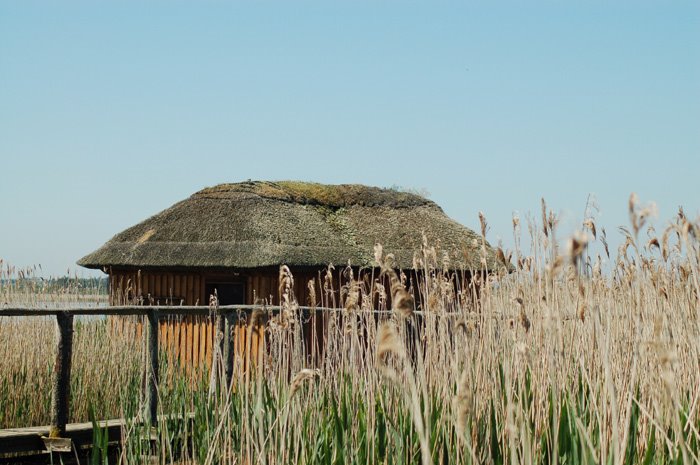
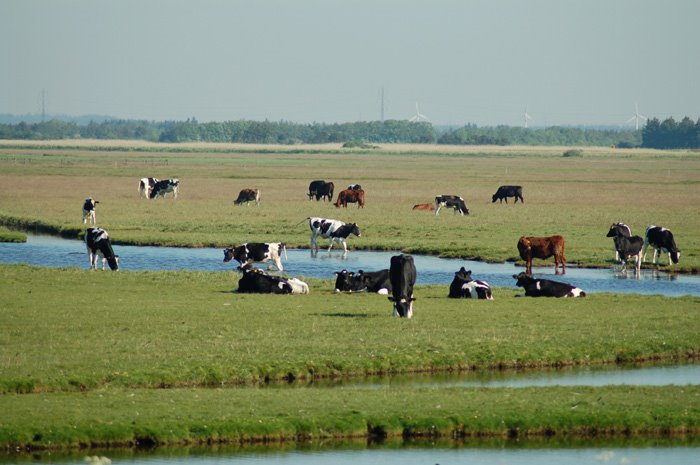
We continued the trip along the northern coast of Randers fjord. Along the fjord lies a long piece of flat land, raised ancient seabed with cultivated and grazed fields, the soil is very fertile and many four- winged farms lie almost wall to wall along the fjord, especially at the village Vestrup. Some meadows are preserved, they have large bird migrations, especially in autumn. In the outernest section near Mellerup is a birds' sanctuary with a rich bird life.


The little ferry sailing between the villages Mellerup and Voer is one of the smallest ferry routes in Denmark. The 470 m long sailing across the fjord takes four minutes. There is place for three-four cars, depending on the size, and for 29 passengers. It is also one of the oldest ferry routes in Denmark's history, it can be traced back to 1610, where the tour was carried out by a barge (also called a kåg) - and it was being rowed across the fjord. The barge carried both passengers, cattle and horse waggons. The ferry traffic between Mellerup and Voer has a complicated history, but it got a royal license in 1740 (Kgl Priviligeret- see the image)


I have just found out today that a café opens in the ferry house from Easter. That sounds good. While we stayed there the other day, we took our usual thermo-coffee and a pecan-Danish in the car. I really must remember to put on some warmer boots. And thick socks, My feets were freezing after having stayed down by the water.  


Notice the ice-crystals in my photos. They were so beautiful in the sun. 


When the ferry was sailing over the first time, a dog stood on the deck, no one else, and the dog did not come back with the ferry. Maybe it was visiting someone! The little sweet ferry called "Ragna" took another trip a little later with a red car. Suddenly a big freight ship, loaded with wood, turned up, it seemed so big in the narrow fjord. The name indicated that it came from Estonia.

The ferry traffic in summer is more heavy, especially in good weather, when people from the northside of the fjord take the ferry to get over to the southside to a special good bathing beach near Voer. And since there now is a café in the ferry house in the summer season, there'll be more lively here - in this picturesque little spot at Randers fjord.


See you soon! Before Christmas! 
photo: 8 december 2012: grethe bachmann 


Tuesday, January 03, 2012

First Day in 2012 - A Bleak Day in a small Island

A Taste of Denmark
Winter

It was a very bleak January day, the first day of the new year 2012 , but the air was warm. The white-tailed eagle had just been seen at the small island Alrø - maybe we would be lucky and see this great bird of prey today. 

Falling church
At the Aakjær manor lived in the 1700s a lady who was extremely vain, Hedevig Margrethe Bornemann. When she died she was buried in a small chapel at Falling church and dressed in a precious silken dress with fine lace - and wearing silk stockings. She had emphasized in her will that  she should have new silk stockings every Christmas -  and it's said that the will was complied up into the 1900s. The parish clerks from Gylling, Ørting and Falling met each Christmas and replaced her silk stockings. In return they were paid 10 rigsdaler  -  this was a big sum of money at that time.

you can see the cut hedgerow in front of the neighbour's hedge.
The present owner of Aakjær, Koed Jørgensen has built a completely new manor, except for the half timbered building, which was restored. Unfortunately he has cut down the beautiful hedgerows along the fields - and this is such a shame, not only for the look of it, but also considering the birds. Hedgerows are perfect living places for small birds. The large fields at Åkjær are now surrounded by cut down hedgerows, and it really looks odd - and not very pretty. I don't understand a farmer who's an enemy of nature.
There is much trouble in his wake. He has destroyed meadows, glades and some water streams. In my opinion it's a serious case, and I'm glad that he's not a common landlord.  His behaviour is obviously rather arrogant - and it seems that he's not at all interested in taking care of nature. It's all about money. 

There is a portal at the forest of Aakjær, which is connected to the legendary figure Svend Felding. He was born at Aakjær, and the bridge across the water stream at Bilsbæk is named  "Svend Feldings Bro". The portal (ruin) is called "Svend Feldings Stald".
( the ruin being the rest of a stable), but old sources say that these ruins were called "spegelhus" = spedalskhedshus (leprosy hospital). In the forest between Hundslund and Ørting is Svend Felding's grave. Svend was said to have the strentgh of 12 men, which was given him by a sorceress - he had promised her not to reveal the secret, but he told the landlord one day -  and the rest of his life he eat and drank as much as 12 men.

the dam to Alrø


But now we'll forget the stories and just take the road to the little island Alrø. Mother Nature has good conditions on Alrø - at least along the coast and in the fjord with a rich bird life. But there are few parking places for visitors. The road from east to west is very narrow, there is only this one road, and it is impossible to do a stop until you reach the western part.


People from other places of the country have recently started restaurants and cafés at Alrø in the summer season. A gourmét restaurant Møllegården has become a popular attraction, the restaurant is established in the old pig house, and parts of the pigsty stands exactly like when the pigs were there. The guests are literally sitting in the booths, where the  feeding troughs and woodwork are kept. This might be the only stable in Denmark with wireless internet, but people like to feel they are in a real stable. The restaurant offers a little, but exclusive dining card, but this means that people don't have to wait long for their dinner. The Café Alrø is in a cosy farm building where they serve a simple, traditional lunch/dinner.

  
some red-breasted mergansers

Lerdrup Bugt


In the outer section of Horsens fjord are two bird sanctuaries, Vorsø and Lerdrup Bugt. This part of Horsens fjord is appointed as Ramsar and EF-birdprotection area. The island Vorsø was listed since 1917, it is owned by the Ministry of Environment. The bird life on and around Vorsø is very rich. Eiders are seen all year, but most wellknown is the large colony of cormorants at Vorsø with more than 4000 breeding pairs. The waters around Vorsø is an important resting place for ducks and waders, especially in winter. A large number of ducks like mallard, wigeon and goldeneye, while common sandpiper, bar-tailed godwit, and Eurasian curlew are often seen.


 Lerdrup Bugt is a low watered bay with beach meadows and dry wades and small uninhabited islets. It is a very important breeding area for ducks and waders and for seagulls and terns. The area is also important as a resting place for ducks and waders. The most common waders are plover, common sandpiper and goldeneye.


view to vorsø
Lerdrup Bugt Vildtreservat (Game reserve) and Vorsø Naturreservat are two among ab. 50 reserves which were established or extended before 2000. The reserves expand the existing network for breeding and migrating water birds in Denmark. The reserves are sanctuaries, where the birds have peace and quiet to rest and seek food. It is expected - based in experiences from reserves in Limfjorden and at the island Møn - that the reserves will increase the numbers of resting birds in the areas. The effect of the reserves will be followed in a surveillance program by the Ministry of Environmen and the Nature Agency.

Source: Naturstyrelsen

And on the southeastern corner we looked for the whitetailed eagle, but it was nowhere to be seen. I guess it was resting high in some tree, digesting the cormorant  or a fat duck it might have caught this morning!


on our way home "upon the continent" we passed Gylling church.


photo 1. January 2012: grethe bachmann

Sunday, May 09, 2010

Marsh Harrier/Rørhøg

Lille Vildmose, North Jutland
and
The Story about the Long-billed Dowitcher ,
the Sparrow Hawk and the Fox


Marsh Harrier/ Rørhøg
(Circus aeruginosus)

Suddenly the marsh harrier showed beside our car and followed us on the long road that leads through a section of the nature reserve Lille Vildmose in the northeastern part of Jutland. We were out looking for the cranes. It was a cold, grey day -and in the night were frost degrees. We had reached the eight day of May. Only 6 degrees Celsius at noon. When will the sun and the warmth arrive?


The marsh harrier is a raptor with a wing span of 135 cm, a rare bird in Denmark with only 650-800 breeding couple. It builds its nest upon the ground in reed beds, in moors and along lake shores. Here is also the main part of its food, like water birds, water voles and mice. The marsh harrier is a migrating bird with winter quarters in the western Africa. A large number of marsh harriers from Sweden and Finland pass Denmark under both the spring- and autumn migration.


The marsh harrier is typically seen hovering on raised wings above reedbeds looking for prey. It is also a common thing to see it hunting in fields and meadows. Its large wings and small body weight makes this raptor eminent for this type of hunting. The male's plumage is striking with a brown back, blue grey tail and flight feathers and black wing tips. The underside of the wing is white with a black tip. The female is self-coloured dark brown with light crown, chin and wing fronts. The species belongs to the group of harriers, which in Denmark is also represented by Blå Kærhøg/Hen Harrier (Circus cyaneus) and Hedehøg/Montagu's Harrier. (Circus pygargus).


The marsh harrier is native to the southern Scandinavia down through western Europe and east to Russia. Closely related species live in the southern Africa, in Sibiria, the Pacific region with Australia and New Zealand and finally at Madagaskar. In Denmark it is found in wet areas with wellgrown reed woods, mainly in the southern and eastern part of the country, but some of the largest populations are in Jutland in the bird-sanctuaries: in Tøndermarsken, in Vejlerne and upon the Tipperne, which together with the Maribosøerne (lakes) at Lolland are top localities for the marsh harrier.


photo Vejlerne June 2006: stig bachmann nielsen, Naturplan Foto

Finally the marsh harrier left us and disappeared across the moor. We did not find the cranes that day. The birdwatchers only saw one, although there is a large flock now, but the moor is enormous with many hiding places for the birds. What do they care about those silly birdwatchers? We're watching out for flora and fauna in order to get some photos. A real birdwatcher is able to stay the whole day in rain and storm in order to watch a rare bird like a blue-winged duck, who suddenly came to visit Lille Vildmose a few days ago.

Last week there was a drama in Lille Vildmose. The birdwatchers were watching a long-billed Dowitcher, which is a foreign bird in Denmark. It had stayed in Lille Vildmose for some time- and the birdwatchers kept a close eye on it and made reports. Then suddenly, the other day, while the Dowitcher was peacefully tripping around in the water, came a sparrow hawk as quick as lightning. Pfuit! It all happened so fast and the birdwatchers were shocked. The sparrow hawk started eating the poor dowitcher, but then out of the blue came a fox - the sparrow hawk and the fox stared at each other, looking vigilant and hesitant, but the sparrow hawk made the choice to disappear, and the fox went off with the rare bird, probably unaware that this was a rather valuable steak.

photo: The fox with the dowitcher

Back to the grey day. The rain began and it was raining cats and dogs, we do not endure rain and storm like the birdwatchers, so we gave up and went home, but there'll be another day in Lille Vildmose in summer with lots of birds and butterflies and flowers.

photo Lille Vildmose 8. May 2010 : grethe bachmann

Sunday, December 13, 2009

Vejlerne, North Jutland


Marsh harrier

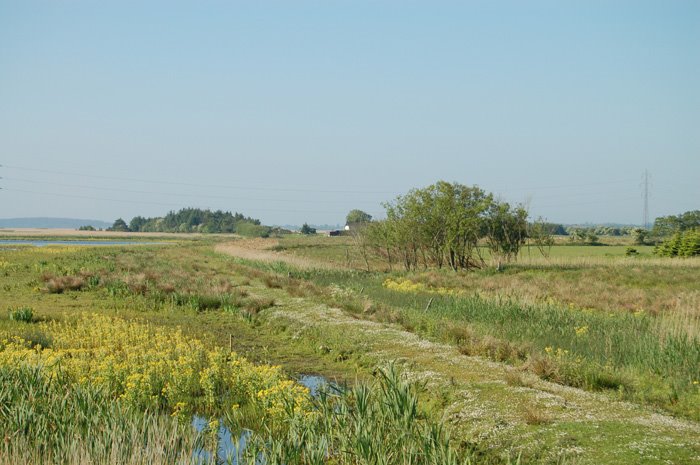
Vejlerne is a huge nature area situated between Lønnerup fjord to the west, Lund fjord to the north, Bygholm Vejle to the east and Limfjorden to the south. The area is about 6000 hectare, and it covers various nature types like meadow, reed wood, moor and fjord. The many fjords in the area were earlier connected to Limfjorden, and the areas with the byname Vejle (Bygholm Vejle, Arup Vejle, Krap Vejle etc) were a section of the waters close to the coasts of Limfjorden.

A drainage project had its beginning in 1866. Engineers, entrepreneurs, landowners tried with lesser succes during 40 years to drain the low waters of Limfjorden (Østerild fjord, Vesløs/Arup Vejle, Tømmerby fjord, Lund fjord and Bygholm Vejle), but they had to give up after having fought against weather, wind and the power of nature - and at last they had to admit that it was an almost impossible task to drain the earlier sea-bed.(with the technique from those days).


Krap Vejle

Krap Vejle, I heard but didn't see the Eurasian bittern


Krap Vejle, a young one

The area has since the stop of the drainage project been laid out as a protected nature reserve with national and international rules, and it is now assigned to the rules for EU-bird-protection-areas, Ramsar- areas and hunting-free areas. The varied nature in Vejlerne has a special chapter of Danish history, and many books have been written about the flora and fauna in this district. The area is now almost untouched, except the yearly cattle grazing and mowing in the largest meadow areas.

Vejlerne are visited all year by large bird populations. The amounts of ice and snow in winter decide how many birds are in the area. If the winter is mild there will be large flocks of pink-footed goose and whooper swan, various ducks and over wintering birds of prey, like blue harrier, white-tailed eagle and peregrine falcon. Upon meadows and fields are flocks of snow buntings and shore larks. If the winter is hard, Vejlerne might not be rich in birds.


Kærup Holme

Kærup Holme, a view from the tower

Kærup Holme, a nice little family

In spring come large populations of ducks if the waterlevels are ideal. Numerous are i.e. widgeon and teal. The pink-footed goose culminate in March, the same does the barnacle-goose. The spring migration guests arrive at the same time, Eurasian spoonbill, Common Crane, Black-tailed godwit and Pied Avocet. The wading birds' spring migration are dominated by various sandpipers, Eurasian golden plover, ruffs. Temminck's stint has one of the best localities in Vejlerne. As for breeding birds Vejlerne is unique, since the area has some of the most important populations of Eurasian bittern, greylag goose, spotted crake, common dunlin, black-tailed godwit, pied avocet, ruff, and black Tern. Little gull breeds occassionally.


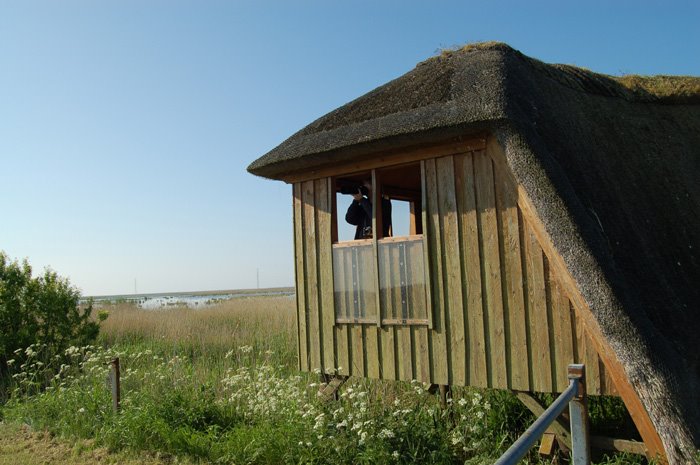
Bygholm Vejle, a popular place for bird watching.


Bygholm Vejle, two towers connected


Bygholm Vejle, cattle-grazing


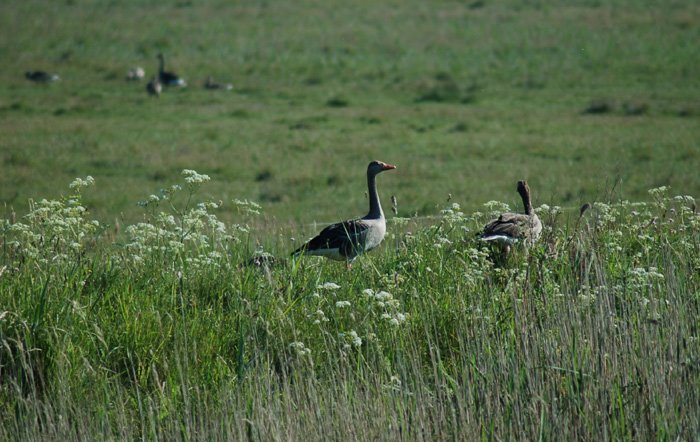
Bygholm Vejle, geese

Bygholm Vejle, Mute swan

During summer the birds are dominated by wading birds, common shelduck, and usually seen little egret, great egret, Caspian tern etc. At the same time the Eurasian spoonbills arrive from the breeding place in Nibe bredning and gather at the meadow in Bygholm Vejle with their young ones. More than 100 birds at the same time (200/ 162). Little gulls are often numerous in Kærup Holme area. Late summer come more and more cranes and they culminate usually in the end of September or start of October with up till 121 birds (in 2006). The cranes are easiest to see from the Kraptårnet, where they come flying across the Bygholm meadow for overnighting or fouraging in the fields east of Vejlerne. Autumn is like spring, but often the populations are much larger, i.e. up till 40.000 ducks, 13.000 greylag geese and 18.000 golden plovers. Peregrine falcon is seen regularly and up till nine have been seen at the same time on a September's day. In September and October are large numbers of bearded tits with their characteristic flying up and down.

Over 300 various bird species are seen in Vejlerne, the list of accidental guests is very long. American bittern, black-crowned night heron, purple heron, glossy ibis, red-breasted goose, blue-winged teal, Braillon's crake, Demoiselle crane, black-necked stilt, collared pratincole, black-winged pratincole, American golden plover, white-tailed lapwing, stilt sandpiper, lesser yellowleg, long-billed dowitcher, whiskered tern, snowy owl, red-rumped swallow, Blyth's pipit, citrine wagtail , Siberian stonechat, White's thrush, Pallas's warbler, lesser grey shrike, rosy starling, rustic bunting, little bunting - just to mention a few.

photo
Vejlerne: grethe bachmann