Showing posts with label tea. Show all posts

Friday, January 15, 2016

Thyme, Timian


Thymus vulgaris
Thymus vulgaris


Thyme is a half bush with square stalks, green leaves, dark violet, white or pink flowers. The herb has a very pleasant aroma which attracts honey bees.

Thyme is today a wellknown and popular spice herb all over the worl. The plant originated in the Mediterranean  regions and is known from time immemorial. It is an evergreen herb with culinary, medicinal and ornamental uses. The most common variety is Thymus vulgaris. Thyme is of the genus thymus of the mint family lamiaceae and a relative of oregano and it is one of the oldest spice herbs. It was already mentioned by the Sumerers 5000 BC. The Greek word thymus means power. The herb grows wild in all of southern Europe and is found up to a height of 1000 meter.


Ancient Egypt, Anubis attending embalming of mummy
Ancient Egyptians used thyme for embalming. The ancient Greeks used it in their baths and burnt it as incense in their temples, they believed it was a source of courage. The Greeks wore it on the breast and took a thyme bath before they went to war. Olympic masters were garlanded with thyme. The spread of thyme throughout Europe was thought to be due to the Romans, as they used it to purify their rooms and to "give an aromatic flavour to cheese and liqueurs".

Fairy, Midsummer Eve, E.R. Hughes 1908


In the European Middle Ages, the herb was placed beneath pillows to aid sleep and ward off nightmares. In the days of chivalry ladies would embroider a bee hovering over a sprig of thyme to present to their champions at the tournaments.  The association with magic and fairies was particularly noticeable during Shakespeare's time. In the Ashmolean museum in Oxford is a recipe dated 1600 that includes thyme, which will enable one to see the fairies. Medicinally thyme has been associated with the treatment of depressions. Thyme was also used as incense and placed on coffins during funerals , as it was supposed to assure passage into the next life.


In Denmark 
Thyme was a daily spice upon the king's dinner table in the summer 1541,  and it is mentioned in 1613 about some purchase of thyme seeds to the royal garden at Skanderborg Slot. In 1650 as a cut thyme-frame of garden beds; it had to be cut two days before New Moon. The thyme plant was known by both rich and poor in Denmark. Yearly was sowed and plant numerous plants - and people said that "it was really not necessary to tell everyone that they used thyme in the kitchen every day -  for everyone knew that it was one of the finest food herbs". 

In a market today

Gardeners from Funen sold in the 1700s seeds and plants of thyme at markets in Holstein and Jutland, and it was probably exported to Norway.  Thyme was called craddle straw like other strongly scenting herbs which could drive away bed fleas. In the Middle Ages it was often called Virgin Mary's Bedstraw  (Jomfru Maries sengehalm) like another herb, yellow bedstraw. Thyme was also called bee herb, the honey bees love thyme  In autum thyme was bound into garlands around hoops and hung to dry in the ceiling and later at the attic for use in the next winter.

At the market in Copenhagen was in 1967 sold 295.000 bundles of thyme.


Thymus vulgaris : common thyme, English thyme, summer thyme, winter thyme, French thyme or garden thyme is a commonly used culinary herb. It also has medical uses. Common thyme is a Mediterranean perennial which is best suited to well drained soils and full sun.
(There are about 100 varieties of thyme) 


Thymus serpyllum , Boeslum, Mols, photo gb
In Denmark are two species of wild growing thyme:
1) *Thymus serpyllum (DK: smalbladet timian)is low and creeping and a very branchy halfbush with red flowers in dense heads, it is common in dry sandy fields and hills, in hedges,wickets, in dunes, in heathers etc like its very alike 2) Thymus pulegioides (DK: bredbladet timian

 Thymus serpyllum: wild thyme, creeping thyme is an important nectar source plant for honeybees. All thyme species are nectar sources, but wild thyme covers large areas of droughty, rocky soils in southern Europe, both Greece and Malta are especially famous for wild thyme honey. The lowest growing of the widely used thyme is good for walkways  It is also an important caterpillar plant for large and common blue butterflies.


Other varieties:

Thymus pseudolanuginosus: wooly thyme is not a culinary herb, but is grown as a ground cover.

Thymus herba-barona: caraway thyme is used both as a culinary herb and a ground cover and has a very strong caraway scent due to the chemical cavone

Thymus citriodorus, wikimedia
Thymus citridiodorus  - various lemon thymes, orange thymes, lime thymes. Lemon thyme is a creeping wintergreen plant with a strong lemon taste. It has blue flowers in June- July - it is a fine and useful plant, both in the herbal garden and the rock garden. As a medicine plant it is used against whooping cough, diarrhea and stomach pain. It has wound-healing properties and is used in mouth water, in gum inflammation and as a cover on wounds and scratches. As a spice herb it is used instead of lemon balm, fx in fish dishes and salads. A little twig of lemon thyme in the tea takes a bitter taste and sweetens the tea and makes sugar unneccessary. The plant thrives well in a sunny place in the garden in sandy soil. Spring and summer the plant easily takes roots. It grows fast and it keeps green in normal winters, but much bare frost might take the green.


The name of the genus of fish thymallus, first given to the grayling (T. thymallus described in the 1758 edition of systema naturae by Swedish zoologist Carl Linneaeus) originates from the faint smell of the herb thyme, which emanates from the flesh.


Garden


Herb garden, Boller slot, photo: gb
Garden thyme (Thymus vulgaris)  is a relatively  hardy plant which can withstand to be trodden on. It is very suited to be plant among the tiles and stones, where it will spread as a thick and scenting carpet. The creeping growth of thyme makes it a fine ground covering plant in many sunny beds of the garden, where it can prevent outdrying of the soil and keep down the weeds. It is also good in the rock garden.

Thyme seeds keep their viability for about 3 years. Thyme can grow in the same place in the garden for about 3-4 years, it can be cut down in spring to prevent the plant from getting lanky and wooden-like, old plants can be divided and plant again. Thyme can also sow itself  and these small plants can be plant out in the garden.

Thyme is suitable for planting in pots and bowls at the terasse, and since it is very drought tolerant it can be plant on the sunny places in the garden slopes. In England it is a popular thing to plant several varieties of thyme together in a lawn. It will quickly become an entwined carpet with flowers, scent and attraction to the bees.

To harvest in high season July-August: cut the stalks off and bundle them, put in small brown paperbags after drying, keep in bags until use in kitchen, crumble the bouquets over a sieve which gives a fine and smooth spice  - and it is easier to remove the little branches.

All thymes can easily be propagated with herbaceous cuttings,  many varieties of thyme tend to get a course growth if they are not cut back in spring. It is best to plant thyme in a sunny place, but else the plant is not asking much as for the soil. If a garden has some big areas it is popular to arrange thyme lawns with stepping stones, which is commonly seen in the English country garden. Every four years it is best to replace the plant, take cuttings from the second year on for this purpose.


The young thyme plants are the most vigorous, it is good to renew the plant each second year. Thyme likes a sunny place and its aromatic substances gets heavyer in the sunshine. If the garden-soil is heavy, mix it with sand or grovel, winter-cover is also a good idea, hard winters can eliminate the thyme in the garden. In dry periods thyme must be watered in spite of its hardiness.

Thyme was cultivated in the gardens of Thorshavn, the Faroes in 1780. 


Food


Thyme is sold both fresh and dried. While summer-seasonal, fresh greenhouse thyme is often available year round. The fresh form is more flavourful, but also less convenient; storage life is rarely more than a week. Although the fresh form only lasts a week or two under refrigeration, it can last many months if carefully frozen The plant can take deep freezes and are found growing wild on mountain highlands along the Italian Riviera, it is found from sea level up to 800 m.


Thyme retain its flavour on drying better than many other herbs.It is a common component of the bouquet garni and of herbes de Provence. The lovely aroma of thyme makes is very useful in the kitchen. The fresh leaves as a spice in meat, fish, poultry and in soups. Thyme gives a welltasting tea and is a good pickle spice fx for pickled beetroots, onions or in common pickles.The thyme flowers can be used as a decoration or mixed in a salad dressing, they have a sweet taste and are pretty as a decoration in every kind of dessert.

An old dish from  the Danish island Funen is called "sve". It is thyme and onion in sheep-blood, cooked  with oats to a thick porridge  


Thyme was added to sausage, cabbage and all slaughtering food  When the pig intestines were cleansed they lay until next use in water with a big bundle of thyme which removed eventual bad smell. 

Wild thyme is not worth using as a spice herb, but it was used as a spice in sausages and cabbage if people had no garden thyme. It was said that if a pig eat much thyme it would get a taste like wild boar.

Other Use
Thyme keeps colour and scent very well after drying and is good in a scent potpourri and to bring taste in a snaps


Folk Medicine/Medicine

Old pharmacy, Viborg Museum, photo gb
Thyme was used as a mild antiseptic herb for both outer and inner use, it was a good tea against insomnia, especially very hot and mixed with honey. Thyme was used in cough mixtures and in medicine for the digestive system , an oil from thyme was used to treat shingles.Thyme was also used against female diseases and  in chastity rituals.  Thyme was mixed into the bed straw against fever and dwindling sot  A decoction was used against whooping cough, croup and bronchitis. An oil essence and extraction of thyme was sold at the pharmacy as a cough medicine 

Thyme cooked together with other spice herbs and used as a cover on knots or bumps and bruises.  Thyme in very hot tea upon a sore tooth.  Oil from garden thyme added to mouth water against toothache. The Pharmacopoeia sold Thymus serpyllum and Thymus vulgaris in 1772.   At the Faroes the tea was used as a stomach strengthener and at Greenland the tea was drunk to heal manic insanity.

A tea of equal parts of thyme, peppermint, bay leaf  and camomile was used against fatigue.
medicine


The volative oil thymol, which gives the strong scent is very antibacterial and was in the past used to desinfect hospital tools.  In folk medicine it was used against menses-pain, diarrhea, coughs and
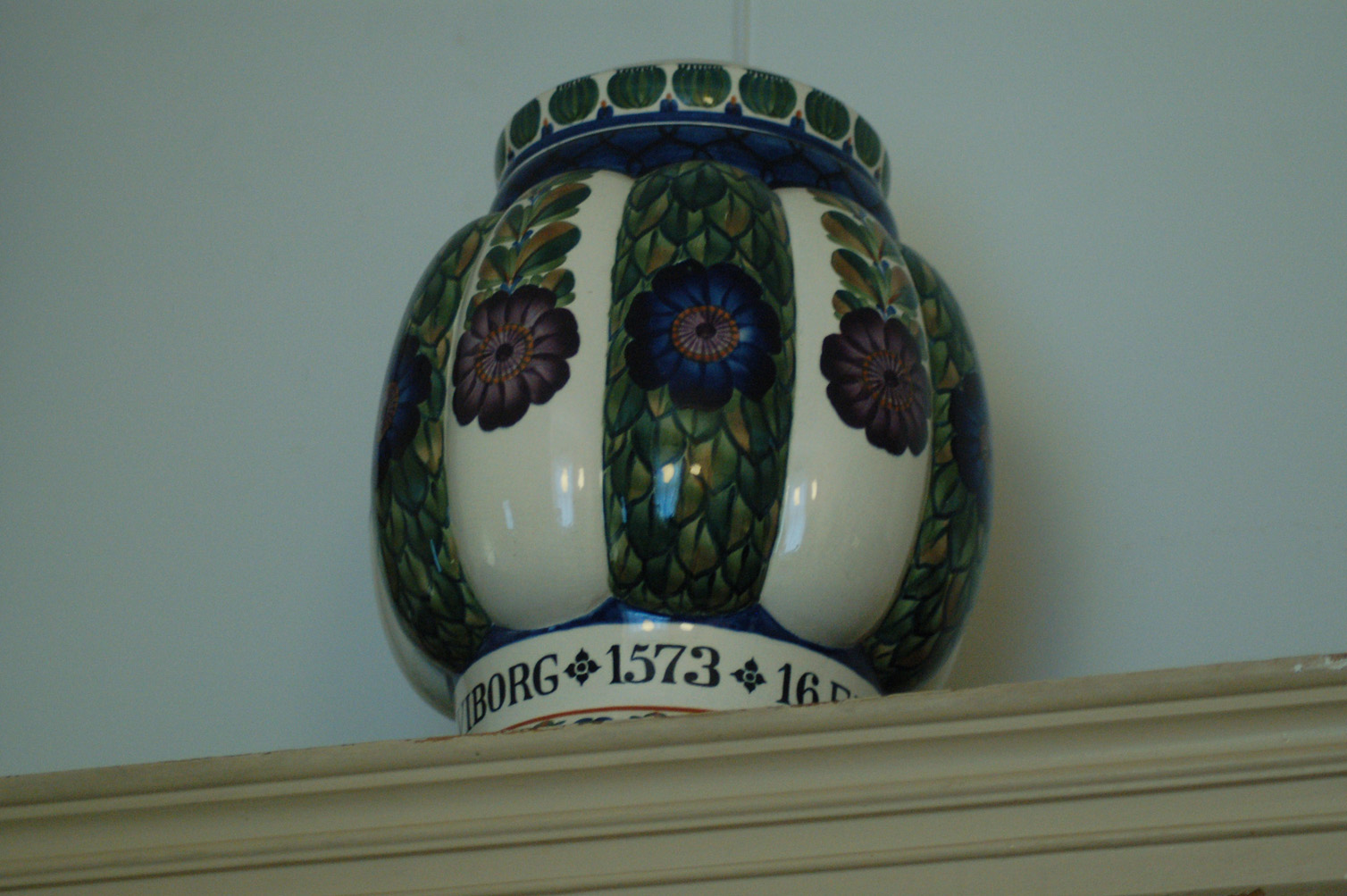
Old pharmacy jar, Viborg museum, photo gb
headache. It is still recommended up till present as a tea for a soar throat and hangovers. Thymol is extracted in the medicinal industry, it is used in mouth water, tooth paste and as a means against tooth ache, and as an ingredience in some desinfectants. The oil is a part of a medicine against whooping cough.


The old Physicians' Medicine:
old medicine bottes, Viborg museum, photo gb
Henrik Harpestræng ab 1300: thyme crushed with vinegar and rose oil in a balm against headache, a decoction was a part of food, so people did not get hurt by worms and other poisonous animals while they were sleeping in the field. Thyme was used as a cover on bites and poisonous stings. Poisonous animals flee from the smoke of burning thyme. 

Christiern Pedersen 1533
Thyme was part of a gout patch, and as a wine decoction against nausea,  the juice of thyme upon

haemorrhoids, crushed thyme mixed with salt was put upon fistulas and cancer. 

Henrik Smid 1546 
A decoction with thyme casts out slime of the kidneys and blatter and stops intestinal twisting,
he also uses thyme as an antidote in bites of posisonous animals. They  were driven away by the smoke from thyme  Thyme was a multi-medicine and used in all kinds of diseases. Mentioning a few: Thyme heals bowles which are sore after blood sot = dysentery; it strengthens the brain to smell to the plant, it can be put upon the head against dissiness, garden thyme cooked in wine is good for shortness of breath , drives out worms, poison, dead embryo etc. 

Simon Paulli 1648
Oil of thyme against head and kidney pain, clusters of garden thyme put in beer as a means for melancholia, wild thyme has empowering and expectorant properties. as a part of a balm it was in the 1700s used as a cover for headache and dissiness. Used in a tea against colic  A decoction to children with intestinal worms 


Farmhands chamber, Hjerl Open Air Museum, photo gb
Superstition; and against vermits
An advice to the farmer: Pluck thyme silently and put it under the first sheaf of straw, this will keep away the rats.
The bedstraw which was delivered to Christian 4. was mixed with thyme as a protection aginast bed fleas. or else it was said that wild thyme only drove away women's fleas and not men's fleas. 
Chicken with fleas or other vermins were smoked with thyme and hops. 
Against flea beetles put out thyme mixed with wormwood and garlic.


Replacement of tea, hops and tobacco.
Shag tobacco, wikipedia
Children in the country were sent out with a basket to pluck wild thyme, which was dried and gave a tea substitute in winter (1880) The tea was added sugar and cinnamon  An old saying was "this tea you must have when the windows are white" = when it is hard frost. Wild thyme tea was in the 1800s recommended as a substitute for hops Also in Greenland was wild thyme used as a tea 
InWWII thyme was dried into shag tobacco, and already in 1780-1800 they used the thyme as tobacco and to chew. 


Livestock 
Hjerl Hede Open Air Museum, photo gb
Thyme was a part of a cover upon the abscesses of the horse. Wine with crushed thyme was rubbed upon the tongue of a cow against heart- inflammation. Tea of thyme was used to bathe the cattle against the food and mouth disease. 


photo: market, Thymus serpyllum, pharmacy, Viborg Museum, Hjerl Hede Open Air Museum: grethe bachmann
other photos: wikipedia
Sketches: grethe bachmann  

Source:
Krydderurter i haven , Anemette Olesen, Politiken, 1996/1998. 
Danske klosterurter, Anemette Olesen Aschehoug 2001.
Brøndegaard, Folk og Flora, bd. 4, Thymus vulgaris.
Krydderurtehaven paa knatten , Annemarta Borgen,
A Garden Herbal Anthony Gardiner
Ceres Esplan Helbredende urter 1981, Hernovs forlag, oversat af Hans Henrik Sørensen og Michael Beck fra Vitskøl Kloster. Original titel: "Herbal teas, tisanes and loitions."


Sunday, October 04, 2015

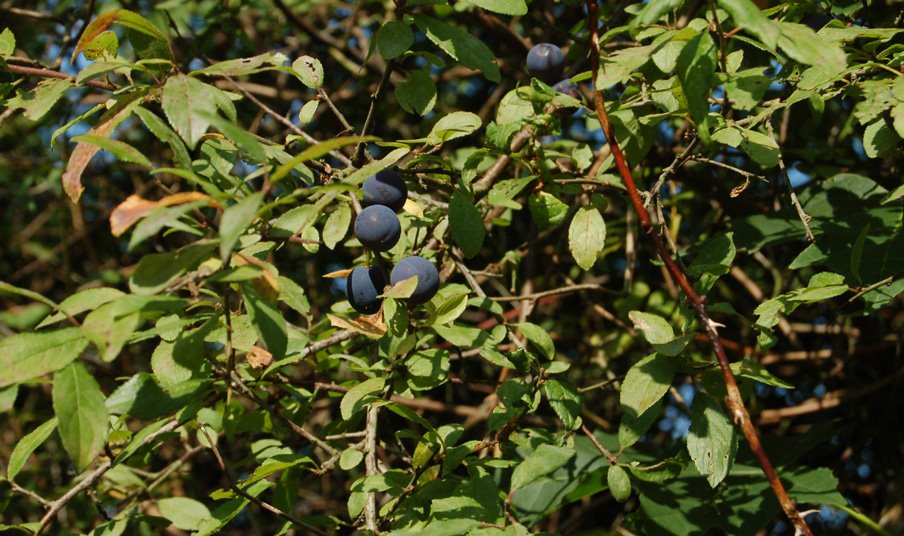
Blackthorn / Slåen


Prunus spinosa

Blackthorn grows at cliffs, embankments along the beach, cleanings on edges of woodland, thicket and fences. It is extensively planted for hedging and a cover for game birds. Some forms are grown for ornament and flowers. The fruit is called sloe, which is similar to a small damson as plum suitable for preserves, but too tart to eat. The berries are best after the first night's frost, but if they are plucked before that period, they can either be pricked by a fork or put in the freezer for a few days. Sloe is used for juice, syrups, jams, jellies, liqueur, wine and snaps.

The foliage is sometimes eaten by larvaes of  Lepidoptera (like the Brown and the Black Hairstreak butterfly). The pocket plum gall is found on the fruit, where it results in an elongated and flattened gall, devoid of a stone.


In the 1700s and 1800s:
It was a common thing in the time after harvest and after the first nigh frost to gather sloe, scold them and eat them. Infusion gave a well-tasting and healthy juice, which people drunk together with porridge instead of milk. The berries cooked with syrup or sugar and fermented on a wooden barrel was popular as a porridge. Sloe-must was made by just pouring cooked water over the berries and let the infusion ferment for 3-4 weeks. Berries crushed with the kernels gave a juice with a spicy taste. After the first night of frost the farmers' wives plucked the sloe-berries in large baskets and made a fine red juice, which was hidden in a barrel until Christmas Evening. The clear light red juice drunk in wine glass and sweetened with sugar was a popular refreshing drink during summer. It tastes a little like red wine, bad red wine was despisingly called "sloe-juice". Beer cooked with the berries makes such a good taste that it is like old red wine. From the flowers were made aqvavit, and the berries were used to clear must. They bring a pleasant taste to beer and a pretty colour, but they can also improve apple-must during the fermentation.

Jam, Cheese and Tea.
The berries preserved with sugar and cinnamon gave jam for a winter salad or a steak sauce, after they had got frost they were put with honey in jars as a jam. In Vendsyssel (North Jutland) were sloe-berries used when preserving pumpkins. If the barch was used when making cheese the cheese wouldn't rotten. The new dried leaves were a good tea, also the dried flowers mixed with strawberry-leaves.


Sloe-Wine and Liqueur

In 1580 the vasal at Kronborg let gather 2-3 barrels of sloe, from which the king's cupbearer made sloe-wine for Frederik II. The wine made by chrushed berries and kernels was very intoxicating and was only served on special occassions. During WWII a wine firm in Odense (at Funen) advertised for sloe-berries. From the fruits are also made a liqueur.
 
Sloe-Gin
In rural Britain a so-called sloe-gin is made from the sloe. It is not a true gin but an infusion of vodka, gin, or neutral spirits with the fruit to produce a liqueur. In Navarre, Spain is a popular liqueur Patxacan made with sloe. Sloe is also excellent for a herbal snaps. From fermented sloes are made wine in Germany and other central European countries. Sloe is also good as jam and if preserved with vinegar, have a similar taste to the Japanese umeboshi.


Folk Medicine:
The juice of sloe was used for stomach pain - and the flowers drawn in warm beer was used for childrens' motions. It was also used to cure tooth-ache, pain in the eyes , blood poisoning, shingles and much more. Physician Christiern Pedersen 1533: crushed leaves and barch used on on shingles. Eyedrops from the pulverized barch in wine. Physician Simon Paulli 1648: berry-juice with beer for stomach problems. Children with constipation had the flowers in warm beer. Vinegar-decoct from the green medium barch was effective against toothache. The flowers in a healing morning drink , destilled water from the flowers for bronchitis, cleaning the body etc. A tea cleansed the blood and was laxative. The barch was used against malaria, the berries gave a healing drink against fevers, and mixed with cherries against diarrhoea. A milk decoct from flowers for a drink or a bath to remove freckles. The fruit juice for sores in the mouth or to rub upon swellings and against nosebleed. In 1772 flowers and fruit were entered into the pharmacopoeia.

Dye:
Unripe berries dye black, the juice of the ripe berries dye pale brown, while the dried berries make wool red. The barch gives with alun a red dye, unripe berries with iron vitriol give a dye like black ink. The unripe berries and the barch were used in tanning.


Other Use:
Blackthorn was recommended for hedges around gardens and fields, in Denmark this is much used especially at Funen. Many loads of cut blackthorn from the hedges were brought home as a fuel for the baking ovens. Before or in the killing season at the farms when sausages were made, the children gathered thorns from sloe, which in the evening were scraped clean , dried upon the oven and eventually burnt in the tips and then used as sausage-sticks; this was a tradition in most parts of the country  (DK) - and the sausage sticks were sold at the market. Boys also used the thorns as arrow-heads. From the wood were made music instruments, it was commonly used in turner-works and for mathematical instruments. From the tough wood were made walking sticks, hammer - and axen handles. During WWII gramophone needles were made from sloe thorns, they gave lesser needle-noise and lesser wear on the records than metal needles.

Blackthorn makes and excellent fire wood that burns slowly with a good heat and little smoke.

Straight blackthorn stems have traditionally been made into walking sticks or clubs (known in Ireland as a shillelagh). In the British Army, blackthorn sticks are carried by commissioned officers of the Royal Irish Regiment; the tradition also occurs in Irish regiments in some Commonwealth countries.

Ink: 
Shlomo yitzhaki, a Talmudist commentator of the High Middle Ages,  writes that the sap (or gum) of P. spinosa (or what he refers to as the prunellier) was used as an ingredient in the making of some inks used for manuscripts.

Fishing: 
A "sloe-thorn worm" used as fishing bait is mentioned in the 15th century work, The Treatyse of Fishing with an Angle, by Juliana Berners.The expression "sloe-eyed" for a person with dark eyes comes from the fruit, and is first attested in A.J.Wilson's novel Vashti.

Making snaps:
Put sloe berries in a glass or bottle with double amount alcohol. Filtration after 2-3 months. There is now a pretty dark red to violet essence, which can be thinned as you like. The berries can be used again together with the crushed stones in a new amount of alcohol to draw for a month or two, which gives a drink with a taste of almond. A sloe snaps gets better and better when stored. It is excellent for herring and cheese. Added honey makes it a snaps for desserts.


text and photo: grethe bachmann

Wednesday, September 18, 2013

Elderberry Juice, Black Tea and Jasmin Oil.


Elderberry
Autumn is on its way, you cannot avoid it. The nights grow colder and the sun is losing some power. Stop your colds and your sneezing. Have some elderberry juice ready. If you'd like to be ahead, before it hits you then pluck a basket, full of the healthy black elderberries and make some juice. Take care it might give extra colour to your kitchen table.
If you cannot find elderberries in your  nearby forest, there is enough elderberry - like bottles with juice and soup in the frost disc - to get in the shops.

Scientific research has shown that elderberry juice can reduce fever, tiredness, headache and relieve sore throats. The elderberry juice is a vitaminbomb with a high content of C-vitamins and flavonoids. which promote the absorption of the vitamins. 


Black Tea
The green tea is the most emphasized tea, when it's about your health, but the black tea has also entered the field. The black tea contains some flavonoids, which Australian scientists have examined for their regulating effect on the blood pressure. The scientists selected a group of 112 women and men, who all had a high blood pressure. Half of the group had to drink three cups black tea daily, the other half had to drink three cups of a drink without flavonoids.

It showed already from the first day that the group, which drank black tea, had reduced their blood pressure. The experiment ran for six months, and the effect stayed all the way. The group, who did not get the black tea, had  unchanged blood pressure.

Source: American Journal of Clinical Nutrition.


Jasmin Oil
If you suffer from anxiety, or if you have a constant feeling of uneasiness then try to get some etheric Jasmin oil. Just if to stick your nose down in a blooming jasmin makes you feel you'll have to take a deep breath and let the good feeling spread in your body.
The concentrated etheric oil from jasmin shows that it is able to compete with the most common anxiety medicines like barbiturates, benzodiazepines and propofol.

German scientists conclude in Journal of Biological Chemistry that there is scientific evidence to use the etheric oil of jasmin against anxiety, uneasiness and insomnia. A fragrance lamp and a bottle of the etheric jasmin oil can help you. Let the fragrance spread in your room and feel the tranquility!


Source: Magazine Søndag, Nyt om din sundhed, Søndags Sundhedspanel. 2013.
photo 2005/2012 : grethe bachmann nielsen

Sunday, April 22, 2012

Boosting Your Burning..........

.......... with 5 healthy things.


In  my weekly magazine were 12 pages, a whole section, with advice for health and beauty, one better than the other and one more forgetfull and expensive than the other . But there was a good little page with 5 healthy things which would be easy to remember. And not only if you want a weight loss but just want to treat your body in a good way.

Green Tea.
Most people know green tea. It promotes the combustion, it reduces the bad cholesterol and reduces the fat depots. Studies have shown that green tea inhibits the ensyme lipase, which deplete the fat in the food, and therefore lesser fat is absorbed. Green tea also stimulates the thermogenesis, (which promotes the calorie burning). Green tea reduces the speed, and thereby carbohydrates are taken into the bloodstream.

Chili.
New studies show that special natural plant-substances like capsaicin and epigallocatechin gallate affect the food-caused stimulation of the compustion. Both substances are in chili. Strong spices boot the system and give you warmth -  and at the same time they boot the socalled food-induced compustion - daily just called compustion or burning - and this burns off your calories.

Apple Cider Vinegar
Apple cider vinegar alone does not give you a weight loss, but together with a sensible food it supports the weight loss immensely and counteracts the side effects in a food, which contains lesser calories than you burn.


Grapefruit     
It has been shown that plant chemicals in grapefruit can contribute to reduce the insuline level in the body and thereby the amount of the energy from the meal, which is transformed into fat.


All Vitamins and Minerals
And then it is important to be supplied with all essential vitamins, minerals and fats daily - especially if you want a weight loss. 


Source: Caroline Fibæk,  Femina, nr. 16, 19. April 2012, Aller Media A/S , Havneholmen, København.

photos: copies

Tuesday, March 06, 2012

Burr Marigold/ Brøndsel

Bidens tripartita
 
The family Bidens (DK: Brøndsel) is spread in Europe and in North and South America. They are herbs and bushes with opposite leaves and small composites of yellow flowers in august-September. The fruits are equipped with barbs.The Burr Marigold is common at ponds, village ponds, lakes, in pit bogs, ditches etc.  The Bidens cernuus grows in the same habitats but is not as common as the tripartita. The common names beggarticks, black jack, bur-marigolds, stickseeds, tickseeds and tickseed sunflowers refer to the burrs on the seeds, most of which are barbed. The generic name refers to the same fact; it means "two-tooth", from Latin bis "two" + dens "tooth". 

The old Danish name Bryndsel means ildebrand (fire), because the flowers dye fabrics in a strong yellow hue called brandgult ( fire yellow).


Painted Lady/Tidselsommerfugl


The plants are zoochorus; their seeds will stick to clothing, fur or feathers, and be carried to new habitat. This has enabled them to colonize a wide range, including many oceanic islands. Some of these species occur only in a very restricted range and several are now threatened with extinction, They were and are still used to make a refreshening tea. Some of the species are sometimes eaten as a vegetable, others are very bitter, others are fine honey plants - and several Bidens are used as food by caterpillars of certain Lepidoptera, like Painted Lady.


Dyeing:
The Burr Marigold  is mentioned in Denmark in 1670 among plants, which dye a strong yellow. The flowers with alum dye yellow, the flowers with potash dye a strong light yellow (1795) - the flowers were ab. 1800 used for yellow dye in general , fx at the island Bornholm. The plant itself dyes red-yellow and golden-brown.


Medicine:
In the autumn the sheep was given Burr Marigold as a protection against worm and disease. (1761).

GB


Source: V. J. Brøndegaard, Folk og Flora, Dansk etnobotanik, Rosenkilde og Bagger, 1980;
Danmarks fugle og natur; Naturegate; Wikipedia; Gyldendal, den store danske; Danmarks flora.


photo September 2010/2011: grethe bachmann

Wednesday, February 22, 2012

Heath Speedwell / Ærenpris

Veronica officinalis
Flora and Fauna


Veronica officinalis, foto: stig bachmann nielsen, naturplan.dk


In the Danish flora are ab. 20 species of the Veronica, most common:
Veronica officinalis , Heath speedwell, Læge-ærenpris,
Veronica hederifolia, Ivy-leaved speedwell, Vedbend-ærenpris,

Veronica chamaedrys, Germander speedwell, Tvebladet ærenpris
Veronica beccabunga, European speedwell, Tykbladet ærenpris, 


Rare in Denmark:
Veronica spicata, Spiked speedwell, Aks-ærenpris,

 
The Veronica officinalis ( Heath speedwell)  is wildgrowing in open forests and on dry hills and fields. The creeping stems  have clusters of little short-stemmed blue-purple flowers with dark veins. Characteristic about the speedwells are the blue-purple flowers, which fall off easily, that's why they have got some nicknames referring to infidelity. The Ivy-leaved speedwell grows in cultivated land, it was once a difficult weed in the winter crops. The seeds were often found in numbers in the corn, and the peasantry believed they had fallen down as rain.  The Germander speedwell is common in fences, in high meadows, in forest and thicket. The European speedwell is easy to recognize from the other Veronicas by the thick oval leaves and dark blue flowers. It's common in flowing water ( brooks, ditches etc).

The Danish name Ærenpris (meaning honor and price) refers to the excellent medical power of the plant.

Folk Medicine: 
Henrik Smid, 1546: the European speedwell was included in a decoction for ointment on gout and in cover on swellings; it was eaten as a salad, which had to dissolve bladder stones, expell urine and women's impurities. Some was of the opinion that a patient with dysentery should have the plant boiled in oil, which eased the pain, and the wounded bowel would be healed.

Veronica chamaedrys,foto stig bachmann nielsen, naturplan.dk
Simon Paulli 1648: Germander speedwell was one of the best herbs against scurvy, it was used in baths against scurvy-cramp, it removed spots on arms and legs of the patient , the juice of the plant healed wounds in the gums. Peasants put the plant with salt and spiderweb upon wounds.
The Veronica officinalis helped wounds in lungs and other organs, abscesses, colics, even the plague itself. Some mixed pulverized vitriol in speedwell-water was used to bath and clean abscesses, the same water used to heal itching spots and ringworm. It was wellknown that speedwell-wine was good for a patient with pain in lungs and kidneys. Pharmacies had speedwell-syrup and -water, and it was recommended to drink a decoction of the plant added the syrup or water .

The European speedwell was a part of "King Hans scurvy advice" in 1487. The leaves were eaten, the juice or milk- or water-decoction was drunk for scurvy.

the habitat in Lindenborg ådal
1700s: The peasants of the island Funen used, after the schnapps, mostly elderberry syrup, bog myrtle and speedwell against all diseases. Speedwell-water mixed with mint-water or warm beer provided emetics.

The Veronica triophylla, was used against jaundice.

1800s: the speedwell is mentioned among means against dropsy and was part of blood cleansing tea, the leaves are diuretic and tea of the leaves was used for pain in the loin and kidneys; wine-essence helped to strengthen the brain. Syrup from speedwell taken for asthma, "blood spitting"  and wounds in the lungs; the plant was part of a water extract against shortness of breath and old cough.

The Veronica officinalis was recommended against chest-disorders, the dried aboveground parts are still an ingrediense in tea for the chest.

Veronica spicata, foto gb
Tea of leaves from the Veronica spicata was used in coldfever(Malaria) instead of  china bark.

The wise men and women in the countryside used the speedwell in their treatment of the patients, for gout, wounds, cough etc. It was probably also used in abortions together with savin juniper.

The Veronica officinalis (Heath speedwell)  and the Veronica beccabunga ( European speedwell)  are both noted in the Pharmacopoeia in 1772 and was still sold in pharmacies in 1980.

The speedwell was also used to treat horses. A water essence was given the horse against diarrhea, flower buds used for a narrowed hoof; upon a wounded horse was put a cover of European speedwell, flaxseed, butter and vinegar.

At the Faroe islands the Veronica beccabunga was used against scurvy .
 
Food:
The European speedwell is good in the kitchen. Young plants can be eaten as salad like water cress. In the Swedish wars 1659-60 the plant was a good contribute to people's nutrition. The leaves were eaten as salad, spinach and cabbage. Leaves and shots was used in potatosalad; stalks with leaves to be pickled in vinegar as a replacement for cucumbers. Very young leaves eaten raw or as a salad.

Chinese tea: 
The Veronica officinalis is mentioned in 1740 as one of the best replacements of Chinese tea and was drunk like this in many places in the country. Peasants drank speedwell tea in feast seasons with sage and elderflowers, they never bought Chinese tea (1800s).

Dyeing:
Veronica officinalis boiled with vitriol dyes black;  with leaves from another speedwell (?) linen is dyed blue.

Superstition:
Speedwell put under the lock of the gun protects it against witchcraft.
GB

Source:  V.J.Brøndegaard, Folk og Flora, Dansk Etnobotanik, Rosenkilde og Bagger, 1980.

 photo: grethe bachmann and stig bachmann nielsen, naturplan.dk

the flowery hill, Lindenborg ådal


From wikipedia: 
Historically the green parts of the plant have been used medicinally for coughs, otitis media, and gastrointestinal distress. The plant is rich in vitamins, tannins, and the glycoside aucuboside. Aucuboside, which is also found in many other Plantaginaceae species, is thought to have anti-inflammatory properties. Extracts are widely sold as herbal remedies for sinus and ear infections. It has been introduced to North America and is widely naturalized there. The slightly bitter and astringent taste and tea-like smell of speedwell led to its use as a tea substitute in 19th-century France, where it was called the d'Europe, or "Europe tea." The French still use this term as a name for speedwell.


Friday, January 08, 2010

Time for Tea.


I'm mostly a coffee-drinker, but I also like tea. Coffee in the morning and when I need some energy, sometimes tea in the afternoon and a mild tea in the evening hours when it's soon go-to-bed time.

Tea is as we all know something special in England, but it seems that some of the English customs are slowly being adapted in Denmark. We have now got some good tea-shops, but not places where you can go and have a good cup of tea, we've still only got coffee-places, lots of Baresso cafés etc. - and the terrible tea bags are what you usually get in cafés and restaurants here. So you can only have a good cup of tea at home, when you brew it yourself - but I'll leave the complicated tea-traditions to be told by an Englishman.


In Chinese the word tea is c'ha, which became te in Malaysian. The European languages all have their tea-word from this. German and Dutch tee; French thè and English tea. People drink it all over the world but have various customs. In Russia tea is still brewed in a samovar - in Australia and Ireland they brew the strongest tea. The Arabs are known for their mint-tea served in glasses. The Dutch usually do not put milk in their tea, in China the second cup is considered the best and in Japan they nearly always serve tea for food. Last but not least the English have their Afternoon Tea.


It is said that the tea-bush was discovered more than 5000 years ago by the Chinese emperor Shen Ning. The legend says that the emperor, who was at war, found shadow under a tree, while he was boiling some water for drinking. A leaf from the tree fell down into the boiling water and a wonderful scent spread. The emperor tasted the drink and was delighted.

The tea plant has been cultivated for thousands of years in the subtropic countries around the Equator, i.e. China, India, Ceylon, Indonesia and East Africa. The tea-drink came to Europe in the middle of 1600s via the Dutch traders and it is today drunk as a common soft drink. But originally tea was considered a medicine. A cup or two was taken on an empty stomach and was said to remove fever, headache, stomach ache and pain in the joints.


Black Tea
The top class of black tea is sorted i.e. in Flowery Orange Pekoe, Orange Pekoe and Pekoe. Flowery means that there are many leaf buds in the tea. Orange is the name of a grading and has nothing to do with oranges. The roughest leaves are sorted i Pekoe Souchong and Souchong. The crushed tea leaves are also being sorted. The finest are Broken Pekoe and Broken Tea. The names varie in the various tea-districts. What is left after the sorting is sold as Fannins or Dust. This is what often is found in the tea-bags! The idea of tea-bags is said to origin from 1904, where an American trader sent his tea-samples out in little silken bags. The customers were too lazy to take the tea out of the bags when they made tea in order to test the samples. They just put the silken bags in hot water.

Green and White Tea.
Green tea is sorted in grades where Gunpowder, small young leaves rolled into little pellets, is the finest and most costy. Green tea has in thousands of years been famous for its healing qualities, which is caused by its content of vitamines, minerals and the calming substance tannin. The tea is also said to prevent holes in the teeth. Green tea is a good tea for beginners, it is mild and very aromatic in a soft way. The last new hit is White tea with a soft and almost fat taste. White tea are young withered "tips", which are being dried in natural sunlight. Like the green tea it is unfermented and has a hight content of antioxidants and a low content of tein.

Earl Grey
The aroma-tea is black tea mixed with dried fruits or spices or tasted with evt. fruit oils. The legend says that when Earl Grey himself once was invited to tea in China, he bit in a bergamot-fruit ( kind of citrus) which his hosts told him to do, and in this way he got the idea to put this bergamot-oil in the tea. Earl Grey tea is extremely popular all over the world .

photos: "History of Tea" at Silkeborg Kunstcenter, Mid Jutland: grethe bachmann

Monday, December 28, 2009

Agrimony/Agermåne

Agrimonia eupatoria


Agrimony is native for Denmark. It grows along roadsides, wasteland, hedges and banks. Its natural habitat is woods and fields, but it takes to cultivation easily. Both the yellow flowers and the notched leaves give off a faint characteristic lemony scent when crushed.

In Greek Agrimone means ' to heal the eyes' and the Greeks used the plant to treat ailments affecting the eyes. The Anglo Saxons used the plant for snake bites and treatment for wounds. It contains tannin and bitter substance plus ethereal oil. It was used for leather tanning and dyeing. The whole plant yields a yellow dye.

The medicinal use of Agrimony in Denmark goes probably back to the Viking period, since its fruits were found in the Oseberg ship. It was a common used medicinal plant in monastery gardens. Monks and physicians used it for many ailments: liver and gallblatter disease, inflammation of the urinary system, compress for wounds and other skin damage, and as gargling water for inflammation in mouth and throat.

Folkmedicine
In the 1400s: the seeds were eaten as a protection against various diseases, they seeds were cruched and mixed with honey and goat's milk rubbed against headache, the leaves were used in compresses against fever and lung diseases, the juice from the plant in stomach trouble , warts were rubbed with the plant crushed in vinegar, a "blue eye" was treated with agrimony and egg white, etc.
Christiern Pedersen in 1533: the plant juice mixed with destilled water from Rumex to drink against the plague, winedecoct against malaria, juice against snake bite.
Henrik Smid 1546: destilled water from the plant stops cough, good for patients with malaria, kill intestinal worms.
Simon Paulli 1648: the doctors gave a syrup or a decoct of agrimony for a blocked up liver, the plant mixed in a herbal extract against syphilis, cooked with the root of alant used for bathing frost-bites in hands and feet.

Agrimony was also used as a tea or mixed in herbal teas.

Dried agrimony hung in beer prevents it from getting sour. The plant was also used in fodder for sheep.


Today
Agrimony is not commonly used today, but has its place in traditional herbal medicine. It is frequently used in alternative medicine as a herbal mouthwash and a gargle ingredient and is applied externally in the form of a lotion to minor sores and ulcers.
Caution: this is an astringent herb, do not use if constipated. Do not use internally during pregnancy without discussing with your obstetrician.

Folklore
Witches used it in spells to dispel negative energies and to ward off hexes. Agrimony was said to cause deep sleep. When placed beneath a man's head this sleep would last until it was removed. This passage is from an old English medical manuscript:

'If it be leyd under mann's heed
He shal sleepyn as he were deed;
He shal never drede ne wakyn
Till fro under his heed it be takyn.'

It was also said that the Anglo Saxons included Agrimony in charms and dubious preparations of blood and pounded frogs.

Snaps
Dried spikes are poured over with a neutral snaps (in bottle or jar). Drawing time is about one week, then filter it and let it draw for some time. Thin your drink according to your taste.

Source: V.J. Brøndegaard, Folk og Flora, Dansk Etnobotanik 3, 1979
photo
: grethe bachmann

Tuesday, July 28, 2009

Watercress/ Brøndkarse
Nasturtium officinale

- a brook almost overgrown in watercress.

Watercress is native from Europe to central Asia and one of the oldest known leaf vegetables. The plant is a member of the cabbage family, related to garden cress and mustard, known for their peppery flavour. It is not related to Tropaeolum, popularly known as "nasturtiums".
Watercress grows mainly in running water, with its long creeping, hollow stalks floating on the surface. The small flowers are white or green - and like many plants in this family the foliage of watercress becomes bitter when the plants begin producing flowers. If unharvested, watercress can grow to a height of 50-120 cm.

Watercress thrives in clean, running water, but can be cultivated in a garden or in a pot. The plant is immensely rich in minerals and vitamins and works fine in the kitchen. Watercress has more iron than spinach, more calcium than milk and three times as much vitamin E as lettuce. It's packed with vitamins A and C, and is low in calories. It is dealed fresh and the young shots are used before flowering. Its taste is spicy and piquante, it can be used raw or cooked in salads, soup, shellfish and as a green sprinkle; suits for Hamburg parsley, pork, champignons, chicken, grill, fish and dressing. The seeds kan germinate like common cress and the dry seeds can be crushed to a mustard. One of Britain's best known dishes, watercress soup, became very popular in the 17th century when it was claimed to cleanse the blood. Watercress was once popular as a tea, freshly made with lemon and sugar. It was drunk as a tonic to ease aches and pains.

NB: It is not advisable to gather watercress out in nature unless it is absolutely certain that no animals are upstreams, especially sheep. People can get a deadly serious infection from a liver parasite. (The parasite dies by cooking.)

The juice from watercress is used in bathing soaps, and the cooked plant in baths for soar muscles. It has a long-standing reputation as a hair-tonic, helping to promote the growth of thick hair when rubbed on the head. Watercress cooked in milk and added honey is used for a face lotion, which keeps the skin soft and brightens freckles. Victorians actually thought the plant could remove freckles, and they also used it as a cure for toothache and hiccups. Eating a bag of watercress is said to be a good cure for a hang-over.


Dollerup Bæk

When Hippocrates founded the first hospital on the island of Kos around 400 BC, he grew wild watercress in the natural springs and used it to treat blood disorders. As a medicinal plant watercress has been traditionally considered a diuretic, expectorant, purgative, stimulant, stomachic and tonic. It has also been used as a remedy against anemia, eczema, kidney and liver disorders, tuberculosis, boils, warts and tumors. It is commonly detoxicating and strengthening by long illness. According to Pliny the smoke of burning cress keeps away serpents.

According to the book "James Cook and the Conquest of Scurvy", Captain James Cook was able to circumnavigate the Globe three times, due in part, to his use of watercress in his sailors diets. Maybe he had read about the Persian king Xerxes who ordered his soldiers to eat watercress to keep them healthy during their long marches. It was also used by soldiers in general to both prevent and cure scurvy. Irish monks were said to survive for long periods eating only bread and watercress and referred to watercress as"pure food for sages". Lord Byron was quoted as saying that watercress "doth restore the bloom to the cheeks of a young maiden". He also called it the "Herb that while young is friendly to life."

Superstition:
Watercress belongs to the Moon. It is connected to the water's elementary creatures, the Undines. If it is worn in a red flannelbag it protects people who sail or flies over water. It gives insight in the nature of water. If watercress is eaten by day peoples' dreams will be more provident, mysterious and visionary. The plant increases empathy and understanding.

Anglo-Saxons swore by watercress potage to "spring clean" the blood. The British vegetarian writer Colin Spencer says that the Romans treated insanity with vinegar and watercress. Roman emperors ate it to help them make "bold decisions". Watercress is believed by many to be an aphrodisiac and in Crete, islanders swear by its powers and ancient recipes are handed down from one generation to the next. The Greeks had a saying that "Eating cress makes one witty". According to Cretan legend watercress grew in the springs of the Dikton Cave on Crete where the god Zeus is said to have eaten the plant to fortify himself against his murderous father Cronos.


"When I ask for a water cress sandwich, I do not mean a loaf with a field in the middle of it.”
Oscar Wilde


photo Dollerup Bæk, 25. July 2009: grethe bachmann