Showing posts sorted by date for query falconry in the Middle Ages. Sort by relevance Show all posts

Monday, September 24, 2012

A small town, a new lake and a peregrine falcon


Limfjordens Hus.
Limfjordens Hus, Scandinavian style
motor boat, view from window
Lighthouse
Limfjordens Hus
I had a birthday, which everyone of us has each year of course - it was in September and we decided to go to the northernest place of the insula Salling, where I had heard about a new restaurant on the outmost tip of land at the small town Glyngøre - a town where my father spent many hours of his childhood, sailing and fishing. His home was south of Glyngøre at Nymølle, where his father was the owner of  Nymølle Tilework.

This new restaurant was built about a year ago, in 2011, a blackpainted wood building, the architecture like the stem of a ship, there is a gourmét kitchen, and a boutique where you can buy all kinds of delicacies (especially in connection to fish) and wine. The menu contains a lot of good dishes, especially fish, mussels and oysters. I like fish, but not mussels and oysters. The gourméts can have them in peace for me. The restaurant is called Limfjordens Hus. It was a very lovely place. We had a table by the panorama window with a view to the waters of Limfjorden where sailboats, fishing boats and little old motorboats came passing by. The sun was shining, it was a perfect day and the food was delicious.

Glyngøre


Glyngøre.
The little cosy town Glyngøre has a unique placement upon an spit of land in the Limfjorden, a land tongue which creates several beaches,  surrounded by high hills, intersected by deep slopes, and giving fine possibilities for fantastic tours, both on land and water. There are some well-developed path systems, and from Glyngøre till the neighbouring town Durup is established a planete road with "the Sun" placed at the tourist bureau in Glyngøre and the outermost planete in Durup. Another biking and hiking path is the old railway, which runs from the harbour of Glyngøre through fields, forests and villages all the way to the town Skive in the southern part of Salling.

Glyngøre harbour
Glyngøre has its roots in water, both ferry and fishing have supported the people of the district since from time immemorial  and created revenues ever since Glyngøre was mentioned for the first time in 1445. The greatest development came with the railway in the 1870s. The Salling railway opened up for a revival of business and increase of population which caused that a church was consecrated in the middle of the town in 1919. Both the industry and the placement of the town at the fjord and the forest have caused that it has developed from two windswept fishing huts into a modern settlement.

The Limfjord-Oyster.
The most wellknown business in Glyngøre is the oyster and mussel  industry. Oysters were in Stone Age an important food - this is obvious when you see the mountains of shells in the several kitchen middens from Stone Age. Oysters became later (Ostrea edulis) a luxurious food, reserved the finest circles, and king Frederik II elevated in 1587 the catch of oysters to a monopoly under the royal house - a socalled kronregalie (regalia) which ordered all oysters, which were presence in Denmark, the property of the Crown. The oyster fishing was for many years a good income for the king, and up to our days it was the Danish monarchy and later the Danish state who leased the right to fish oysters in Denmark. Limfjorden is the only place with large presence today of the oyster, which earlier was common in all Danish waters, and the Ostrea edulis, the flat European oyster, is not being fished in other places than in Denmark. Denmark's export of Limfjord-oyster is ab. 15 million piece a year. The Limfjord-oyster has now got the MSC-mark.

The Blue Mussel.
But I cannot mention the oyster-business without saying something about the blue mussel ( Mytilus edulis) , for this is also one of Glyngøre's wellknown and important exports. 100 % of the Danish mussel-export has the renowned and international MSC-mark (Marine Stewardship Council). The blue mussels in the Limfjorden are cultivated between May and September, and about a couple of thousand tons are harvested each year, the mussels are produced sustainably without or with only little impact of the environment and the other mussel-populations. The whole Danish mussel-export is about 42.500 tons each year.

The Salling Girl
Now! I really had to give you a recipe after all this talk, but I cannot deliver it without copying someone's recipe, and this is not allowed I guess!

Sallingsund Bridge in the background


 The Salling Girl.
An artist (Erik Dahl Nygaard) has created the sculptures of 8 Salling-girls, a 2 meter tall bronze figure, they all wear stilettos. When I saw the sculpture of this girl outside the restaurant I wondered why she stood like that, looking like she had a scoliosis, but  well it must be the artist's idea of a young girl, but then it was because she had to balance on stillettos. The other 7 Salling girls are placed in various towns in the Salling district.  


 Grynderup Sø.
Public Planche from naturplan.dk

In the afternoon  we went to a new lake which was re-established recently near Glyngøre. Grynderup sø (lake) is a nature restoration project. The purpose is to reduce the outlet of nitrogen into the Limfjorden and to create a better living for birds, animals and plants -  and to give people new possibilities of experiencing nature. The project has been carried through via voluntary agreements with the landowners. The main part of the area is still privately owned, while the Miljøministeriet (environment) has taken over ab. 80 hectare of the northernest part of the area, where the public probably will come. Bike- and hiking paths have been established, areas with tables and benches, parking places and primitive overnight places. Lookout towers give possibility to see the bird life, and in the northern end of the lake is a drawing- ferry in the narrowest place of the oblong lake.


red admiral
toad, a kid!
elderberry
peregrine falcon, photo: stig bachmann nielsen.


The Peregrine Falcon.
There were still some flowers by the path along the lake, like toadflax and yarrow and some yellow ones, there were dragonflies, too fast for shooting, and there was a tiny, tiny toad, who was looking at us in a very suspicious way.  The elderberry had fruits, ready to pluck for elderberry juice for winter, but there was not enough for both me and the birds, so I let them be. And then - there it came, the highlight of the day - a streak in the air like a flash of light - the peregrine falcon - it came so fast that I saw nothing but a glimpse. But my son took a shot of the noble bird in its speed. And this falcon is really extremely fast. The peregrine falcon is the fastest animal on earth when it is diving.

The peregrine falcon's maximum speed:
Speed is the falcon's forte. If birds of prey were airplanes, then the eagles, the buzzards, the kites would be the gliders, and the falcons would be the jets. Estimates of the maximum speed of a falcon dive are as fast as 273 miles an hour (440 km/h) based on analysis of motion-picture footage of a falcon in full vertical dive taken by the Naval Research Laboratory in England in WWII. Most biologists, however, estimate the falcon's maximum velocity at 150 to 200 miles an hour ( 240 to 320 km/h), which is still faster than any other animal on earth.
(from my article "Falconry in the Middle Ages" from August 2010, on the Thyra-blog) 


photo September 2012: grethe bachmann nielsen; stig bachmann nielsen, naturplan.dk

Saturday, August 28, 2010

Falconry in the Middle Ages


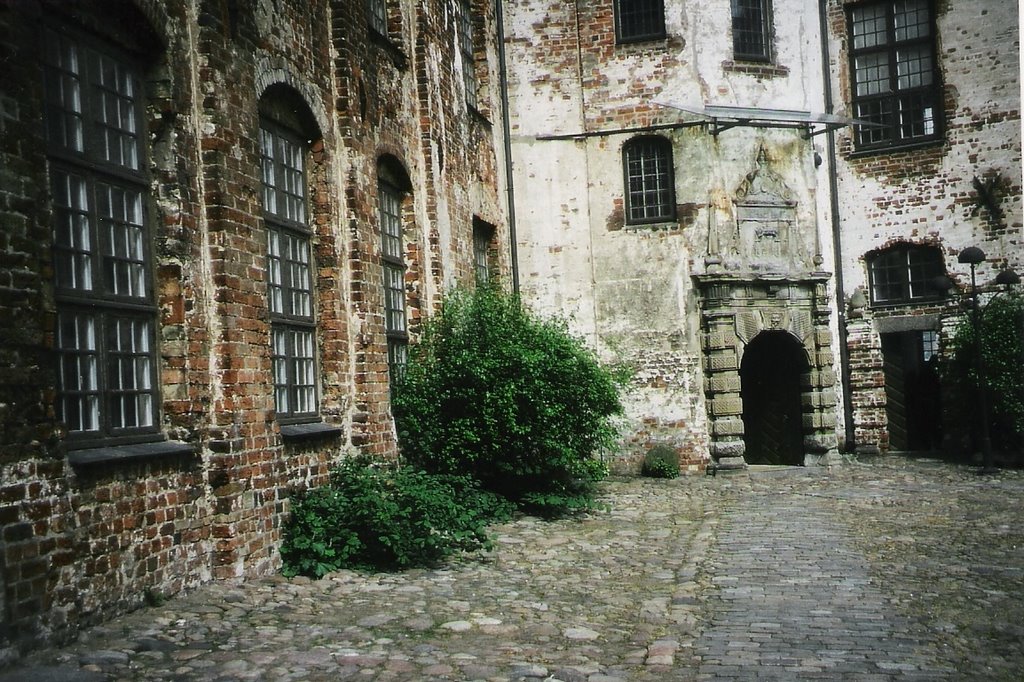
Gurre Castle Ruin, Zealand


Falconry , especially in medieval England.

In history no bird of prey has shared as close a relationship with humans as the falcon did during the Middle Ages, when the sport of falconry and hawking was an important part of life. It reigned as the most popular sport in England for more than four centuries. So important were falcons in England that the first laws aimed at protecting birds of prey were treated here. Perhaps no such stringent laws have ever been passed to protect a wild bird or animal.

Somehow wildlife conservation was born during the age of falconry. No one knows exactly where or when humans started using trained raptors to hunt for food, but a theory says that it probably came into existence by the nomads on the Asian steppes around 2000-1600 B.C., from where it spread east to China and west to Arabia, Persia and Europe.The first record of humans using birds of prey for hunting comes from an Assyrian bas-relief dated in the early part of the seventh century B.C. References to falconry in China are as early as 680 B.C., but one Japanese work states that falcons were used as gifts to Chinese princes during the Hsia dynasty, 206-220 B.C.

With the increasing trade falconry reached the Mediterranean about 400 A.D. Germanic tribes acquired the sport around the sixth century A.D., and by 875 A.D. it was practiced through western Europe and Saxon England.The first documented English falconer was the Saxon king of Kent, Ethelbert II (died 762), followed by Alfred the Great and Athelstan in the ninth century.
After the Norman conquest in 1066, new raptor species were introduced in England. The Normans restricted falconry to the upper classes, and peasants could be hanged for keeping hawks. Yeomen were allowed to use the short-winged hawks, like goshawks and sparrowhawks, to hunt for food, but only king and nobility were allowed to have the more noble long-winged falcons, like gyrfalcon, peregrine and merlin.


There are few written sources about falconry in the period before the Middle Ages, but already around year 1000 large amounts of art and literature began to emerge. Beyond being hunting birds the falcons were symbols of power, strength and superiority and found their place in coat of arms, banners and tapestries. The famous Bayeux tapestry is one of the best preserved contemporary sources. The first 10-15 meters of the embroidery is about a falcon hunt of Harold Godwinson's.

In the thirteenth century Frederick II of Hohenstaufen brought the sport to its highest state of respectability, when he wrote "The Art of Falconry". The book took over thirty years to complete, and as one of the first scientific works about birds placed him as one of the founders of ornithology. He introduced the Arabic practice of hooding falcons to keep them tranquil during training. His work also holds several pages of interesting instructions for dog trainers. The falcons often worked in conjunction with special trained hunting dogs, raised with the falcons since puppy hood. Frederick II's book is available for modern readers, newly edited and reprinted in 1969.

The position of falconer was usually handed down from father to son. In a royal household he was called Lord Falconer, sitting fourth from the king at table. He was responsible for capturing, training and caring for the hawks. He was a key number of the hunt, planning with the lord which birds to fly at which prey. He also rode to war with the lord, bringing the birds along to hunt for food.During the Hundred Year's War falcons accompanied their masters across the Channel to the battles of Grecy, Poitiers and Agincourt. When Edward III invaded France, he had thirty falconers with him. John of Gaunt often brought hunting parties to the Test Valley, and since it was due to the practice of ringing these birds, the huntings are documented in the Domesday Book.


Neither hawks or falcons are suitable house-pets because they have spectacular mode of excretion, they are tradionally kept on special perches standing in sand, the mews. Richard II let build the Royal Mews at Charing Cross in London, and the office of Master of the Mews is still extant.Falconry remained popular among royalty until the reign of George III. The Stuarts were particularly fond of the sport. Henry VIII was perhaps the most important falcon advocate since Frederick II. Mary, Queen of Scots, was an ardent fan of the merlins ("milady's falcon"), and Elizabeth, who liked the sport herself, occassionally let Mary out of the dungeon for short hawking excursions.

Falcons were so highly valued that they were worth more than their weight in gold. During one bloody crusade in the late fourteenth century, the Ottoman Sultan Beyazid captured the son of Philip the Bold, duke of Burgundy, and turned down Philip's offer of 200.000 gold ducats for ransom. Instead Beyazid wanted and was given something even more precious, twelve white gyrfalcons.

Falconry's popularity became a status symbol in medieval society, but it was a rather expensive pleasure. The birds required intricate housing and all kinds of accessories- and falconers were required to feed the birds a balanced diet on a daily basis. The average citizen kept more common birds like sparrowhawks and goshawks. According to the Boke of St. Albans of 1486, written by Dame Juliana Barnes, the prioress of Sopwell nunnery, there was a type of bird of prey for each class of feudal society. To keep a falcon that was above one's station was a felony, and the typical punishment was cutting off hands of people, who committed that crime.


People brought their pet falcon everywhere, perched on hand or wrist. Falcons were very popular among the clergy and were taken into religious services, especially nuns were rarely seen without their falcon on their wrist. Knights took their favourite birds to church so often that eventually rules were made to bar them. A few couples even got married with falcons on their fists. A lady was advised by her husband to take her bird everywhere with her so that it would become accustomed to people. Elements of the sport were found nearly everywhere. The Lisle Letters, published in six volumes by Muriel St. Claire Bryne, reveals how thoroughly falconry permeated various realities of life in the household of Lord and Lady Lisle.

In Shakespeare's works the reader will probably get a more distinct vision of falconry and the sporting pastimes of the aristocracy of that day than in any other way. To understand falconry and the falconer's words was an important part of the upbringing of young men and women, and it was often a necessity in order to understand the expressions in art and in some of Shakespeare's plays. In Shapespeare's time it was usual to go hunting in the afternoon, and when the falcon went up for the heron in a North Western wind, the falconer couldn't know the falcon from the heron, because he had the sun in his eyes. Therefore the words in Hamlet: " I am but mad north northwest, when the wind is southerly I know a hawk from a handsaw."

The Golden Age of falconry ended several centuries ago, due to the discovery of the firearms, but also because the feudal systems changed, and the forests were cleared for farmland.

Hobby


Borrowed words:
The word codger, used today to describe an elderly person, can be traced back to the falconry term, cadger, who carried a portable perch called a cadge for a falconer. Most cadgers were old falconers.
Callow, which is a nestling raptor whose feathers are still in the blood-quill stage, is now used to describe someone who is young or untested.
When raptors drink , it is called bowsing. A bird that drinks heavily is called a boozer, the term used to describe the same tendency in humans.

The falcon's maximum speed:
Speed is the falcon's forte. If birds of prey were airplanes, then the eagles, the buzzards, the kites would be the gliders, and the falcons would be the jets. Estimates of the maximum speed of a falcon dive are as fast as 273 miles an hour (440 km/h) based on analysis of motion-picture footage of a falcon in full vertical dive taken by the Naval Research Laboratory in England in WWII. Most biologists, however, estimate the falcon's maximum velocity at 150 to 200 miles an hour ( 240 to 320 km/h), which is still faster than any other animal on earth.


Koldinghus Castle, East Jutland

Falconry in the Middle Ages II
by grethe bachmann

"Their haufdu Hauka sina a oxlom" (They had hawks on their shoulders) Rolf Krakes Saga Chapter XL:
Rolf Krake (6th century) and his men went on a visit to his hostile stepfather king Adils in Uppsala, and the saga says: "They had hawks on their shoulders, and this was considered a great splendour, and king Rolf owned the hawk named Höjbrog."
Hakon Jarl had to pay a yearly tax to Harald Bluetooth (d.985) of 10 mark in gold and 60 hunting falcons for that part of Norway that was transferred to him, and on account of this tax Harald Bluetooth used to call Norway his Haukei (hawk- or falcon island.)
Canute the Holy had in 1085 a seal made, showing him on horseback with a falcon upon his hand, and after his death in 1086 his mortal remains were swept in a Byzantine silken carpet with motifs of birds of prey.
Hakon the Old of Norway (1204-1263) was the first northern king, who made present of falcons to foreign sovereigns, thus a considerable amount of goshawks, and later Icelandic falcons were sent from Norway and Iceland to England. In 1276 Edward I received eight grey and three white gyrfalcons from the king of Norway as a sign of peace.


In the 14th century at least five shipments of falcons were sent to the Emperor of Morocco, and negotations concerning similar shipments to Tripoli were conducted by the Danish king.The Renaissance king Christian IV gave his brother in law, James the First of England and Scotland 24 falcons every year.
Finding new birds was an important endeavour in the Middle Ages. Falcons from Scandinavia were considered especially good birds. The gyrfalcon came in colours from grey in Scandinavia, especially Norway, to a lighter shade in Iceland and to and almost white with black markings in Greenland. Falcons from Iceland and Greenland were sent to the Royal mews in Norway and Denmark, and from here they were sold to a medieval company in Lübeck in northern Germany and then shipped across the Alps to Venice and thence to Alexandria, Baghdad and Constantinople.
The Icelandic gyrfalcon was already in 1100-1220 years exported to the courts in Europe. The resources for bringing falcons home from Iceland were rather troublesome, and the men had to travel several hundred kilometres along primitive roads. Many falcons died during these long travels in spite of the best care. Furthermore there had to be enough food for the falcons upon the ships on the way home. An account shows that 10 falcons for a period of 3 months eat 200 kilo meat, which had to be of the finest and leanest quality. Some falcons (ab.12-20%) were rejected in the end ot the journey, if they did not please the royal falconer. Most Icelandic falcons were given to foreign courts, only a few were kept by the Danish and Norwegian falconry.
Falcons were also captured in the open moors of Valkenswaard, Holland, where each year millions of migrant birds would stop on their way south, followed by the falcons. All during the Middle Ages falcons were trapped and trained here for the nobility of Europe. In the fall, knights and falconers from the courts of every feudal lord and king would gather for lively medieval auctions, bidding against one another for the best of the birds captured that year.
There are two main categories of birds used in falconry, long winged falcons, which hunt birds, and short winged hawks, (accipiters), which hunt a range of prey, often focusing on rabbits. In falconry the birds were divided by the type of bird and by the way they were flown at the prey. While short wings could be flown in wooded country, the long winged falcons required large open tracts, where the falconer could follow the flight with ease. The general rule was that true falcons were "hawks of the lure" and accipiters were "hawks of the fist".
The term hawking was used when a hawk was used for the hunting, and even the broader term austringer was used for a falconer, who hunted with hawks. The term falconry was used strictly for hunting with falcons. Short wings (goshawk, sparrow hawk) were not flown to the lure, but encouraged to make long flights at a rabbit lure pulled along the ground and encouraged to fly from tree to tree as the falconer walked along. If the hunt was not successful the bird returned to its place on the falconer's glove and waited for a new opportunity.
One of the characteristics of a true falcon is to prey on birds in the open air. They circle hundreds of feet into the air, waiting for the prey to be flushed out by beaters or dogs. In falconry only the larger female bird was properly called the falcon. The male, which is up to one third smaller than the female, was the tiercel. A male hawk is also one third smaller than the female, but never called tiercel.
The long winged falcons were restricted to nobility, and the gyrfalcon was considered the ultimate status symbol of the medieval potentates. It makes its home in the Arctic, and it prefers to take its prey in a low ground hugging attack. The gyrfalcon is the largest and noblest of the falcons, it's similar to the peregrine, but heavier and harder to train.
Peregrine Falcon

The most highly evolved of the falcons is the peregrine. It is a large falcon, but unlike the gyrfalcon the peregrine takes almost all of its prey out of the sky. The peregrine was a favourite of falconers and the most frequently bird used for falconry. It was not only easily trained, but provided the most daring spectacle. It circles high overhead, waiting for the quarry to be flushed, then dive for it at high speeds. In locations where the main quarry was wild fowl, it was sometimes called "hawk of the river". The peregrine was found all over Europe.
The saker was the banner bird of Attila the Hun, it feeds only on small mammals, usually taking its prey near the ground. Sakers were trained in Arabia to go after gazelles. They were the bird of choice of Arab falconers. Their breeding grounds were in Eastern Europe and the Middle East.
The lanners were used predominantly in France and Spain during the Middle Ages.
Hobby

The hobby was considered the easiest falcon to train, it was mostly used for hunting larks. The merlin was "Milady's Falcon". It was considered the best flyer among the birds of prey and was sent after high flying skylarks. It circles up on a higher flying bird, until it is exhaused - and it doesn't mind chasing it through a tight flock of birds. Falconers recommended the kestrel for beginners, it was easy to train and handle and was used for hunting small birds like sparrows and larks.
Accipiters, (goshawks, sparrow hwawks) take birds too, but they do so in forests, where their short wings and long tails give them the ability to swerve through the branches, taking their prey by stealth and surprise. They waited upon the falconer's wrist or fist until the game was flushed, then were flown straight at the prey. They cannot fly as fast as the true falcons, but they can turn instantly and locate their quarry in dense vegetation.
The goshawk was considered the classic hunting bird, it was used for hunting pheasant, partridge, wild duck, hare and rabbit. Goshawk was everyman's hawk, as handy to the poacher as to the squire and required less skill than the peregrine. The austringer was not on horseback when hunting with goshawk. Its virtues were summed up in a nickname: kitchen-hawk. The French came to refer to goshawks as cuisiniers.
The female sparrow hawk was used for quail hunting.
The only difference between a trained and a wild falcon was that the falconer's bird had learned to accept the falconer as its helper. Falcons were taken from their nests as young birds and kept in mews or hawk houses. The falcon required much human contact and careful attention on daily basis, or else it would quickly grow wild an unreliable.
The falconer would feed the bird secretly, so it would not be aware that the food came from humans. The falcon was fed with its hood still on, until it ate without hesitation. Then gradually the hood was removed and the bird allowed to eat by candle light, as it slowly became accustomed to men, women, children and dogs.

Special devices aided the falconer. The falcons had small bells tied around their necks to help the falconer locate them, and they wore jesses, small leathered straps that hung loose, though they could later be attached to a leash. A leather hood covered the eyes of the bird to keep it calm.

Later the bird would be making long flights, and if it was absent at the regular feeding time, the falconer captured it back with nets. Training falcons required extreme patience and persistence, and the falconer was morally committed to keep his bird in good condition and to fly it regularly. Basically a hunting bird had to be tamed, or "manned". Raptors were not tamed in training, even birds bred for several generations in captivity were not tame in the way that social animals are.
The falconer was responsible for finding proper terrain with right wind conditions, plantations and proper quarry. When this was taken care of he was responsible for positioning himself, and if he had a dog, also the dog, in a way that left the bird in a position with the best chances possible of catching the quarry. Eventually the bird was taken into the field, where it was introduced to the lure, a padded weight with wings and with a long string attached. Food was tied to the lure and the falcon allowed to eat from it, until the bird associated the lure with food.
Birds were flown according to their weight and hunger. A fat bird might refuse to fly at all. The daily weighing of the bird was vital, and to ignore a bird's weight and condition was to lose it or kill it. The falconer manipulated the falcon's diet, so that the bird was in peak health, but just hungry enough to come to the falconer and the lure when called. A falconer must never take food away from the falcon. Once the bird killed its prey, the bird was taken from it with more food on the glove.
Before the hunting the bird was equipped with a hood, often decorated with tuft of feathers in the colours of the royal house. Hunting with falcons was usually done on horseback. The falconer wore his bird on his left glove hand. During the ride the falcon's breast had to be turned against the wind to prevent it from being restless. When the falconer saw the quarry, he threw the falcon up in the air, and if the bird caught eye of the game, it pursued it and went down on it in a vertical dive.
The horse was necessary for the falconer in order to move fast, and he had help from his dogs, who came to the falcon and its catch early. It all depended on the falcon itself, whether or not there would be any hunting. The falconer hurried to the spot and offered the falcon a piece of lean meat of partridge or something he knew his bird liked in change. It was essential that the falcon didn't feel cheated by the trade. If the bird found it was cheated it would fly away. Occassionally the falcon didn't start to eat the quarry, but awaited the approach of the falconer and the treasured morsel of lean meat.
Frederick II of Hohenstaufen said in his work about falconry that hunting for food put too great a burden on the falcon. He believed falconry was best practiced as an art, and he cautioned that a successful falconer could not be "indolent or careless, for this art requires much labor and much study". He advised the falconer to quiet a restless falcon with mouthfuls of pure cold water - after thouroughly having cleansed his mouth before the operation. Before Frederick II introduced the falcon hood, the birds' lower eyelids were stitched together with a fine silken thread, which was loosened gradually in the progress of the training.

The original purpose of falconry, using birds to capture quarry, was slowly replaced among the nobility by another purpose. The use of falconry was not a primary means of obtaining food for medieval citizens. Not even among nobility did falcons and hawks provide other than a small percent of meat. Falconry provided an opportunity for kings and lords to host other nobles for grand hunting parties. The kings of England and France, the Russian czars and the Holy Roman emperor all maintained extravagant falconry establishments. For the nobility falconry practiced on a magnificent scale became an essential element in establishing and maintaining personal and national prestige.
The patron of falconers St. Bavon is celebrated on October 1st. According to legend he was accused of stealing a white gyrfalcon, tried for the offence, and condemned to be executed. On the day and place of his execution the missing falcon suddenly appeared in the air and came down to land. St. Bavon's innocence, established by sign from heaven, caused him to be released immediately. He subsequently was regarded as the patron saint for falconers. He died in 659 and is buried in the cathedral in Gent.
Sources:Michael Tennesen: Flight of the Falcon, Edith Wenzel: Kunsten at jage med rovfugl, Bettina Buhl: Falkoneren og hans jagtfugl, Shawn E.Carroll: Ancient and Medieval Falconry


photo: grethe bachman & stig bachmann nielsen, Naturplan Foto
sketch: gb

Wednesday, July 08, 2009

Eurasian Hobby/Lærkefalk
Falco subbuteo


photo Portlandmose, Lille Vildmose 20. June 2009:
stig bachmann nielsen, Naturplan foto

The Eurasian hobby can without slowing down its speed catch a dragonfly in the air, bring the insect to its beak with the claw and eat it. Just look at a gallery with fantastic photos of the hobby. See especially nr. 7 on the first page by Mogens Hansen, where the falcon eats its "lunch" in the air. The hobby is able to catch both swallows and swifts on the wing, and barn swallows or house Martins have a characteristic "hobby" alarm call.

The hobby prefers open landscapes with small forests and wetlands. Its food are birds, insects and exceptionally bats. This pretty little flyer is the size of a kestrel, but has another plumage and flight. It is a well-proportioned falcon with long, pointed wings and a rather short tail. It has an elegant flight with fast strong strokes of the wings interrupted by a glide. The hobby does not hover like the kestrel. Adults are slate-grey above, and streaked lengthwise below, with a white throat. Close views enable the red "trousers" and vent to be seen. Sexes are similar, but juveniles are generally much browner.

The hobby is a true falcon. In falconry one of the characteristics of a true falcon is to prey on birds in the open air. They circle hundreds of feet into the air, waiting for the prey to be flushed out by beaters or dogs. In falconry in the Middle Ages only the larger female bird was properly called the falcon. The male, which is up to one third smaller than the female, was the tiercel. The long winged falcons were restricted to nobility.The hobby was considered the easiest falcon to train, it was mostly used for hunting larks.

The Eurasian Hobby is native to most of Europe and Asia and some localitites in Northwest Africa. In Europe it breeds mostly in lowlands, in general avoiding large areas without trees. In Denmark the species is especially connected to older, open forests with grazed meadows or wetlands or other open nearby biotops which are rich in insect-life.

In the 1800s the hobby was probably a common breeding bird in Denmark, but with the intensive agriculture the species declined. Environmental poisons contributed furthermore to this development. Around 1950 the breeding population were reduced to max. 20 pair. It seemed that the decline continued up to the Millenium with only 5 pair. 2005 was the best hobby-year since the start of *DOF's project Truede og Sjældne Ynglefugle (DATSY) in 1998 with at least 15 pair. In 2006 were at least 10 breeding pair in Denmark. Hobbies nest in old nests of crows and other birds, laying 2-4 eggs. Three hobby-pair have breeded in old crow-nests put up in pylons, all in Sønderjylland. The hobby overwinters in Africa.

Eurasian Hobby see :
Observationer

A wonderful story about a young Eurasian hobby with a broken wing.
A hobby with a broken wing was saved. After 29 days on Aabenraa Veterinary Hospital the young hobby could be discharged. The rare falcon was found with a broken wing by a local ornitologist Jesper Tofft from Sønderjylland. The hobby was a young bird from one of the crow-nests in the pylons in Sønderjylland. Jesper Tofft keeps an open eye with the Eurasian Hobby in the above mentioned project *DATSY, and he brought the hobby to the veterinary hospital. Dyrenes Beskyttelse (Animal Protection) has a nursing station in connection to the hospital. Usually birds of prey and owls with a broken wing do not achieve a nursing place, since experience shows that hunting birds with broken wings seldom can be cured and become effective hunters in the wild again. But the veterinarian Torben Knage-Rasmussen made an exception. "The ornitologists argued for that we had to do everything in order to heal this young hobby, because the species are so rare in Denmark that each specimen is of importance to the population" And then the veterinarian said yes. There are probably only 15 hobby pair in Denmark at present.

Except the broken wing the hobby was in good condition and vigorous. It also had a good appetite. It had to be fed on the first day, but already on the next day it eat the food itself. (chickens). On the first days the falcon was in a box with straw, but it soon came to
a small volière, and three weeks later in a large volière where it trained the first flights. T
he falcon was calm and composed during the whole course, and the veterinarian describes it as an easy patient. He said that he had taken care of various birds of prey, but the hobby was very balanced with a calm temper. It wasn't confused although it was experiencing an unusual situation.

Fortunately it showed that the nursing was worth the try. After 29 days of nursing the young patient was ringed, before Jesper Tofft put the it out near the nest where it was born. The falcon was so fast and brisk that the ready photographer missed to sharpen the picture. It rushed out at high speed to live the life of a free bird again, and it was received by two hobbies from its own family only a few minutes later.

Source:
DOF
(Dansk Ornitoligisk Forening)
Danmarks Fugle og Natur

* DATSY is a project for endangered and rare breeding birds in Denmark.

Thursday, March 05, 2009

Falcon/Falk/Falco


Peregrine Falcon
photo 2008: stig bachmann nielsen Naturplan foto


Kestrel,
photo 2008: stig bachmann nielsen Naturplan Foto

Falcon/Falk/Falco
Old Danish: Falk; Old Norse: Falki
Faeroe Islands: falkur

Peregrine Falcon/Vandrefalk/ GFalco peregrinus
Gerfalcon/Jagtfalk/Falco rusticolus
Kestrel/Taarnfalk/ Falco tinnunculus
Merlin/Dværgfalk/Falco columbarius
Hobby/Lærkefalk/Falco subbuteo

Falcons are pictured upon coins from Lund in the ruling period of Canute the Great (1018-35), Hardicanute (1035-42) and Niels (1104-34) - and in aristocratic coats of arms and seals since the 1200s, like the family Valk, Falk and Falkenskiold; a lieutenant was knighted with the name Falkenskiold, becuase he (1715) tore a falcon away, which had placed itself upon the king's head threatening to tortear out his eyes. There are falcons in several Danish city arms and in the emblem of Falcks Redningskorps.( ambulance corps).

According to a legend Rolf Krake's men wore falcons on their shoulders, when they in the 500s came to Uppsala, and Rolf's falcons killed the Swedish king Adil's falcons, before the Danes left the town. There are few informations about falconry in Denmark in the Middle Ages. It was very costy and only for princes a nd nobility. Kings with falcons are pictured upon frescoes from the 1300s and 1400s in some Danish churches . Haakon Jarl had to pay 60 falcons or hawks to king Harald Blåtand in taxes for his part of Norway.
Valdemar the Great (1157-82), Valdermar Atterdag (1340-75) and Frederik II (1559-88) were zealous falconers. The right to falconry was regal, but the king often let on lease his rights. He had several falconries upon Zealand and a few in the southern part of Jutland.

The best gerfalcons came from Greenland and Iceland. In the years 1690-1793 the king sent every year a ship with a falconer to Iceland to collect the captured white falcons. In the period 1664-1806 came 4.287 Icelandic falcons to Copenhagen (average 80 a year). Most of them were later sent as gifts to other ruling princes. Frederik II established in 1571 the first Danish falconry, but it was closed down already a year later. In 1673 Christian V established a modest falconry at a falkonergård (farm) ; it was closed down in 1810. In May 18772 Christian VII participated for the last time in falconry at amager and the last falconry in Denmark was held in March 1803. The falcons are totally protected today and mustnnot be used for falconry.

Fairy tales:
A young guy transformed into a falcon flies to a princess in England and is put into a cage; a boy transforms himself into a falcon with a golden feather; an old falcon tells that it is on its way to the east with its dead chick in order to find the well with eau de vie and make it alive again, the falcon later carries a prince to a castle.

The kestrel is common in Denmark.

Source: Folk og Fauna 2/Dansk etnozoologi af V.J. Brøndegård/1985

More information on Thyra: Falconry in the Middle Ages .

Sunday, October 12, 2008

Peregrine Falcon/ Vandrefalk


Falco peregrinus


A peregrine falcon on top of a chimney by a harbour.

History in short:
The most highly evolved of the falcons is the peregrine. It is a large falcon, but unlike the gyrfalcon the peregrine takes almost all of its prey out of the sky. The peregrine was a favourite of falconers and the most frequently bird used for falconry. It was not only easily trained, but provided the most daring spectacle. It circles high overhead, waiting for the quarry to be flushed, then dive for it at high speeds. In locations where the main quarry was wild fowl, it was sometimes called "hawk of the river". The peregrine was found all over Europe.

The Peregrine falcon's maximum speed:

Speed is the falcon's forte. If birds of prey were airplanes, then the eagles, the buzzards, the kites would be the gliders, and the falcons would be the jets. Estimates of the maximum speed of a falcon dive are as fast as 273 miles an hour (440 km/h) based on analysis of motion-picture footage of a falcon in full vertical dive taken by the Naval Research Laboratory in England in WWII. Most biologists, however, estimate the falcon's maximum velocity at 150 to 200 miles an hour ( 240 to 320 km/h), which is still faster than any other animal on earth.

See my article about Falconry in the Middle Ages.

photo 101008: stig bachmann nielsen,
Naturplan Foto

Saturday, December 10, 2005

Falconry in the Middle Ages

 - especially in Medieval England


Gurre Castle Ruin, Zealand


by Grethe Bachmann

Falcons social history medieval

Historically, no bird of prey has shared as close a relationship with humans as the falcon did during the Middle Ages, when the sport of falconry and hawking were an important part of life. It reigned as the most popular sport in England for more than four centuries. So important were falcons in England that the first laws aimed at protecting birds of prey were treated here. Perhaps no such stringent laws have ever been passed to protect a wild bird or animal.

Somehow wildlife conservation was born during the age of falconry.No one knows exactly where or when humans started using trained raptors to hunt for food, but a theory says that it probably came into existence by the nomads on the Asian steppes around 2000-1600 B.C., from where it spread east to China and west to Arabia, Persia and Europe.The first record of humans using birds of prey for hunting comes from an Assyrian bas-relief dated in the early part of the seventh century B.C. References to falconry in China are as early as 680 B.C., but one Japanese work states that falcons were used as gifts to Chinese princes during the Hsia dynasty, 206-220 B.C.

With the increasing trade falconry reached the Mediterranean about 400 A.D. Germanic tribes acquired the sport around the sixth century A.D., and by 875 A.D. it was practiced through western Europe and Saxon England.The first documented English falconer was the Saxon king of Kent, Ethelbert II (died 762), followed by Alfred the Great and Athelstan in the ninth century.
After the Norman conquest in 1066, new raptor species were introduced in England. The Normans restricted falconry to the upper classes, and peasants could be hanged for keeping hawks. Yeomen were allowed to use the short-winged hawks, like goshawks and sparrowhawks, to hunt for food, but only king and nobility were allowed to have the more noble long-winged falcons, like gyrfalcon, peregrine and merlin.


There are few written sources about falconry in the period before the Middle Ages, but already around year 1000 big amounts of art and literature began to emerge. Beyond being hunting birds the falcons were symbols of power, strength and superiority and found their place in coat of arms, banners and tapestries. The famous Bayeux tapestry is one of the best preserved contemporary sources. The first 10-15 meters of the embroidery is about a falcon hunt of Harold Godwinson's.

In the thirteenth century Frederick II of Hohenstaufen brought the sport to its highest state of respectability, when he wrote "The Art of Falconry". The book took over thirty years to complete, and as one of the first scientific works about birds placed him as one of the founders of ornithology. He introduced the Arabic practice of hooding falcons to keep them tranquil during training. His work also holds several pages of interesting instructions for dog trainers. The falcons often worked in conjunction with special trained hunting dogs, raised with the falcons since puppy hood. Frederick II's book is available for modern readers, newly edited and reprinted in 1969.

The position of falconer was usually handed down from father to son. In a royal household he was called Lord Falconer, sitting fourth from the king at table. He was responsible for capturing, training and caring for the hawks. He was a key number of the hunt, planning with the lord which birds to fly at which prey. He also rode to war with the lord, bringing the birds along to hunt for food.During the Hundred Year's War falcons accompanied their masters across the Channel to the battles of Grecy, Poitiers and Agincourt. When Edward III invaded France, he had thirty falconers with him. John of Gaunt often brought hunting parties to the Test Valley, and since it was due to the practice of ringing these birds, the huntings are documented in the Domesday Book.

Neither hawks or falcons are suitable house-pets because they have spectacular mode of excretion, they are tradionally kept on special perches standing in sand, the mews. Richard II let build the Royal Mews at Charing Cross in London, and the office of Master of the Mews is still extant.Falconry remained popular among royalty until the reign of George III. The Stuarts were particularly fond of the sport. Henry VIII was perhaps the most important falcon advocate since Frederick II. Mary, Queen of Scots, was an ardent fan of the merlins("milady's falcon"), and Elizabeth, who liked the sport herself, occassionally let Mary out of the dungeon for short hawking excursions.


Falcons were so highly valued that they were worth more than their weight in gold. During one bloody crusade in the late fourteenth century, the Ottoman Sultan Beyazid captured the son of Philip the Bold, duke of Burgundy, and turned down Philip's offer of 200.000 gold ducats for ransom. Instead Beyazid wanted and was given something even more precious, twelve white gyrfalcons.

Falconry's popularity became a status symbol in medieval society, but it was a rather expensive pleasure. The birds required intricate housing and all kinds of accessories- and falconers were required to feed the birds a balanced diet on a daily basis. The average citizen kept more common birds like sparrowhawks and goshawks. According to the Boke of St. Albans of 1486, written by Dame Juliana Barnes, the prioress of Sopwell nunnery, there was a type of bird of prey for each class of feudal society. To keep a falcon that was above one's station was a felony, and the typical punishment was cutting off hands of people, who committed that crime.

People brought their pet falcon everywhere, perched on hand or wrist. Falcons were very popular among the clergy and were taken into religious services, especially nuns were rarely seen without their falcon on their wrist. Knights took their favourite birds to church so often that eventually rules were made to bar them. A few couples even got married with falcons on their fists. A lady was advised by her husband to take her bird everywhere with her so that it would become accustomed to people. Elements of the sport were found nearly everywhere. The Lisle Letters, published in six volumes by Muriel St. Claire Bryne, reveals how thoroughly falconry permeated various realities of life in the household of Lord and Lady Lisle.

In Shakespeare's works the reader will probably get a more distinct vision of falconry and the sporting pastimes of the aristocracy of that day than in any other way. To understand falconry and the falconer's words was an important part of the upbringing of young men and women, and it was often a necessity in order to understand the expressions in art and in some of Shakespeare's plays. In Shapespeare's time it was usual to go hunting in the afternoon, and when the falcon went up for the heron in a North Western wind, the falconer couldn't know the falcon from the heron, because he had the sun in his eyes. Therefore the words in Hamlet: " I am but mad north northwest, when the wind is southerly I know a hawk from a handsaw."

The Golden Age of falconry ended several centuries ago, due to the discovery of the firearms, but also because the feudal systems changed, and the forests were cleared for farmland.

Borrowed words:
The word codger, used today to describe an elderly person, can be traced back to the falconry term, cadger, who carried a portable perch called a cadge for a falconer. Most cadgers were old falconers.
Callow, which is a nestling raptor whose feathers are still in the blood-quill stage, is now used to describe someone who is young or untested.
When raptors drink , it is called bowsing. A bird that drinks heavily is called a boozer, the term used to describe the same tendency in humans.

The falcon's maximum speed:
Speed is the falcon's forte. If birds of prey were airplanes, then the eagles, the buzzards, the kites would be the gliders, and the falcons would be the jets. Estimates of the maximum speed of a falcon dive are as fast as 273 miles an hour (440 km/h) based on analysis of motion-picture footage of a falcon in full vertical dive taken by the Naval Research Laboratory in England in WWII. Most biologists, however, estimate the falcon's maximum velocity at 150 to 200 miles an hour ( 240 to 320 km/h), which is still faster than any other animal on earth.

Koldinghus Castle, East Jutland

Falconry in the Middle Ages II
by grethe bachmann

"Their haufdu Hauka sina a oxlom" (They had hawks on their shoulders) Rolf Krakes Saga Chapter XL

Rolf Krake (6th century) and his men went on a visit to his hostile stepfather king Adils in Uppsala, and the saga says: "They had hawks on their shoulders, and this was considered a great splendour, and king Rolf owned the hawk named Höjbrog."
Hakon Jarl had to pay a yearly tax to Harald Bluetooth (d.985) of 10 mark in gold and 60 hunting falcons for that part of Norway that was transferred to him, and on account of this tax Harald Bluetooth used to call Norway his Haukei (hawk- or falcon island.)
Canute the Holy had in 1085 a seal made, showing him on horseback with a falcon upon his hand, and after his death in 1086 his mortal remains were swept in a Byzantine silken carpet with motifs of birds of prey.
Hakon the Old of Norway (1204-1263) was the first northern king, who made present of falcons to foreign sovereigns, thus a considerable amount of goshawks, and later Icelandic falcons were sent from Norway and Iceland to England. In 1276 Edward I received eight grey and three white gyrfalcons from the king of Norway as a sign of peace.
In the 14th century at least five shipments of falcons were sent to the Emperor of Morocco, and negotations concerning similar shipments to Tripoli were conducted by the Danish king.The Renaissance king Christian IV gave his brother in law, James the First of England and Scotland 24 falcons every year.
Finding new birds was an important endeavour in the Middle Ages. Falcons from Scandinavia were considered especially good birds. The gyrfalcon came in colours from grey in Scandinavia, especially Norway, to a lighter shade in Iceland and to and almost white with black markings in Greenland. Falcons from Iceland and Greenland were sent to the Royal mews in Norway and Denmark, and from here they were sold to a medieval company in Lübeck in northern Germany and then shipped across the Alps to Venice and thence to Alexandria, Baghdad and Constantinople.


The Icelandic gyrfalcon was already in 1100-1220 years exported to the courts in Europe. The resources for bringing falcons home from Iceland were rather troublesome, and the men had to travel several hundred kilometres along primitive roads. Many falcons died during these long travels in spite of the best care. Furthermore there had to be enough food for the falcons upon the ships on the way home. An account shows that 10 falcons for a period of 3 months eat 200 kilo meat, which had to be of the finest and leanest quality. Some falcons (ab.12-20%) were rejected in the end ot the journey, if they did not please the royal falconer. Most Icelandic falcons were given to foreign courts, only a few were kept by the Danish and Norwegian falconry.
Falcons were also captured in the open moors of Valkenswaard, Holland, where each year millions of migrant birds would stop on their way south, followed by the falcons. All during the Middle Ages falcons were trapped and trained here for the nobility of Europe. In the fall, knights and falconers from the courts of every feudal lord and king would gather for lively medieval auctions, bidding against one another for the best of the birds captured that year.
There are two main categories of birds used in falconry, long winged falcons, which hunt birds, and short winged hawks, (accipiters), which hunt a range of prey, often focusing on rabbits. In falconry the birds were divided by the type of bird and by the way they were flown at the prey. While short wings could be flown in wooded country, the long winged falcons required large open tracts, where the falconer could follow the flight with ease. The general rule was that true falcons were "hawks of the lure" and accipiters were "hawks of the fist".
The term hawking was used when a hawk was used for the hunting, and even the broader term austringer was used for a falconer, who hunted with hawks. The term falconry was used strictly for hunting with falcons. Short wings (goshawk, sparrow hawk) were not flown to the lure, but encouraged to make long flights at a rabbit lure pulled along the ground and encouraged to fly from tree to tree as the falconer walked along. If the hunt was not successful the bird returned to its place on the falconer's glove and waited for a new opportunity.
One of the characteristics of a true falcon is to prey on birds in the open air. They circle hundreds of feet into the air, waiting for the prey to be flushed out by beaters or dogs. In falconry only the larger female bird was properly called the falcon. The male, which is up to one third smaller than the female, was the tiercel. A male hawk is also one third smaller than the female, but never called tiercel.
The long winged falcons were restricted to nobility, and the gyrfalcon was considered the ultimate status symbol of the medieval potentates. It makes its home in the Arctic, and it prefers to take its prey in a low ground hugging attack. The gyrfalcon is the largest and noblest of the falcons, it's similar to the peregrine, but heavier and harder to train.


The most highly evolved of the falcons is the peregrine. It is a large falcon, but unlike the gyrfalcon the peregrine takes almost all of its prey out of the sky. The peregrine was a favourite of falconers and the most frequently bird used for falconry. It was not only easily trained, but provided the most daring spectacle. It circles high overhead, waiting for the quarry to be flushed, then dive for it at high speeds. In locations where the main quarry was wild fowl, it was sometimes called "hawk of the river". The peregrine was found all over Europe.
The saker was the banner bird of Attila the Hun, it feeds only on small mammals, usually taking its prey near the ground. Sakers were trained in Arabia to go after gazelles. They were the bird of choice of Arab falconers. Their breeding grounds were in Eastern Europe and the Middle East.
The lanners were used predominantly in France and Spain during the Middle Ages.


The hobby was considered the easiest falcon to train, it was mostly used for hunting larks. The merlin was "Milady's Falcon". It was considered the best flyer among the birds of prey and was sent after high flying skylarks. It circles up on a higher flying bird, until it is exhaused - and it doesn't mind chasing it through a tight flock of birds. Falconers recommended the kestrel for beginners, it was easy to train and handle and was used for hunting small birds like sparrows and larks.
Accipiters, (goshawks, sparrow hwawks) take birds too, but they do so in forests, where their short wings and long tails give them the ability to swerve through the branches, taking their prey by stealth and surprise. They waited upon the falconer's wrist or fist until the game was flushed, then were flown straight at the prey. They cannot fly as fast as the true falcons, but they can turn instantly and locate their quarry in dense vegetation.
The goshawk was considered the classic hunting bird, it was used for hunting pheasant, partridge, wild duck, hare and rabbit. Goshawk was everyman's hawk, as handy to the poacher as to the squire and required less skill than the peregrine. The austringer was not on horseback when hunting with goshawk. Its virtues were summed up in a nickname: kitchen-hawk. The French came to refer to goshawks as cuisiniers.
The female sparrow hawk was used for quail hunting.
The only difference between a trained and a wild falcon was that the falconer's bird had learned to accept the falconer as its helper. Falcons were taken from their nests as young birds and kept in mews or hawk houses. The falcon required much human contact and careful attention on daily basis, or else it would quickly grow wild an unreliable.
The falconer would feed the bird secretly, so it would not be aware that the food came from humans. The falcon was fed with its hood still on, until it ate without hesitation. Then gradually the hood was removed and the bird allowed to eat by candle light, as it slowly became accustomed to men, women, children and dogs.
Special devices aided the falconer. The falcons had small bells tied around their necks to help the falconer locate them, and they wore jesses, small leathered straps that hung loose, though they could later be attached to a leash. A leather hood covered the eyes of the bird to keep it calm.

Later the bird would be making long flights, and if it was absent at the regular feeding time, the falconer captured it back with nets. Training falcons required extreme patience and persistence, and the falconer was morally committed to keep his bird in good condition and to fly it regularly. Basically a hunting bird had to be tamed, or "manned". Raptors were not tamed in training, even birds bred for several generations in captivity were not tame in the way that social animals are.
The falconer was responsible for finding proper terrain with right wind conditions, plantations and proper quarry. When this was taken care of he was responsible for positioning himself, and if he had a dog, also the dog, in a way that left the bird in a position with the best chances possible of catching the quarry. Eventually the bird was taken into the field, where it was introduced to the lure, a padded weight with wings and with a long string attached. Food was tied to the lure and the falcon allowed to eat from it, until the bird associated the lure with food.
Birds were flown according to their weight and hunger. A fat bird might refuse to fly at all. The daily weighing of the bird was vital, and to ignore a bird's weight and condition was to lose it or kill it. The falconer manipulated the falcon's diet, so that the bird was in peak health, but just hungry enough to come to the falconer and the lure when called. A falconer must never take food away from the falcon. Once the bird killed its prey, the bird was taken from it with more food on the glove.


Before the hunting the bird was equipped with a hood, often decorated with tuft of feathers in the colours of the royal house. Hunting with falcons was usually done on horseback. The falconer wore his bird on his left glove hand. During the ride the falcon's breast had to be turned against the wind to prevent it from being restless. When the falconer saw the quarry, he threw the falcon up in the air, and if the bird caught eye of the game, it pursued it and went down on it in a vertical dive.
The horse was necessary for the falconer in order to move fast, and he had help from his dogs, who came to the falcon and its catch early. It all depended on the falcon itself, whether or not there would be any hunting. The falconer hurried to the spot and offered the falcon a piece of lean meat of partridge or something he knew his bird liked in change. It was essential that the falcon didn't feel cheated by the trade. If the bird found it was cheated it would fly away. Occassionally the falcon didn't start to eat the quarry, but awaited the approach of the falconer and the treasured morsel of lean meat.
Frederick II of Hohenstaufen said in his work about falconry that hunting for food put too great a burden on the falcon. He believed falconry was best practiced as an art, and he cautioned that a successful falconer could not be "indolent or careless, for this art requires much labor and much study". He advised the falconer to quiet a restless falcon with mouthfuls of pure cold water - after thouroughly having cleansed his mouth before the operation. Before Frederick II introduced the falcon hood, the birds' lower eyelids were stitched together with a fine silken thread, which was loosened gradually in the progress of the training.

The original purpose of falconry, using birds to capture quarry, was slowly replaced among the nobility by another purpose. The use of falconry was not a primary means of obtaining food for medieval citizens. Not even among nobility did falcons and hawks provide other than a small percent of meat. Falconry provided an opportunity for kings and lords to host other nobles for grand hunting parties. The kings of England and France, the Russian czars and the Holy Roman emperor all maintained extravagant falconry establishments. For the nobility falconry practiced on a magnificent scale became an essential element in establishing and maintaining personal and national prestige.
The patron of falconers St. Bavon is celebrated on October 1st. According to legend he was accused of stealing a white gyrfalcon, tried for the offence, and condemned to be executed. On the day and place of his execution the missing falcon suddenly appeared in the air and came down to land. St. Bavon's innocence, established by sign from heaven, caused him to be released immediately. He subsequently came to be regarded as the patron saint for falconers. He died in 659 and is buried in the cathedral in Gent.


Sources:Michael Tennesen: Flight of the Falcon, Edith Wenzel: Kunsten at jage med rovfugl, Bettina Buhl: Falkoneren og hans jagtfugl, Shawn E.Carroll: Ancient and Medieval Falconry
photo: grethe bachmann