Showing posts with label legend. Show all posts

Thursday, May 16, 2019

Legends from Denmark - Clausholm


Much has been said about the ghosts at Clausholm. The most wellknown tale is about the 22 steps and a guest at Clausholm experienced this in 1918. He describes: "When evening came the broad castle yard between the long grey wings was filled with shadows  and the dusk was creepy. Every hour  - just when the bells died out - a figure came out from the gable, stopped in the middle and began to sing. It was the watchman who all night through sang the old watchman-songs, while the bats flew in the light of the dusk".

When people heard the echo from the songs they could sleep tight.  He told he slept tight until the latest night, but  about 30 minutes after midnight he heard the sound of long heavy steps from Anne Sophie's cabinet. In the same moment he remembered what he had promised the matron -  that he had to lock the outer door. He was sure that some tramp tried to get in to have some night lodgings, and he went with a candle in his hand to the small tapestry door where he counted the last 22 steps of the creature behind the door - he opened the door very fast - but the room was empty! But one of the double doors which was locked the evening before was now wide open.


One of the owners of Clausholm wanted to reveal the 22 steps, which were said to be the steps of Anna Sophie Reventlow (d 1743) Frederik IV 's queen of the  left hand. He sat one night in the room where the haunting took place. He placed a table with two loaded pistols beside the chair. His  servant was ready beside him. At midnight the steps started and the servant handed the pistols to the lord. The lord cried"Stop or I shoot!" but the steps went on and he fired two shots which made a terrible noise through the castle. When the echos had died out the rest of the 22 steps were heard. Since then no one has tried a ghost hunt again at Clausholm.

There is much unrest at Clausholm. In the night sounds from wagon rumbling are heard in the castle yard and clairvoyants say they can see a coach with four black horses -  some even say the horses have no heads. There is also a secret passage somewhere but no one knows where it begins or ends.

Once in the beginning of the 20th century a box was found upon the attic. It contained some documents and it was carried it down into the sitting room in order to investigate it further. But while people were searching the box an arm with a lace cuff came out from the air and took one of the documents and disappeared. The paper was never found again.


Source: Gorm Benzon, Sagnenes Danmark, Midtjylland/Himmerland/Djursland . 1984.

Thursday, December 06, 2018

Legends of Denmark / Sagnenes Danmark


The source:
Legends of Denmark (Sagnenes Danmark)  is the result of many year's persistent investigations and studies, gathered and written by author, Gorm Benzon, whose work presents and summarizes substantially knowledge which never before was accessible to the general reader. 


A small extract: 


Rugaard Manor
The witch-hunter Mogens Arenfelt's wellknown and numerous witch processes are not just legends, they are  well documented history. He sent lots of innocent women to be burned at the stake -  and he often accused women who asserted their innocence. He had a certain test for an accused witch. She  had to be tested in a small pond on the road outside his manor Rugård. Her hands and feet were tied and she was thrown out into the pond. If she floated upon the water, she was a witch and was burned on the stake. If she sank she was innocent and she drowned.

Arenfeldt had a chamber on the third floor of the south-western tower, named Hamburg. When his creditors came to see him he would hide in this room, and the servant told the unwelcome guests that his lord and master was in Hamburg.

One of the later owners of Rugård manor told how his mother-in- law often saw someone sit in a chair in the living room. During a party she saw a grey lady walking  through the room. Other guests did not see her but they involuntarily went aside to let her pass.


Sebber Kloster 
 In old days they tried to build a church at Sct. Nicolai Bjerg near Sebber, but what was built in the day time was torn down at night. The trolls in the hill did not like the sound of church bells. Two rich ladies lived at the kloster and they had the church moved to where it still stands.

A notorious attorney took over Sebber Kloster in 1781 (he died in 1791). He was extremely despised. The farmers hated him and his peers of
the landowners disdained him. After his death he was haunting the kloster, and he was a very noisy ghost. Several priests tried to summon him without success. A priest named Bloch in the nearest village was not able to completely get the better of him, but managed to tie him to the peephole in the kloster church. Finally a priest succeeded after a long race - where he was above land and the ghost below land - to have him put down in the stable on Sebber manor, just behind the horse he rode while he was alive. Now people had finally found peace, but when the stable boy came out in the morning he could see how the horse was lathered as if it was highly ridden during the night.

A young girl served at Sebber kloster for several yeas. After her death she was haunting for some reason. In warm summer evenings she hovered above the building and disappeared on the church yard.


Kalø Slot
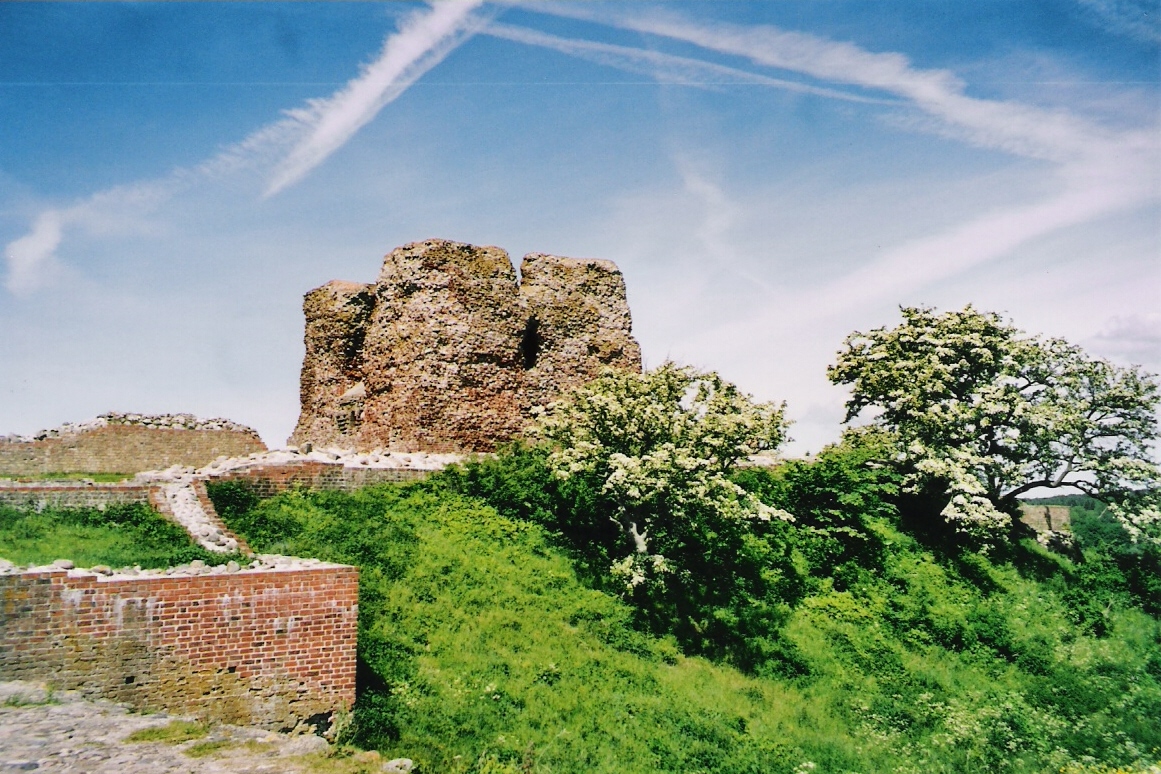
Below the ruin is a great treasure hidden - reportedly as much as the taxes in Denmark for seven years! It is not easy to find it and raise it, for it is well hidden and well protected somewhere in the ruin of Kalø. Probably under the big tower is a copper gate leading to a secret cave and a secret passage. The passage leads to Hestehave forest on main land and in the cave lies a dragon and guards a copper kettle filled with money.

Many have tried to dig for the treasure but only a few have reached the gate. The first who entered the cave was a German, but the dragon attacked him and tore him into a thousand pieces. The next entering the cave were two peasants from the local district, the dragon could not hurt them for some reason, and the peasants spoke harsh words to the beast and made it so scared that it crept over into a corner of the cave, while the two men picked up the kettle and began to walk away. The poor dragon, who was the guard of the treasure, was now in a terrible pinch, which gave it a stomach ache -   and in its embarasment it let a poisonous wind go. This was a rescue both for the dragon and for the treasure, for the two men rushed off coughing and sputtering up into the fresh air, and they never showed their face on Kalø again .

The only possible way in fetching the treasure was said to be  in the summertime. The dragon was like all other dragons fire-breathing - and it was over heated in summer and had to fly to Norway to cool down. It was easy to see when it left for Norway  - there was a trace of fire in the air from Kalø  in the direction of Norway.

A manager who lived a Kalø drowned. He might have committed suicide. He had no rest in the grave, for he had done wrong against his landlord and the Kalø-farmers. He sometimes rode in the castle yard on a white headless stallion, but he was often also running around in the rooms as a big black dog, impossible to catch. Finally people succeeded to summon him down into a meadow, and a pole was driven through him.


Lynderupgaard.
 Lynderupgaard is one of the finest timbered manors in Jutland, and it is rich in legends. Upon the castle yard the clear spring water runs down from the oldest fountain in the North into a cord of hollow oak logs , coming from a spring in the hills behind the house. It is  said to be the best water in Denmark. The well might have a past as a holy spring. Once in the night when it is a full moon a black ghost dog comes running into the yard and drinks the clear water.

Sseveral people have told that they saw a funeral procession coming out from Lynderupgård. It came out from the wall in the west wing and went across the open moat and disappeared on the other shore. When one year they digged on that spot at the castle castle bank they found traces of an entrance from the house and across a bridge across the moat.

It was told that when landlord Friis in 1777 took over Lynderupgård there were two skeletons upon the attic. He let them bring down to be buried, but there was never again any rest on that attic.

In the old days was in the park a carved wooden sculpture under which a nun was buried. Maybe it is she who each night sits upon the "Virgin bench" with a baby on her lap.

People at Lynderupgård have met a priest when they at night went in the great halls and rooms. No one knows who he is, but he might have been there ever since Lynderupgård's stone house was a part of a bishop's manor.

When big changes have to happen in the family at Lynderupgård, mostly sad changes, a big black and white cat, named Whitehead, comes jumping across the floor in big clumpsy hops and disappear under some furniture, but when you look for it there is no cat.


Skaføgaard.
One of the owners of Skaføgaard had sold himself to the devil, and he even knew when his time has come. When he was dying the devil arrived in the form of a black dog and sat by the head end of the bed. Now the man regretted that he had signed such a contract, and he called for seven priests to come and save him, but no one was able to drive the devil out -  not until the eigth priest arrived the devil had to give up. Unfortunately the priest made a fatal error already in the initial maneuvers.He used a wrong word about God, and the devil - who is a terrible stickler, worrying about the smallest trifles -  attacked the priest and turned his head, so it was awry for the rest of his life and his voice took lasting damage. In spite of these handicaps he was able to talk so resourceful that he drove away the devil. He drilled a small hole in the window where the devil had to disappear through. So the priest had now saved the landlord's soul.

But when the priest togtether with his coach was on his way home he started to talk about what had happened, still before they were out from precincts of Skaføgård. Each clerk could have told him that this was the work of a crazy man to talk like that - and it did not last long before the devil attacked him again. The priest succeeded in jumping down from the waggon and pull off one of the rear wheels. Now he had peace, for the devil had to walk instead of the wheel. When they came to the vicarage the coach drove the waggon out upon the dunghill, and the devil had to stand in manure up to his knees until he was free  at sunrise and could run home to his great-gandmother.

About the landlord is said that he did not get peace after his death. He has still been haunting at Skaføgaard. 


Source: Gorm Benzon, Sagnenes Danmark, bd. 2. Himmerland, Ommersyssel, Djursland og dele af Midtjylland. Aarsleff og Friis 1984.


photo GB:  Rugaard, Sebber kloster, Kalø slot og Skaføgaard:

photo wikipedia: Lynderupgaard .

Friday, December 08, 2017

Santa Lucia in Scandinavia (13.December)


The Scandinavion tradition with Lucia processions is relatively new and origins from 1928, where a Swedish newspaper graded "Stockholm's Lucia". Today each Swedish town has its own Lucia, who each year is graded Lucia long before 13 December. All the Lucias take part in a competition as "Swedens Lucia", a title which don't just mean to drive in a cortege to Skansen in Stockholm, but that the lucky girl gets a pr-tour to Italy and Syracusa where Lucia came from.


The Swedes have actually celebrated the Lucia night  ("lussenat") since the 1600-1700s, especially in the western part of the country, where tradition says that the young girls in the farm wake everyone with coffee and bread in the dark early morning. In Sweden the tradition has been cultivated with the special Lucia "lussebröd", a bun,  which is shaped like a wreath with four loops and spiced with saffron.


The Santa Lucia celebration song is a Sicilian folksong in the honour of Lucia, but the Scandinavian text is not so much about the historic Lucia, rather about the Swedish tradition where the Lucia Bride carries a tray with food to "those in need". Maybe this comes from the old legend, where Lucia brought food to the Christians in the catacombs during the persecutions. Lucia has nothing to do with Christmas which is seen in the Lucia songs. Sweden has lots of Lucia songs while the Danes only know a single one ( about the locality Lucia south of Napoli.) The first Lucia procession in Denmark was during the German occupation in WWII, and since then it has become a permanent part in Danish schools, but the Lucia feast in Denmark has never reached the same importance as in Sweden.


The story about Lucia begins in 283 at Sicily in the town Syracusa. Her family was well off and her  prospects were good, but at a young age Lucia conversed from the Roman religion and was baptized, which later cost her life. Sicily was a part of the Roman Empire -  and in order to maintain peace the inhabitants had to sacrifice to the emperor. The Christians denied to bring these sacrifices.

The Romans considered Christianity a dangerous religion and an enemy of the Roman empire, and the Christians were tortured and executed in the most brutal way. Many Christians lived a secret life where they either hid their faith or lived underground in the catacombs. Lucia helped her fellowmen. At night she brought food to the Christians in the catacombs -  and in order to find way in the dark she wore a wreath upon her head with lit candles.

According to customs she was promised to a man, who was a Roman from a reputable family, but she rejected the husband and the marriage. Her faith and her vow to God were incompatible with marriage, but in the eyes of the Roman her reasons were not just ridiculous, but also dangerous, and he indicated her to the authorities. Lucia would not sacrifice to the emperor and she was convicted guilty. At first she was sent to a brothel, but by divine intervention she was being protected. She was  then exposed to torture and sentenced to die at the stake, but once again God intervened. At last the judge took his sword and stuck her, and she died on 13. December year 304. 
Lucia was buried in her hometown Syracusa and as early as in the 400s she is mentioned in written sources. In the 600s where Christianity now was a state religion in the Roman kingdom she was a part of the Catholic liturgy. Her celebration day is the day of her death on 13. December, which is celebrated as a light feast in Scandinavia, especially in Sweden and Denmark. According to tradition the Lucia Bride walks in front of the light procession wearing a crown with candles upon her head. This is the virgin crown as a memory about Santa Lucia who gave her life to God as the bride of Christ .

Santa Lucia is connected to more than light and joy. She has become the patron saint for blind people and people with eye diseases. She is often displayed with a small bowl containing two eyes.


humorous drawing from 1848 by Fritz von Dardel


Thursday, November 16, 2017

Poinsettia/ Julestjerne


Euphorbia pulcherrima


Poinsettia/ Julestjerne  is an ornamental plant originally from Mexico . It is  a commercially important plant and is widely used in Christmas floral displays. It derives its common English name from Joel Roberts Poinsett, the first United States Minister to Mexico, who introduced the plant to the US in 1825.

Poinsettia is a shrub or small tree, typically reaching a height of 0.6–4 metres (2–13 ft). The plant bears dark green dentate leaves that measure 7–16 centimetres (2.8–6.3 in) in length. The colored bracts—which are most often flaming red but can be orange, pale green, cream, pink, white, or marbled—are often mistaken for flower petals because of their groupings and colors, but are actually leaves. The colors of the bracts are created through photoperiodism, meaning that they require darkness (12 hours at a time for at least five days in a row) to change color. At the same time, the plants require abundant light during the day for the brightest color.

Young plants are partly succulents. The short branches are from beginning herbel-like and juicy, but they gradually turn wooden-like. The barch is first olive green, but later greyish brown with crevices. The upperside of the leaves is dark green, while the underside is light green. 
The flowers of the poinsettia are unassuming and do not attract pollinators. They are grouped within small yellow structures found in the center of each leaf bunch, and are called cyathia.

Like in other plants of the spurge family (vortemælkfamilien) the juice is latex-containing and white. People with latexallergy must avoid to get the juice on their skin. The plant iself is only vaguely poisonous .

There are over 100 cultivated varieties of poinsettia.

In areas outside its natural environment, it is commonly grown as an indoor plant where it prefers good morning sun, then shade in the hotter part of the day. Contrary to popular belief, flowering poinsettias can be kept outside, even during winter, as long as they are kept frost-free. It is widely grown and very popular in subtropical climates.


The plant requires a daily period of uninterrupted long, dark nights followed by bright sunny days for around two months in autumn in order to encourage it to develop colored bracts. Any incidental light during these nights (from a nearby television set, from under a door frame, even from passing cars or street lights) hampers bract production. Commercial production of poinsettia has been done by placing them inside a greenhouse and covering the latter completely to imitate the natural biological situation.


Poinsettias are susceptible to several diseases, mostly fungal, but also bacterial and parasitic.


The poinsettia is native to Mexico. It is found in the wild in deciduous tropical forests at moderate elevations from southern Sinaloa down the entire Pacific coast of Mexico to Guatemala.
The species is naturalized in many other tropic districts.  

The poinsettia has been cultivated in egypt since the 1860s, when it was brought from Mexico during the Egyptian campaign. It is called bent el consul, "the consul's daughter", referring to the U.S. ambassador Joel Poinsett

The Aztecs used the plant to produce red dye and as an antipyretic medication. In Nahuatl, the language of the Aztecs, the plant is called Cuitlaxochitl, meaning "flower that grows in residues or soil". Today it is known in Mexico and Guatemala as Flor de Noche Buena, meaning Christmas Eve Flower. In Spain it is known as Flor de Pascua or Pascua, meaning Easter flower.

In Chile and Peru, the plant became known as Crown of the Andes.  In Turkey, it is called Atatürk's flower because Atatürk, the founder of the Republic, liked this flower and made a significant contribution to its cultivation in Turkey.  In Hungarian, it is called Santa Claus flower, and it's widely used as a Christmas decoration.
 
The plant's association with Christmas began in 16th-century Mexico, where legend tells of a girl, commonly called Pepita or Maria, who was too poor to provide a gift for the celebration of Jesus' birthday and was inspired by an angel to gather weeds from the roadside and place them in front of the church altar.  Crimson blossoms sprouted from the weeds and became poinsettias.

From the 17th century, Franciscan friars in Mexico included the plants in their Christmas celebrations.The star-shaped leaf pattern is said to symbolize the Star of Bethlehem, and the red color represents the Blood Sacrifice through the Crucifixion of Jesus.

Poinsettias are popular Christmas decorations in homes, churches, offices, and elsewhere They are available in large numbers from grocery, drug, and hardware stores. In the United States, December 12 is National Poinsettia Day.


Sunday, March 20, 2016

Rosemary /Rosmarin

Spice Herb

Rosmarinus officinalis.

There's rosemary, that's for remembrance. Pray you, love, remember.” 

William Shakespeare, Hamlet 


Rosmarinus officinalis is an evergreen halfbush which is often sold and cultivated as if it was a perennial. It is cultivated for its aromatic leaves, used in various Mediterranean inspired dishes. The plant contains a strongly fragrant tacky rresin. The leaves are narrow and grey-greenish and the little flowers are pale blue to dark blue . tTe flowers arrive early spring (in Denmark often in March-April). The fruits are nuts, each with an Elaiosome. The roots go very deep with many fine side roots. It is a member of the mint family Lamiaceae, which includes many other herbs. The name "rosemary" derives from the Latin  "dew" (ros) and "sea" (marinus), or "dew of the sea" The plant is also sometimes called anthos, from ancient Greek, meaning "flower". Rosemary's natural habitat is in southern Europe, North Africa and the Middle East, where it prefers light-open, dry places with a calcareous and nutrient-poor soil. Rosemary is used as a decorative plant in gardens where it may have pest-control effects.


Rosemary in Denmark.
In Denmark rosemary is one of the oldest houseplants, it was cultivated around 1500s and maybe even earlier. In 1559 the king's gardener had to provide rosemary plants for the king's herb garden, and in 1618 were 60 rosemary plants provided for the royal garden at Rosenborg slot. It is told about one of Chr. 4's daughters that she did not tolerate the scent of rosemary since it reminded her of the death of her childhood friend. Rosemary is mentioned in the first Danish garden book from 1647. It was said that it should be planted and cultivated in "posh gardens" . The plant was also a part of the verse in some Danish psalms. Rosemary was used as a houseplant outside in summer and inside in winter, but the cultivation ceased almost completely around 1850, and in 1880 Rosemary was referred to as a rare plant.  


Medicine/Folk Medicine
Christiern Pedersen 1533: wine decoction to drink against various diseases; to smoke the crushed plant into the nostrils against headache and sneezing; a water- or beer decoction of rosemary and 
rue (herb-of-grace) -  or a wine decoction of rosemary against epilepsy. The leaves were eaten as an appetizer. The dry leaves to take with a drink against stomach pain. Crushed rosemary upon haemorroids. Rub black teeth with a powder of burnt twigs.
Henrik Smid 1546: wine decoction of flowers to drive out jaundice, to counteract shortness of breath, stimulate the digestion , this decoction was an antidote, it was cleansing the blood and it was diuretic.  Destilled water from the plant in order to regain a lost voice. Rosemary sugar strengthens the brain and heart and counteracts poison.
Simon Paulli 1648 said:  " this herb is one of the very best for the weaknesses of the head and extremely good to use against strokes, epilepsy, catarrh, weak eyes, dizziness, toothache, pain in the tongue and in the whole body, stitches in the chest, shortness of breath , vomitting, jaundice, colic, flatulence, diarrhea ". Malaria patients were cured with Rosemary oil. The pharmacy had a Rosemary balm, which was rubbed under the nose in times of the plague . 

The rosemary leaves and flowers were written into the Pharmacopoeia in 1772  and in a medical book in 1807.

In the 1700s and 1800s:  rub rosemary oil on the forehead against frenzy. Wine and rosemary for a weak heart ; rosemary as a component in snaps against gout. Tea of rosemary and lemon balm against various diseases; rosemary tea was a good help for the whooping cough. Old peope should bathe their weak eyes with rosemary in snaps; a decoction of rosemary against toothache and against hair loss.

Live stock: horses were smoked with rosemary for various horse-diseases. A decotoion of rosemary drove out lice, mange and scab of livestock.

Other use: Rosemary is used in the kitchen for both food and drink. The leaves are used to flavor various foods, such as stuffings and roast meats. The dry leaves in vinegar and for giving a steak a taste of game .Rosemary oil is used for purposes of fragrant bodily perfumes or to emit an aroma into a room. It is also burnt as incense, and used in shampoos and cleaning products.


Legend/Mythology
According to legend, it was draped around the Greek goddess Aphrodite when she rose from the sea, born of Uranus' semen.  The Virgin Mary is said to have spread her blue cloak over a white-blossomed rosemary bush when she was resting, and the flowers turned blue. The shrub then became known as the "Rose of Mary"


In the Middle Ages, rosemary was associated with wedding ceremonies. The bride would wear a rosemary headpiece and the groom and wedding guests would all wear a sprig of rosemary. From this association with weddings, rosemary was thought to be a love charm.

In myths, rosemary has a reputation for improving memory and has been used as a symbol for remembrance during war commemorations and funerals in Europe and Australia. Mourners would throw it into graves as a symbol of remembrance for the dead.

In Shakespeare's Hamlet, Ophelia says, "There's rosemary, that's for remembrance." (Hamlet, iv. 5.) In Australia, sprigs of rosemary are worn on ANZAC Day and sometimes Remembrance Day  to signify remembrance; the herb grows wild on the Gallipoli Peninsula. Hungary water was first prepared for the Queen of Hungary Elizabeth of Poland to " ... renovate vitality of paralyzed limbs ... " and to treat gout. It was used externally and prepared by mixing fresh rosemary tops into spirits of wine. Don Quixote, (Part One, Chapter XVII) mixes it in his recipe of the miraculous balm of Fierabras.


Music/ TV 
The song "Scarborough Fair " (popularised by Simon and Garfunkel) has the refrain "Parsley, Sage, Rosemary and Thyme" which is also the title of their third studio album.

Rosemary and Thyme is the name of a British TV detective series, starring Felicity Kendal and Pam Ferrim.
Rosemary song by Suzanne Vega, first published 1998 on her album Tried and True. 


Source: Brøndegaard, Dansk Etnobotanik, folk og flora, bd. 4. / Dansk wikipedia /British Wikipedia
photo: wikipedia
sketch: gb

Sunday, October 04, 2015

Sct. John's Wort /Perikon


Hypericum perforatum


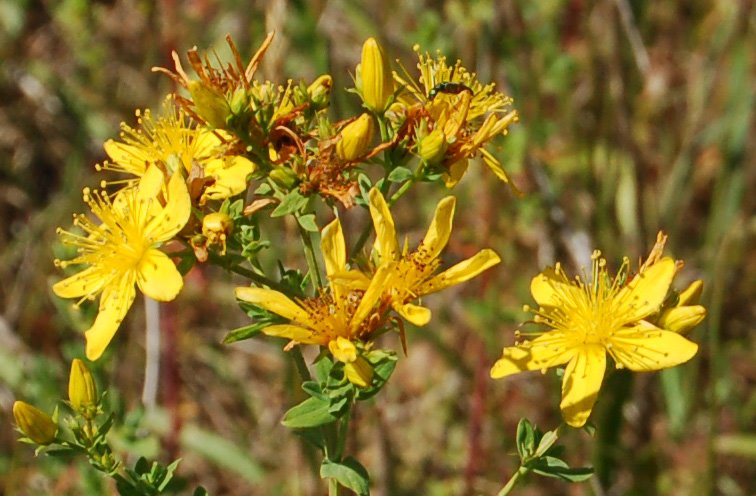
The lovely yellow St. John's wort is flowering in the summer fields now among white, blue, pink and other yellow flowering plants. It's got many different names, Man's Blood, Man's Power, Christ's Blooddrop, Sharon's Rose, Aron's Beard, Devil's Escape ( Fuga daemonum), Earth Hop, Lady's Herb and Snaps Herb.

Hypericum Snaps (Perikon snaps)The flower buds are the base for the famous Hypericum snaps. The fresh unopened flower buds without leaves are the best. Cover them with some neutral alcohol and let the snaps draw for a few days before filtering. The finished extract is dark red, like the colour of a precious ruby, and it has a wonderful taste, (when thinned of course)! It can be stored, and the red colour changes into brown along the way, but the taste is still fine. Dried or freezed flower buds are also okay for making a good snaps. There are many ways to mix and draw herbs in alcohol: an ancient recipe from folklore shows that people mixed fresh ginger with St. John's flowers in their snaps.


Folk Medicine: 
St. John's wort is a classical medicinal plant. In ancient times herbalists wrote about its use as a sedative and a treatment for malaria as well as a balm for wounds, bums and insect bites. The strong red colour inside the plant was considered to be blood-cleansing and being able to heal inside wounds like in the kidneys. Exterior damages like rheumatism were cured with tinctures, plasters, ointments and oils.

There is some scientific evidence that St. John's wort is useful for treating mild depressions. Today St. John's wort is used in alternative medicine as a means against mild depressions, but since it is known to cause photo-sensitivity it is advisable to take care. For exterior use St. John's wort is stimulating and healing for the skin. A St. John's wort oil on the base of flowers and sesame seeds is softening and make the skind supple.
NB: Every alternative medicinal use of any herb needs caution.

Legend and Superstition.There were many stories attached to St. John's wort. According to legend the plant grew up, where the blood hit the ground from John the Baptist's decapitated head, but the common name comes from the fact that it traditionally flowers by and is harvested on St. John's day, 24. June. Actually it flowers all summer.
The Devil had a role too in the legend. He was terribly irritated over this herb, because it created such great medicinal cures for the human beings - and he tried to destroy the plant by pricking holes in it with his pitchfork, but he didn't succeed in killing it. Both the Devil and all kinds of evil spirits were dominating in society then. People thought that insanity were evil demons helding the body captured, and they tried to drive them out with St. John's wort, from this the name 'The Devil's Escape.' On Midsummer's Night people burnt St. John's wort in order to drive away evil spirits from the family place.
Healing could be achieved with St. John's wort. People had to dig it up or pluck the flowers on Midsummer's Night, (St. John's Night) and if they wore the herb, then they became invulnerable. Even soldiers were assisted. If a soldier smeared his flintlock inside with the plant juice he would never miss the target.
By the ancient Norse St. John's wort was dedicated to the God Balder, and people were sure that it had magical powers and aroused a mad desire of love. The herb was also said to cure impotence and from this came the name 'Man's Power'. One of the other names 'Earth Hop' indicates that it was used as a spice in beer brewing.

Plant-dyeing : yellow and green shades can be extracted from St. John's wort

photo grethe bachmann

Thursday, July 17, 2014

Eurasian bittern / Rørdrum


 Botaurus stellaris


The Eurasian bittern or great bittern  is one of the most peculiar birds in Denmark. The Danish name is Rørdrum.

 It is a wading bird of the heron family Ardeidae, and it is one of the species to which the Agreement on the Conservation of African-Eurasian Migratory Waterbirds AEWA applies.

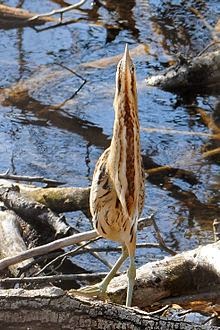
The Eurasian  bittern is a medium-size heron with a lenght-striped,  goldenbrown pliumage. When it is disturbed it shows its striped underside and stretches the head and neck up into the air. This makes it almost invisible in the reed beds. The bittern is a rare sight, it is extremely well camouflaged, it lives very hidden and is very shy - but in return the male bittern delivers the mystic song in spring  -  in Denmark called PAUKEN - which is so strong that the sound can be heard for miles. 

The Eurasian bittern is spread in Europe and in a broad belt through Asia and North Africa, except in the northerh Scandinavia. It breeds spread in most of Europe, but is most numerous in eastern Europe, while it breeds only sporadically in the British Isles and in southern Europe. 


In Denmark the bittern breeds spread in most of the country, except Bornholm. The bird occurs in large reed beds and marshlands, and it is common at the fjords of West Jutland. The best locality in Denmark for the bittern is the birds sanctuary Vejlerne. Here are about one hundred pauking males. There is a good chance to experience these birds, especially in July, where they are flying around a lot. 

The Danish Eurasian bittern is probably a resident bird as far as the winter climate allows. If the habitats are frozen, the bittern has to seek other habitats, or it might overwinter primarily in western and southern Europe. 

The bittern's food is fish, amphibians and other little animals.  

photo:  habitat of the bittern in Lille Vildmose


Folklore/ Legend
No other bird in Denmark is surrounded by so much mystery as the bittern. Both the hidden ways of living, the owl-like flight and the strange voice, which sounds like the roar of a bull, have contributed to this mystery. People were scared of this mystic bird who had a voice as strong as any mammal, and furthermore it was  prancing around in the night hours - and when people met it in the dark of the night they were convinced it was a ghost.

The voice of the bittern created legends about the farmer's water cows roaring and yearning to get ashore.
A brutal landlord from Limfjorden was hated by everyone, and after his death his spirit was hazarding like a big black bird across the landscape, flying with silent wing beats and crying the hoarse scream of the bittern.

In the 1600s the voice of the bittern was compared to the roar of a bull, which is also seen in the Latin name Botaurus. With its beak stuck under wing or down under water, mud or eath its roar could be heard far away. 

The sound is also compared to deep tones from a far away bell buoy, or a foghorn, as when the wind is howling into a barrel. The voice of the bittern was called the rarest sound in Denmark, a strange hollow voice like the hooting of a distant steamer ,or the sound you made as child when you were blowing into an empty water bottle.  it is called the rarest sound in denmark , a strange hollow voice like the hooting of a distant steamer or like the sound you made as child when you blew in an empty water bottle, but only much more powerful.


The farmers took many omens from the voice, if it was heard early spring it would be a fertile harvest.
If the bittern was pauking in the reed rain and storm would come. If the bittern was pauking for a long time it meant that war would come. 

The claws were  - mounted in gold or silver- used as toothpicks. 


 photocopy: wikipedia


source: Brøndegårdsamlingen, folk og flora 2 ; DOF Danmarks fugle,


photo: grethe bachmann, Lille Vildmose, July 2014.

Friday, June 13, 2014

Lille Vildmose in Himmerland, Northeast Jutland.


It was magnificent summer weather in late May and start June - and one of our first summer trips went to the Lille Vildmose in  Himmerland (Northeast Jutland). Lille Vildmose is a raised bog, it is an endangered habitat, not just in Denmark but also in Europe. A project LIFE+ focuses on securing the raised bog and to create conditions for the decomposed part of the raised bog to re-emerge in the long run. This area is the largest left raised bog of the lowlands in northern Europe, and it includes more than half the total raised bog in Denmark. Lille Vildmose is appointed as a Natura2000 area (7824 ha) and a Natura2000 plan has been prepared with a focus in keeping and extending the raised bog area.

From the reed beds sounds the voice of the bittern.

Eurasian Bittern 


When this is said the large moor in Himmerland is a wonderful place to visit, also because of the boardwalks across a big part of the area. It would be impossible to cross the moor without these boardwalks and bridges. The animal and plant life is very rich and you'll never know how much or what you'll see on such a tour. Birds of prey, like the golden eagle, the whitetailed eagle, the marsh harrier or the Eurasian hobby. We did not see the large birds of prey this time, but we heard the rare golden oriole. We did not see this beautiful yellow bird, but we later came to a place where we heard another rare bird. The strange voice of the Eurasian bittern sounded from the reed beds -  and a few moments later an Eurasian bittern flew above our heads and disappeared in the reeds. A rare sight. There are approximately about 22 Eurasian bitterns in Lille Vildmose right now. We heard its strange voice calling out like an angry  bull every five minutes.

                                                                  
Legend
No other bird in Denmark is surrounded by so much mystery. Both the hidden ways of its living, the owl-like flight and the strange voice have contributed to this. People were scared of this strange bird with a voice as strong as any mammal - and when it was strutting around in the night hours people thought they met a ghost. The voice of the bittern created legends about the Merman's cows, roaring and  longing for coming ashore. In the old days lived a landlord, named Mads Spejser, at Aggersborggård at Limfjorden opposite the town Løgstør. He was a brutal master and a nasty neighbour and very much disliked. His spirit is said to hazard like a dark bird across the landscape at night, flying with silent wing beats, uttering hoarse cries like the  bittern. 


New Observation Tower

A new observation tower has been raised in 2014,  called Brandtaarnet (the fire tower). Until the 1980s was here a fire watch tower, where a guard supervised the moor to observe if  there was fire or smoke. The new tower is a part of an ongoing and very comprehensive EU-LIFE nature-restoration project  Brandtårnet is the sixth observation tower in Lille Vildmose. It is 6-7 meter tall, and half as tall as the tower at the Vildmose Center at Vildmosevej. But it is tall enough since the moor is as flat as a panncake -  and there is a fine view across the earlier peat-extraction area, which during WWII gave work to 1200 men. Today it is a bird-rich restoration area, and from the new yellow tower it is possible to follow the rapid change of the nature area in these years.


The moor was earlier overgrown with birch which has now been removed. Only a few birches are allowed to stay in the landscape.


cloudberry, no flowers yet.
cranberry flowers
Plants
The plant life is special in a moor, there are tufts of spaghnum moss, cranberry, rosemary heather, bell heather, cloudberry, sundew, cotton grass, white-beak-sedge etc.

bell heather
cotton grass


Kærguldsmed / Leucorrhinia pectoralis


A Dragonfly...........


In Europe, dragonflies have often been seen as sinister. Some English names, such as "devil's darning needle"  and "ear cutter", link them with evil or  injury.  A Romanian folk tale says that the dragonfly was once a horse possessed by the devil. Swedish  folklore holds that the devil uses dragonflies to weigh people's souls. The Norwegian name for dragonflies is Øyenstikker ("eye-poker"), and in Portugal they are sometimes called tira-olhos ("eye-snatcher"). They are often associated with snakes, as in the Welsh name gwas-y-neidr, "adder's servant". The Southern United States term "snake doctor" refers to a folk belief that dragonflies follow snakes around and stitch them back together if they are injured.
For some Native American tribes they represent swiftness and activity, and for the Navajo they symbolize pure water. Dragonflies are a common motif in  Zuni pottery; stylized as a double-barred cross, they appear in Hopi rock art and on Pueblo necklaces. They have also been used in traditional medicine in Japan and China. In some parts of the world they are a food source, eaten either as adults or larvae; in Indonesia, for example, they are caught on poles made sticky with birdlime, then fried in oil as a delicacy.

And two Butterflies


Moserandøje /Large heath.
Bølleblåfugl / Cranberry Blue


in Portland Mose

some restoration work in the moor.


a view from Portland Mose out to the coast (to Mulbjerge)
A poppy field near the Vildmose.

the limestone quarry near Lille Vildmose.


It was a lovely summer's day in Lille Vildmose.


photo: grethe bachmann, June 2014.